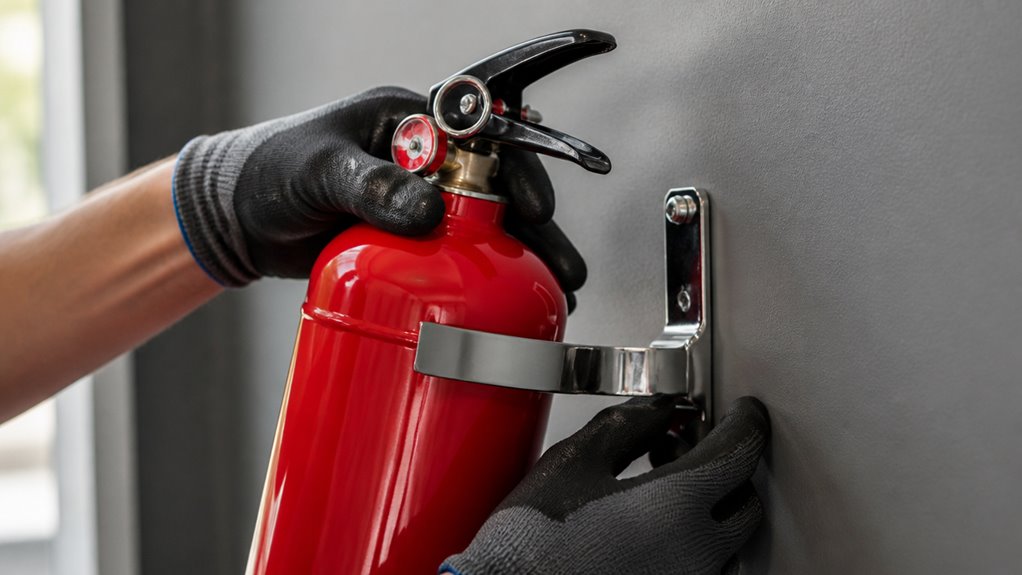

To hang a fire extinguisher, pick a visible, accessible spot near exits or hazards, ensuring it’s within 20 meters walking distance.
Mount it securely to a solid surface, like a wooden stud, using approved hardware at a handle height of 80–120 cm.
Ensure there is at least 4 inches clearance from the floor.
Keep the path clear, add standard signage above, and avoid moisture or damage-prone areas.
Follow proper installation steps, and you’ll find guidance for maintenance and compliance next.
Key Takeaways
- Locate a solid surface, preferably a wooden stud, using a stud finder before drilling for secure mounting.
- Mount the extinguisher bracket or hook at 80–120 cm (31.5–47 inches) height with at least 4 inches clearance from the floor.
- Use hardware rated to support the extinguisher’s weight and allow quick, unobstructed removal during emergencies.
- Ensure the extinguisher is visible, accessible, and not blocked by furniture or other obstacles.
- Confirm mounting complies with ADA guidelines and NFPA 10 standards, then regularly inspect for secure fit and accessibility.
Choose the Best Location for Your Fire Extinguisher
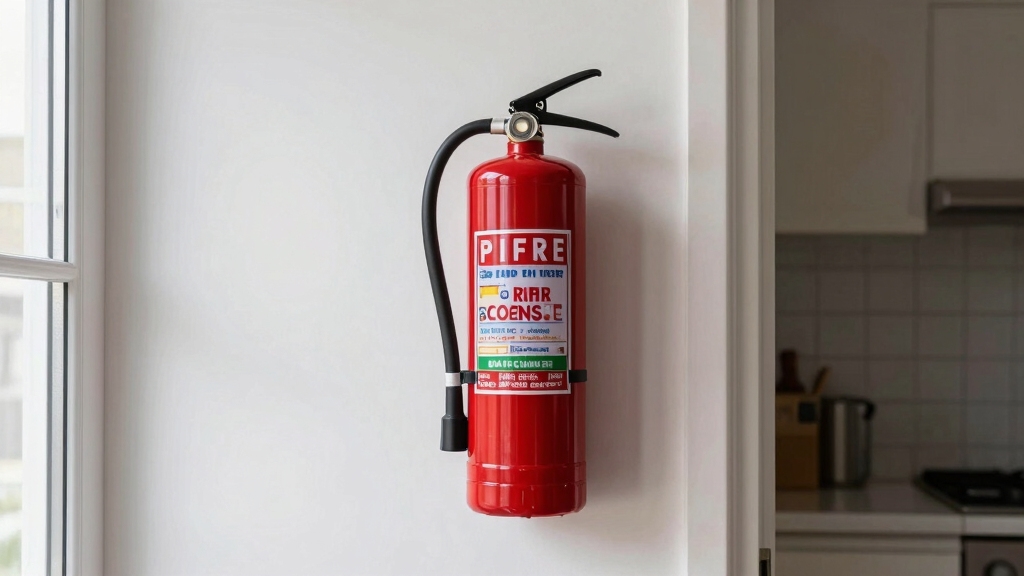
When choosing the best location for your fire extinguisher, prioritize quick access during emergencies by placing it near escape routes and exterior exits.
Place fire extinguishers near escape routes and exterior exits for quick emergency access.
Position the extinguisher at corridor intersections and stairwells to boost visibility and retrieval speed.
In workplaces, make certain you can reach an extinguisher within 20 meters of any point.
Mount the unit where nothing obstructs its removal; avoid tight spaces or behind doors.
Check the surrounding layout carefully before installation to confirm the extinguisher remains visible and accessible.
Keep in mind that strategic placement isn’t just about convenience; it can save valuable seconds during a fire emergency.
Follow these guidelines closely to make certain your extinguisher is always ready when you need it most.
Ensure the extinguisher is mounted at a height where the carrying handle is between 3½ and 5 feet off the ground for effective reach and control.
Keep Your Fire Extinguisher Easily Accessible in an Emergency
When it comes to fire safety, having your fire extinguisher in the right spot is key. Try to place it in strategic locations, like near escape routes and intersections. This way, you can grab it quickly if an emergency arises.
Don’t forget to keep the path to the extinguisher clear and unobstructed. You want to make sure you can reach it without any delays. Visibility is super important too—make sure it’s easy to see and grab when you need it most. Prioritizing these details can really make a difference in ensuring your safety and response time!
Also, mounting a “Do Not Block” sign above the extinguisher at 6 to 8 feet helps maintain clear visibility and compliance with safety standards.
Strategic Placement Locations
For quick access in an emergency, fire extinguishers need to be positioned strategically near escape routes and exterior exits. Place them at stairwells and corridor intersections to improve visibility and retrieval speed.
In workplaces, make certain an extinguisher is reachable within 20 meters maximum walking distance. Mount extinguishers on solid surfaces like wooden studs using approved screws or bolts to support their weight securely.
Keep the handle height between 80 and 120 centimeters above the floor, adjusting for weight and ADA requirements. Avoid obstructed locations; the extinguisher must be easy to spot and grab immediately.
Use protective cabinets or covers in environments exposed to weather or mechanical damage. Confirm your placement complies with safety standards and allows rapid removal to maximize safety during emergencies.
In larger buildings, it is recommended to install extinguishers every 30 to 50 feet to ensure adequate coverage and accessibility.
Clear Removal Pathways
Always make certain your fire extinguisher’s removal path remains clear and unobstructed to guarantee swift access during emergencies. Blocked or cluttered pathways delay retrieval, increasing risk.
Make sure no furniture, equipment, or storage impedes quick removal.
Use this checklist to maintain clear removal pathways:
| Potential Obstruction | Check Frequency | Action Required |
|---|---|---|
| Furniture | Weekly | Rearrange if needed |
| Stored Items | Weekly | Remove or relocate |
| Equipment | Biweekly | Ensure clearance |
| Signage | Monthly | Adjust for visibility |
| Floor Condition | Monthly | Clear debris |
Regularly inspect these factors. Keeping the path clear ensures you can grab the extinguisher immediately when seconds count. It is also important to have your extinguisher serviced by licensed fire protection services to maintain functionality and safety.
Proper Mounting Height and Clearance for Fire Extinguishers
When you’re mounting a fire extinguisher, aim for a height where the handle is between 80 and 120 centimeters off the floor. This range is ideal for easy access when it’s needed most.
If you’re working with portable units that weigh less than 40 pounds, make sure the top is no higher than 60 inches. For those heavier units, keep the top below 42 inches.
Don’t forget about accessibility! Following ADA guidelines is crucial. Ensure that all operable parts are between 15 and 48 inches high so everyone can reach them without a hassle.
Also, maintain at least 4 inches clearance from the floor to prevent moisture damage and allow easy removal, as recommended in the mounting height standards.
Optimal Handle Height
Properly mounting a fire extinguisher means setting the handle at an accessible height to guarantee quick and safe removal during emergencies.
Position the handle so it’s between 80 and 120 centimeters (about 31.5 to 47 inches) above the floor for most extinguishers.
For units under 40 pounds, make certain the top is no higher than 60 inches; heavier extinguishers shouldn’t exceed 42 inches.
Maintain at least 4 inches of clearance from the floor to the extinguisher’s bottom to avoid damage and ensure stability.
This height range helps you grab and remove the extinguisher swiftly without strain or delay.
Always verify the mounting height before installation and make certain the extinguisher remains visible and unobstructed to maximize readiness in emergencies.
Regular inspections help confirm that mounted extinguishers remain accessible and properly positioned according to NFPA 10 standards.
ADA Clearance Requirements
While mounting fire extinguishers, you must follow ADA clearance requirements to guarantee accessibility for everyone, including individuals with disabilities.
Assure the highest operable part is no more than 48 inches above the floor and the lowest no less than 15 inches. For portable extinguishers under 40 pounds, the top shouldn’t exceed 60 inches; for those over 40 pounds, keep it below 42 inches.
The bottom must be at least 4 inches above the floor to allow easy grasp. Mount the extinguisher where no obstacles block quick removal.
Confirm mounting surfaces are solid and use appropriate hardware to secure the unit. Adhering to these standards assures compliance and enables all users to access fire extinguishers swiftly during emergencies.
Extinguishers should also be positioned with unobstructed access within 30 feet of the hazard to ensure rapid response during hot work.
Check Surroundings Before Drilling and Installing
Before drilling, carefully examine the wall and surrounding area to guarantee no hidden pipes, electrical wiring, or other obstacles could be damaged during installation.
Use a stud finder to locate solid mounting points, preferably wooden studs, assuring the fire extinguisher will be securely supported.
Check for nearby switches, outlets, or fixtures that might interfere with placement or create a hazard.
Confirm enough clearance around the mounting area to maintain full visibility and unobstructed access.
Avoid moisture-prone spots or locations exposed to mechanical damage.
Measure mounting height according to guidelines before marking drill points.
Taking these precautions prevents costly repairs and assures your extinguisher is safely and effectively installed for immediate use in emergencies.
Ensure the location allows for quick access and follows safety assessment protocols to maximize effectiveness during an emergency.
Choose the Right Fire Extinguisher Mounting Hardware and Brackets
Select mounting hardware that can firmly support the weight of your fire extinguisher without compromising quick removal in an emergency.
Use brackets or hooks rated for the extinguisher’s weight and designed to allow fast, obstruction-free removal.
Secure them to solid surfaces like wooden studs using approved screws or bolts.
Consider protective cabinets for extra shielding when needed.
| Hardware Type | Material | Weight Capacity (lbs) |
|---|---|---|
| Wall Hook | Steel | Up to 20 |
| Bracket with Strap | Steel/Plastic | 20 to 40 |
| Heavy-Duty Bracket | Steel | Over 40 |
| Protective Cabinet | Steel/Aluminum | Varies |
| Floor Stand | Steel | Wheeled Extinguishers |
Choose according to extinguisher size, location, and accessibility requirements. Always use marine-type brackets to ensure compliance with Coast Guard and NFPA 10 standards.
Securely Attach the Fire Extinguisher to the Wall
After choosing the appropriate mounting hardware, you’ll need to securely attach the fire extinguisher to the wall to guarantee stability and quick access.
Begin by locating a solid surface, preferably a wooden stud, to anchor your screws or bolts.
Use approved fasteners rated to support the extinguisher’s weight.
Position the bracket or hook at the correct height, generally between 80 and 120 centimeters from the floor, ensuring the bottom is at least four inches above ground.
Align the mounting hardware so the extinguisher will hang firmly without wobbling but can be quickly removed during an emergency.
Double-check your installation for secure fit and proper clearance, confirming the extinguisher remains visible and unobstructed.
This precise attachment guarantees both safety and readiness when it matters most.
Regular inspection and maintenance of the extinguisher are essential to ensure it remains in proper working condition.
Ensure Clear Visibility and Add Fire Extinguisher Signage
It’s important to make sure that fire extinguisher signs are placed directly above or near the units. This way, everyone can spot them quickly when they need to. If you’re in a more complicated area, consider using directional arrows or flag signs. They can really help guide people from different angles.
Fire Extinguisher Sign Placement
Every fire extinguisher must be clearly marked with the fire safety sign F001 to guarantee quick identification in emergencies.
Place this sign directly above or adjacent to the extinguisher, assuring it’s unobstructed and at eye level for immediate visibility.
Use approved mounting hardware to secure the sign firmly to a solid surface.
In complex layouts or long corridors, add directional arrows to guide users toward the extinguisher’s location.
Make certain the sign contrasts sharply with the background to stand out clearly.
Document sign placement in your safety plan to maintain consistency and compliance.
Avoid placing signs where lighting is poor or where other signage might cause confusion.
Enhancing Visibility With Signs
How can you make certain a fire extinguisher is noticed instantly during an emergency? Start by installing the standardized fire safety sign F001 directly above or near the extinguisher.
Use additional directional arrows in complex or poorly structured areas to guide people toward the extinguisher. Employ flag or angle signs to guarantee visibility from multiple directions, especially in long corridors or intersections.
Position signs at eye level and ensure they contrast sharply with the background for maximum clarity. Always include extinguisher locations in your escape and rescue plans to reinforce awareness.
Regularly inspect signage for damage or obstruction, replacing signs as needed. By enhancing visibility with clear, compliant signage, you guarantee quick identification and access during critical moments, markedly improving fire safety readiness.
Protect Fire Extinguishers From Damage and Weather Exposure
Protecting fire extinguishers from damage and weather exposure guarantees they remain fully operational when needed.
You should mount extinguishers away from areas prone to moisture, dirt, and heavy traffic to prevent corrosion and mechanical harm.
In outdoor or semi-open locations, use protective covers or cabinets designed to shield against rain, dust, and temperature extremes.
Collision guards or barriers can reduce impact damage in busy environments.
Avoid placing extinguishers where exposure to harsh elements or physical damage could impair their readiness.
Regularly inspect the protective measures to assure they remain intact and effective.
By proactively shielding your fire extinguishers, you maintain their reliability and extend their service life.
This ensures quick access and functionality during emergencies.
Measure and Verify Fire Extinguisher Compliance After Mounting
Once you’ve mounted the fire extinguisher, you need to measure and verify its placement to guarantee full compliance with safety standards.
Confirm that the handle height falls within 80 to 120 centimeters above the floor, or follows the weight-specific height rules: no higher than 60 inches for units under 40 pounds and 42 inches for heavier ones.
Make certain the bottom of the extinguisher is at least 4 inches off the ground.
Check that the extinguisher is easily accessible within a 20-meter walking distance, unobstructed, and visible from all necessary angles.
Verify mounting hardware is securely fastened to a stud or solid surface.
Finally, confirm the extinguisher is marked with the proper fire safety sign and positioned near escape routes or intersections for optimal emergency use.
Maintain and Inspect Your Fire Extinguisher Regularly
After confirming your fire extinguisher’s proper placement and secure mounting, you need to establish a routine for regular maintenance and inspection.
Check the pressure gauge monthly to ensure it’s in the operable range. Look for physical damage, corrosion, or clogged nozzles.
Verify that the pin and tamper seal are intact, and that the unit is easily accessible and visible. Record each inspection date and any actions taken.
| Task | Frequency |
|---|---|
| Pressure gauge check | Monthly |
| Physical damage check | Monthly |
| Accessibility check | Monthly |
| Professional servicing | Annually |
Maintaining your extinguisher ensures it functions reliably during emergencies and complies with safety regulations.
Frequently Asked Questions
How Often Should Fire Extinguishers Be Professionally Serviced?
You should have fire extinguishers professionally serviced at least once a year to make certain they function properly.
Additionally, perform monthly visual inspections yourself to check for visible damage or obstructions.
After any use, regardless of size, get a professional maintenance check.
Regular servicing keeps extinguishers ready for emergencies, complies with safety regulations, and extends their lifespan.
Don’t delay; schedule professional checks annually without fail.
Can Fire Extinguishers Be Mounted on Glass or Metal Surfaces?
Imagine trying to secure a fire extinguisher on sleek glass or cold metal walls. You can mount them there, but you’ll need specialized adhesive pads or brackets designed for these surfaces.
Always make sure the mounting hardware supports the extinguisher’s weight firmly and allows quick removal. Avoid using screws directly on glass, and for metal, use proper anchors or welds if permitted.
This keeps your extinguisher accessible and secure in any environment.
What Types of Fire Extinguishers Are Best for Different Fire Classes?
You should choose a Class A extinguisher for ordinary combustibles like wood and paper.
For flammable liquids or gases, use Class B extinguishers.
Electrical fires require Class C extinguishers to avoid shock risks.
Class D extinguishers are specialized for combustible metals.
Class K extinguishers are best for kitchen grease fires.
Always match the extinguisher type to the specific fire class to guarantee effective and safe suppression.
Are There Legal Penalties for Improper Fire Extinguisher Placement?
Imagine your fire extinguisher as a knight guarding a castle gate.
If you misplace it, you leave the gate vulnerable, and yes, you can face legal penalties for that.
Authorities impose fines or citations when extinguishers aren’t properly positioned or accessible, violating safety codes.
You must follow regulations meticulously: correct mounting height, clear access, and visibility.
This will help you avoid these consequences and guarantee your safety defenses stand strong and ready in emergencies.
How Do I Dispose of or Recycle an Expired Fire Extinguisher?
To dispose of or recycle an expired fire extinguisher, first check with your local hazardous waste facility or fire department for specific guidelines.
Never throw it in regular trash.
You’ll usually need to depressurize the extinguisher by releasing any remaining contents safely.
Then, take it to a certified recycling center or hazardous waste drop-off point.
Some manufacturers also offer take-back programs, so contact them for proper disposal instructions.
Mount Your Fire Extinguisher for Fast Emergency Access
You might worry that mounting a fire extinguisher takes too much time or effort, but it’s a quick, straightforward process that could save lives.
By choosing the right spot, using proper hardware, and guaranteeing clear visibility, you’re making your space much safer.
Don’t skip regular inspections to keep it ready for emergencies.
Taking these simple steps guarantees your extinguisher is always accessible and effective when you need it most.