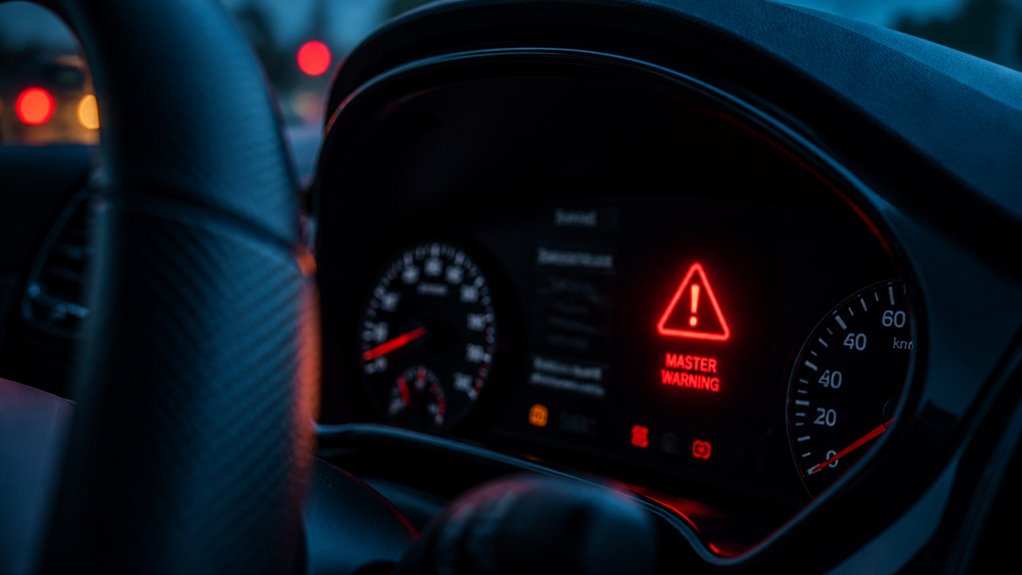

The master warning light is a yellow or amber triangle with an exclamation point that signals your vehicle has detected an issue needing attention.
It doesn’t specify the exact fault but prompts you to check dashboard messages or fault codes for details. Common causes include open doors, low fluids, or system malfunctions.
You should assess severity and safety before continuing to drive. Understanding its meaning helps you respond properly.
Explore how to interpret related warnings and next steps.
Key Takeaways
- The master warning light is a yellow/amber triangle alert indicating a detected issue needing attention without specifying the exact problem.
- It requires checking companion dashboard messages or fault codes to identify the specific subsystem affected.
- Common causes include open doors, low fluids, tire pressure, electrical faults, or maintenance reminders.
- Amber light signals non-critical issues; flashing or red lights and symptoms like power loss or overheating demand immediate stopping.
- Always read the exact message, assess symptoms, prioritize safety, and consult the owner’s manual or a professional promptly.
Master Warning Light: Appearance and Meaning
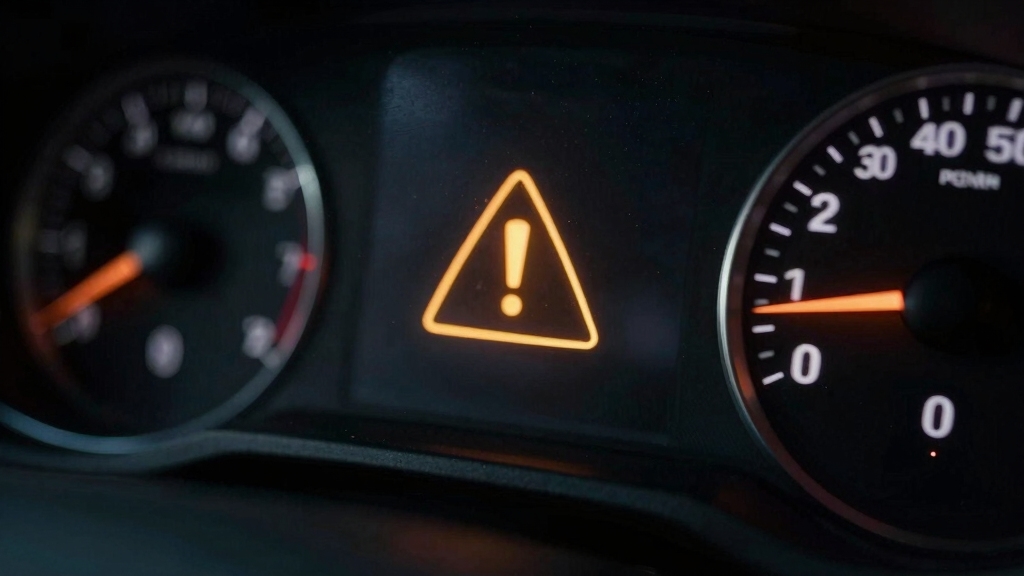
When the master warning light pops up on your dashboard, it signals that your vehicle has detected an issue needing your attention.
The master warning light alerts you that your vehicle has found an issue requiring your immediate attention.
This light typically appears as a yellow or amber triangle containing an exclamation point. It serves as a general alert rather than pinpointing a specific fault.
To identify the exact problem, you’ll need to check the instrument cluster or center display, where a text message or fault code usually accompanies the light.
The master warning light’s purpose is to quickly grab your attention so you can review detailed information.
Keep in mind, the light can indicate anything from a minor notification to a significant malfunction, depending on your vehicle and the accompanying message shown on the display.
For safety, it is important to perform a thorough visual inspection for signs of forced access or unusual noises, similar to safety before disarming an alarm system.
Common Reasons the Master Warning Light Comes On
Understanding what commonly triggers the master warning light can help you address issues promptly. This light signals a detected problem but doesn’t specify the fault, so identifying common causes streamlines your response.
- Open doors, hood, or trunk: Some vehicles activate the warning if any are ajar.
- Low tire pressure: A frequent cause that affects vehicle safety and performance.
- Low fluid levels: Insufficient coolant, oil, hydraulic fluid, DEF, or washer fluid triggers alerts.
- Maintenance reminders: Service intervals, filter changes, or inspections can illuminate the light.
- Electrical system issues, such as sensor wiring problems or malfunctioning control boards, can also cause the master warning light to activate.
How to Read Your Dashboard Messages?
You’ll typically find specific information about the master warning light’s cause on your dashboard display, infotainment screen, or multi-information display.
When the warning appears, immediately check these screens for a detailed message or fault code indicating the subsystem affected.
Pay close attention to additional warning lights that illuminate simultaneously, as they help pinpoint the issue.
Note the exact message, code, and any operating conditions when the light activated.
Inspect for obvious problems such as open doors, low tire pressure, or fluid levels.
Consult your owner’s manual to interpret the displayed message accurately, since meanings vary by manufacturer and model.
This precise reading of the dashboard messages lets you understand the severity and nature of the problem, enabling informed decisions about how to proceed.
For enhanced safety, consider integrating alerts with interconnectivity and smart features that provide clearer and more immediate notifications.
Steps to Take When the Master Warning Light Appears
Although the master warning light signals a range of conditions, your immediate priority should be to read the exact message or fault code displayed on your dashboard or infotainment screen. This message will guide your next steps accurately.
The master warning light alerts various issues; first, check the exact dashboard message to determine your next steps.
After identifying the alert, follow these steps:
- Inspect for common causes like open doors, low tire pressure, or low fluid levels.
- Check for any additional warning lights that might clarify the subsystem involved.
- If the vehicle behaves abnormally, safely pull over and stop driving.
- Schedule a professional inspection promptly if the message indicates a system fault or the light remains on.
Always consult your owner’s manual for specific instructions related to your vehicle’s make and model.
Assessing the Severity of the Master Warning Light
First off, take a good look at the color of the master warning light. If it’s amber, that usually means it’s a less critical issue, but if it’s red, you definitely need to pay urgent attention.
Once you’ve noted the color, check the companion message on the display. This will help you pinpoint the specific fault and understand the context better.
And don’t forget to assess any symptoms like power loss or overheating. These signs can help you gauge the immediate risk and figure out what steps you should take next.
If the warning relates to security or alarm issues, you may need to try simple resets such as using the key fob disarm button before moving to more advanced troubleshooting.
Warning Light Color
Master warning lights frequently use color coding to indicate the severity of the detected issue. This helps you quickly gauge the urgency and prioritize your response effectively.
- Yellow/Amber: Signals a non-critical issue, such as low fluid levels or maintenance reminders. Address these at your earliest convenience.
- Red: Indicates a serious safety-related problem that requires immediate attention, like brake failure or engine overheating.
- Flashing Lights: Often emphasize urgency, demanding you to stop driving and investigate promptly.
- Combination Colors: Some vehicles use additional colors or symbols alongside the master warning light to differentiate system-specific alerts.
Additionally, maintaining an accurate system time with a master code ensures reliable event logging and can assist in diagnosing issues related to the warning light.
Companion Message Importance
When the master warning light illuminates, the companion message displayed on your vehicle’s dashboard or infotainment screen plays a crucial role in evaluating the severity of the issue.
This message provides specific fault codes or descriptions that pinpoint the subsystem affected, which the warning light alone can’t convey.
You should carefully read this message to determine whether the alert signals a minor reminder, such as low washer fluid, or a more critical problem like brake system malfunction.
By correlating the message with other illuminated indicators, you gain a clearer understanding of the fault’s nature.
Always record the displayed information and consult your owner’s manual for exact interpretations, since severity and required actions vary markedly by make and model.
This approach guarantees you respond appropriately to the master warning light.
Additionally, monitoring environmental factors related to your vehicle’s operation can help prevent some issues that trigger the master warning light.
Urgency Based On Symptoms
Typically, the urgency indicated by the master warning light depends heavily on the accompanying symptoms and messages displayed. You need to assess the severity based on what your vehicle is signaling.
Here’s how to evaluate it:
- Color and Message: Amber warnings usually indicate non-critical issues. Red signals demand immediate attention. Check the exact message for details.
- Vehicle Behavior: Notice abnormal signs such as power loss, overheating, or brake issues. These elevate urgency.
- Companion Lights: Additional warning lights help pinpoint the affected system and the seriousness of the fault.
- Environmental Context: Consider operating conditions when the light appears. Heavy load or steep terrain may increase risk.
Always prioritize safety by interpreting these factors before deciding to continue driving or stopping for service. Electrical issues such as power surges and voltage spikes can cause unexpected warning signals and should be evaluated promptly.
When to Stop Driving With the Master Warning Light on?
If the master warning light comes on, it’s a good idea to stop driving right away, especially if you notice any serious issues like power loss, overheating, or brake problems. Just find a safe place to pull over.
Once you’re stopped, take a moment to check out the vehicle’s display messages and indicators. They can give you some clues about what’s going on. Remember, your safety is the top priority, so don’t ignore these warnings. Addressing them quickly can help prevent more damage or dangerous situations down the line.
Sometimes, flashing warning lights may indicate compressor protection delay or other system safeguards activating, which should be diagnosed promptly.
Signs To Stop
Pay close attention to any unusual vehicle behavior once the master warning light comes on, as certain signs demand that you stop driving immediately. Ignoring these signs risks further damage or safety hazards.
You should pull over safely if you notice:
- Significant power loss or engine stalling.
- Overheating indicated by temperature gauges or steam.
- Brake system failure or reduced braking ability.
- Abnormal noises or vibrations suggesting mechanical faults.
These symptoms often indicate serious malfunctions that require immediate inspection. Continuing to drive could exacerbate damage or endanger you and others.
Always prioritize safety by stopping promptly when these critical signs appear alongside the master warning light. After stopping, consult your vehicle’s display for specific fault codes and arrange professional service without delay. If the alarm system is involved, performing a battery disconnection reset can sometimes restore normal function before seeking professional help.
Safety Precautions
Although the master warning light signals various issues, you should stop driving immediately if the vehicle exhibits critical symptoms such as severe power loss, overheating, brake failure, or unusual mechanical noises.
Continuing to drive under these conditions risks further damage or loss of control. If the light appears without severe symptoms, check the dashboard display for specific fault codes or messages.
Inspect for obvious issues like low tire pressure, fluid leaks, or open doors. Don’t ignore persistent warnings; schedule professional diagnostics promptly.
Always prioritize safety by pulling over safely when abnormal vehicle behavior occurs. Driving with unresolved master warning alerts compromises vehicle reliability and your safety.
Adhere strictly to manufacturer guidance and consult the owner’s manual for precise instructions.
What Other Warning Lights Tell You Alongside the Master Warning?
Warning lights that appear alongside the master warning light provide critical context about the specific system affected, helping you pinpoint the underlying issue more efficiently.
When the master warning illuminates, look for these common companion indicators:
When the master warning light activates, check for accompanying indicators to identify the specific issue quickly.
1. Tire Pressure Monitoring System (TPMS) Light
Alerts you to low tire pressure requiring immediate attention.
2. Engine or Check Engine Light
Signals engine or emission system faults.
3. Battery/Charging System Warning
Indicates electrical charging issues or battery failure.
4. Brake System Warning
Highlights problems with brake fluid level, ABS, or parking brake engagement.
For enhanced vehicle safety, it is also important to consider network security measures when using modern connected car systems to protect against unauthorized access.
How Car Brands Interpret the Master Warning Light?
Car manufacturers often interpret the master warning light differently, tailoring its function to the specific diagnostic systems and safety priorities of their vehicles.
For example, Mazda considers it the most urgent alert, signaling critical issues detected by the onboard computer.
Hyundai uses it as a general notification for multiple advanced systems, requiring you to check the LCD display for detailed information.
Toyota hybrids often link the light to hybrid powertrain faults, emphasizing system-specific diagnostics.
Off-road and construction equipment treat the light primarily as a prompt to read messages on the monitor rather than identifying faults directly.
Regardless of make, the master warning light itself rarely specifies the problem. You’ll rely on accompanying dashboard messages or codes to pinpoint the exact issue and determine your next steps.
Using Your Owner’s Manual to Understand the Master Warning Light
Understanding the master warning light depends heavily on the specific information your vehicle’s manufacturer provides. Your owner’s manual is the most reliable source for interpreting this alert since meanings vary by make and model.
Interpreting the master warning light relies on your vehicle’s manufacturer details found in the owner’s manual.
When the master warning light illuminates, consult your manual to identify the exact cause and urgency. It guides you through the displayed fault codes and warning messages. Here’s how to use your owner’s manual effectively:
- Locate the section dedicated to dashboard warning lights or alerts.
- Cross-reference the master warning symbol and any accompanying messages or codes.
- Follow the recommended steps for inspection or immediate action.
- Review maintenance schedules and safety advisories related to the warning.
Using the manual guarantees precise understanding and appropriate response to the master warning light.
Frequently Asked Questions
Can a Master Warning Light Be Reset Without Fixing the Issue?
You can reset the master warning light temporarily without fixing the issue by using a diagnostic tool or disconnecting the battery, but this only clears the alert momentarily.
The light will likely reappear once the system detects the unresolved fault again.
To guarantee safety and proper vehicle function, you should address the underlying problem before resetting the warning.
Ignoring the cause risks further damage or safety hazards.
Does the Master Warning Light Affect Vehicle Warranty Coverage?
The master warning light itself doesn’t directly affect your vehicle warranty coverage.
However, if you ignore the underlying issue causing the light, you risk voiding warranty claims related to that fault.
Manufacturers expect you to address problems promptly.
So, when the light appears, you should diagnose and repair the issue according to your warranty terms.
Failure to do so might limit coverage if damage worsens due to neglect.
How Often Do Sensor Faults Trigger the Master Warning Light?
Sensor snags frequently spark the master warning light, as your vehicle’s diagnostic systems constantly scan for anomalies.
These faults often trigger the alert promptly to prevent potential damage or safety risks.
The frequency depends on sensor reliability and environmental factors, but you can expect sensor-related warnings to occur regularly enough that you should never ignore the light.
Always check your display for specific sensor messages to diagnose and address issues swiftly.
Can Extreme Weather Cause the Master Warning Light to Activate?
Yes, extreme weather can cause the master warning light to activate. Harsh conditions like freezing temperatures, heavy rain, or extreme heat may affect sensors, fluid levels, or electrical components, triggering the alert.
You should immediately check the vehicle’s display for specific fault codes or messages. Inspect for weather-related issues such as low tire pressure or fluid abnormalities.
Consult the owner’s manual for guidance on your model’s responses to environmental stress.
Is It Safe to Ignore the Master Warning Light Temporarily?
You shouldn’t ignore the master warning light, even temporarily.
It signals an issue needing attention, ranging from minor to critical.
While some amber lights may indicate non-urgent problems, you must check the accompanying message or code immediately.
If the vehicle behaves abnormally, stop safely and seek help.
Ignoring the light risks worsening damage or safety hazards.
Always address the cause promptly to guarantee safe operation.
Don’t Ignore the Master Warning Light
So, next time your master warning light flashes, don’t just pretend it’s a disco party. Your car isn’t auditioning for a rave.
It’s a precise signal demanding your attention, not a suggestion. Think of it as your vehicle’s way of saying, “Hey, I’m not feeling great!”
Ignoring it? That’s like ignoring your doctor’s call. Use your owner’s manual, stay alert, and treat that light with the respect it deserves.
Because your car’s life depends on it.