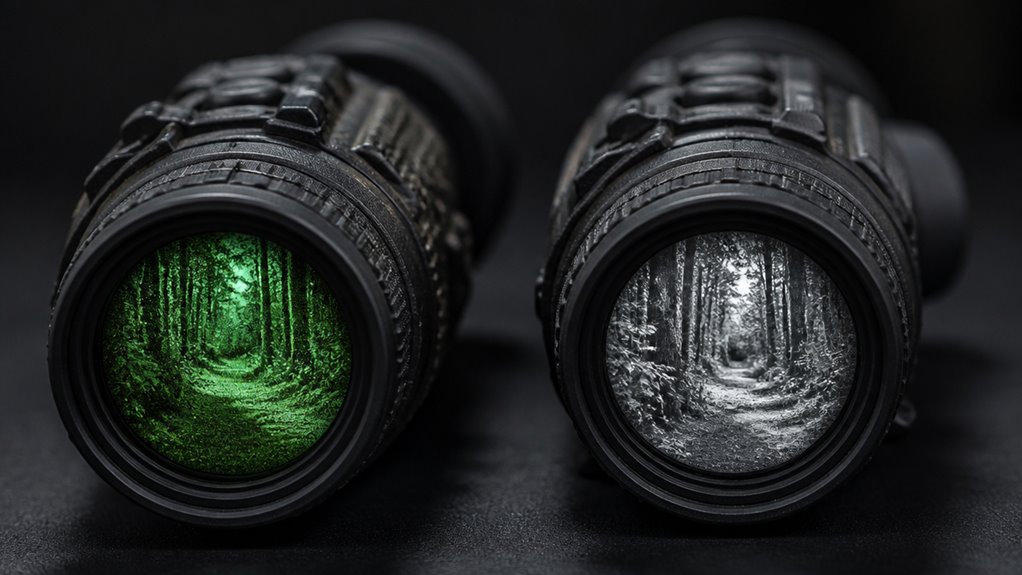

If you need clearer images, longer range, and greater durability, Gen 3 night vision outperforms Gen 2 with advanced GaAs photocathodes, higher amplification (30,000–50,000x), and better signal-to-noise ratios.
Gen 2 costs less but offers grainier images, a shorter 5,000-hour lifespan, and limited passive use.
Gen 3 excels in near-total darkness, with up to 15,000 hours lifespan and reduced IR dependency.
Understanding these distinctions helps you choose the right tech for your mission requirements.
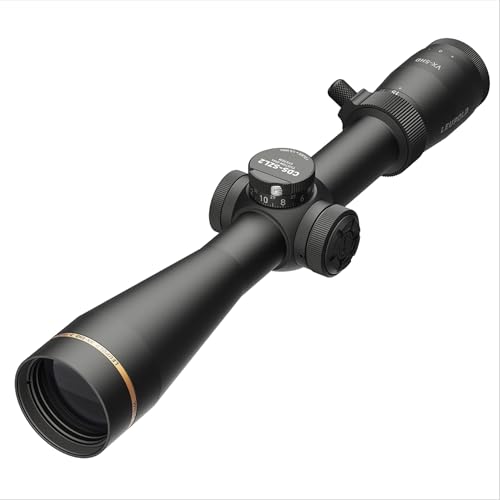
- Model #183850 – Leupold VX-5HD Gen 2 Rifle Scope 3-15×44 (30mm) CDS-SZL2 Side Focus Illum. FireDot…
- Leupold’s VX-5HD Gen 2 3-15×44 riflescope with FireDot Duplex reticle offers illumination for…
- Built in the USA.
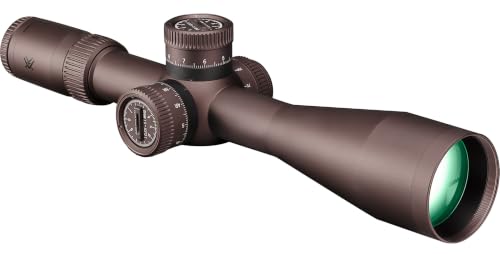
- The Razor HD Gen III 6-36×56 first focal plane scope is built around the perfect balance of…
- The completely redesigned turret system features the L-Tec+ Zero Stop with micro adjust, making…
- Designed for PRS and long-range users who need a clear view to spot misses and correct quickly. Fine…
Key Takeaways
- Gen 3 night vision uses GaAs photocathodes, offering higher sensitivity and better photon-to-electron conversion than Gen 2’s multialkali photocathodes.
- Gen 3 delivers superior image clarity with higher resolution (64–72+ lp/mm) and reduced noise compared to Gen 2’s grainier images at 45–54 lp/mm.
- Gen 3 supports effective passive viewing beyond 300 yards in near-total darkness, while Gen 2 is limited to about 200 yards in moderate light.
- Gen 3 tubes last over 10,000 hours with ion barrier protection, doubling the typical 5,000-hour lifespan of Gen 2 tubes.
- Gen 3 enables covert operations without active IR illumination, unlike Gen 2, which often requires IR light that increases detection risk.
Gen 2 vs Gen 3 Night Vision: Key Differences Compared
| Comparison Factor | Gen 2 Night Vision | Gen 3 Night Vision |
|---|---|---|
| Photocathode Technology | Uses multialkali or S-25 photocathodes | Uses advanced gallium arsenide photocathodes |
| Image Resolution | Around 45–54 lp/mm | Typically 64–72+ lp/mm |
| Light Amplification | Around 20,000x | Approximately 30,000–50,000x |
| Image Quality | More grain and lower contrast | Cleaner, brighter, higher-contrast images |
| Effective Range | Roughly 200 yards in suitable conditions | Often 300 yards or more |
| Low-Light Performance | Best with moderate ambient light | Stronger in near-total darkness |
| IR Dependency | More likely to need IR illumination | Better suited to passive viewing |
| Tube Lifespan | Around 5,000 hours | Commonly 10,000+ hours, sometimes up to 15,000 |
| Best Use | General observation and moderate-light use | Long-range and demanding low-light applications |
Gen 2 vs Gen 3 Night Vision: Key Differences Explained
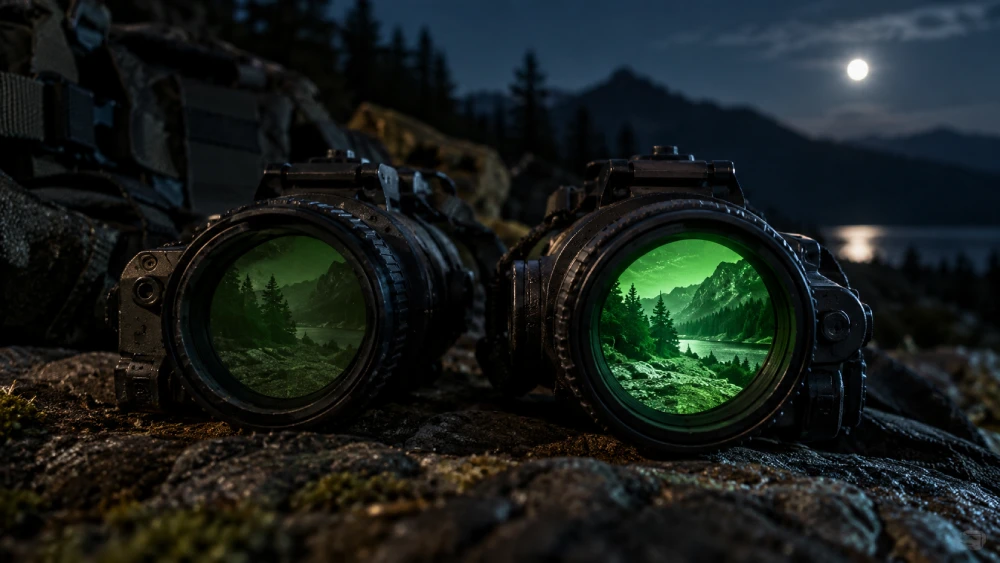
While both Gen 2 and Gen 3 night vision technologies amplify low-light scenes, they differ fundamentally in their core components and performance.
Gen 2 and Gen 3 night vision both amplify low light but differ in key components and performance.
Gen 2 employs microchannel plates paired with multialkali or S-25 photocathodes, delivering amplification around 20,000x and resolution near 45–54 lp/mm.
In contrast, Gen 3 uses gallium arsenide (GaAs) photocathodes, boosting amplification to 30,000–50,000x and resolution beyond 64 lp/mm.
This shift enhances sensitivity, especially under minimal ambient light, and improves durability through ion barrier films extending tube life beyond 10,000 hours.
Gen 3 also supports more reliable passive operation without infrared illumination, making it suitable for covert use.
While Gen 2 typically offers 200 yards of effective range, Gen 3 exceeds 300 yards.
You’ll notice Gen 3’s cleaner, higher-contrast images and stronger performance in challenging environments, reflecting its advanced technology and design.
Additionally, combining night vision with devices that provide continuous monitoring and motion detection can enhance overall situational awareness.
Night Vision Image Quality and Light Sensitivity Compared
Because image clarity and light sensitivity directly impact night vision effectiveness, understanding their differences between Gen 2 and Gen 3 is essential.
Gen 2 tubes typically use multialkali or S-25 photocathodes, limiting photon-to-electron conversion efficiency. This results in lower signal-to-noise ratios, causing grainier images and reduced contrast, especially in near-zero ambient light.
Conversely, Gen 3 employs gallium arsenide photocathodes, markedly enhancing sensitivity and electron amplification. This yields cleaner, brighter images with superior contrast and reduced blooming around light sources.
You’ll notice Gen 3 excels in star-light and overcast conditions, outperforming Gen 2 in both resolution, often above 64 lp/mm, and low-light detection.
If your priority is maximizing image fidelity and light sensitivity in the darkest environments, Gen 3 stands clearly ahead of Gen 2 technology.
Additionally, night vision devices detect reflected near-infrared light using IR-sensitive sensors, which play a crucial role in image formation under low or no ambient light.
Range and Uses of Gen 2 vs Gen 3 Night Vision
You’ll notice that Gen 2 night vision typically offers effective viewing up to around 200 yards. This range is pretty good for general surveillance, especially in moderate light conditions.
Now, when we talk about Gen 3, it really takes things up a notch. It extends that range beyond 300 yards and shines in near-total darkness. This makes it an excellent choice for tactical and covert operations.
Oh, and if you’re deciding between active and passive use, keep in mind that Gen 3’s superior sensitivity allows for more reliable performance even without infrared illumination. So, it’s definitely a solid option if you want flexibility in low-light conditions.
For enhanced security, pairing Gen 3 night vision with cameras that have night vision capabilities ensures clear visibility and detail recognition in low-light conditions.
Effective Viewing Distance
Understanding the effective viewing distance is crucial when choosing between Gen 2 and Gen 3 night vision devices, as it directly impacts operational capability.
Gen 2 typically offers a usable range of about 200 yards under moderate lighting.
Gen 3 extends this to 300 yards or more, thanks to its superior gallium arsenide photocathode and higher signal-to-noise ratio.
When evaluating effective viewing distance, consider:
- Ambient Light Conditions: Gen 3 performs markedly better in near-zero light, extending clear visibility beyond Gen 2 capabilities.
- Image Resolution and Contrast: Gen 3 delivers sharper detail at longer ranges, improving target recognition.
- Dependence on IR Illumination: Gen 2 often requires active IR, limiting covert range. Gen 3 excels with passive operation.
Additionally, choosing devices with adjustable IR intensity can help minimize glare and improve clarity when viewing through glass at night.
Your choice hinges on required range precision and environmental factors.
Operational Environment Suitability
While Gen 2 night vision devices perform reliably in general observation and moderate-light environments, their limited range and reliance on infrared illumination constrain their use in more demanding scenarios.
You’ll find Gen 2 effective up to about 200 yards, suitable for patrols and basic surveillance where ambient light is adequate.
In contrast, Gen 3’s superior gallium arsenide photocathode enables operation beyond 300 yards with enhanced sensitivity in near-zero light. This allows you to conduct tactical and law enforcement missions with greater confidence.
Gen 3’s reduced dependency on IR illumination also improves stealth in covert operations.
If your environment demands longer range, higher resolution, and adaptability to varying low-light conditions, Gen 3 offers a substantial operational advantage over Gen 2, especially in challenging or dynamic settings.
Many advanced night vision systems today incorporate infrared night vision with noise reduction and color correction to enhance image clarity in low-light conditions.
Covert Versus Active Use
Because covert operations demand minimal detection risk, Gen 3 night vision devices excel by offering superior passive viewing capabilities without relying heavily on infrared illumination.
You’ll find Gen 3’s gallium arsenide photocathode enhances sensitivity and image clarity in near-total darkness, making it ideal for stealth.
In contrast, Gen 2 devices typically require active IR illumination, increasing detection chances during covert missions.
When deciding between Gen 2 and Gen 3 for covert versus active use, consider:
- Passive range: Gen 3 supports up to 300+ yards covertly; Gen 2 maxes near 200 yards with IR.
- Image quality: Gen 3 yields clearer, less grainy images in low ambient light.
- IR dependency: Gen 2 relies on IR emitters, risking exposure; Gen 3 often doesn’t.
Choose Gen 3 for discreet operations. Gen 2 suits general active use. Additionally, advanced devices now integrate dual night vision modes to optimize performance across various lighting conditions.
Resolution and Amplification: Night Vision Performance Comparison
Although both Gen 2 and Gen 3 night vision technologies amplify low-light scenes, they differ markedly in resolution and amplification capacity. This directly impacts image clarity and target identification.
Gen 2 tubes typically offer resolution between 45–54 line pairs per millimeter (lp/mm) and amplification around 20,000x. This produces usable but grainier images with moderate contrast.
In contrast, Gen 3 devices deliver superior resolution, often 64–72+ lp/mm, and substantially higher amplification, ranging 30,000–50,000x or more. This results in cleaner images with enhanced contrast, reduced noise, and improved detail discernment, especially under minimal ambient light.
The gallium arsenide photocathode in Gen 3 tubes converts more photons into electrons, elevating sensitivity. This enables better performance for long-range identification and tactical applications where clarity is critical.
Lifespan and Durability of Gen 2 and Gen 3 Tubes
When evaluating night vision tubes, you’ll find that Gen 3 models offer markedly longer operational lifespans and enhanced durability compared to Gen 2 units.
Gen 2 tubes typically provide around 5,000 hours of use, while Gen 3 tubes often exceed 10,000 hours, sometimes reaching 15,000 hours.
This longevity stems from Gen 3’s advanced ion barrier film, which protects the gallium arsenide photocathode and reduces degradation.
Consider these key differences:
- Operational Lifespan: Gen 3 doubles or triples Gen 2’s service life, ideal for extended field use.
- Material Durability: Gen 3’s enhanced photocathode technology resists wear and environmental stress better.
- Reliability: Gen 3 tubes maintain consistent performance longer, minimizing maintenance and replacement needs.
Choosing Gen 3 means investing in a more robust, longer-lasting night vision solution. This investment parallels the benefits seen in addressable systems, which provide enhanced operational efficiency and durability through advanced technology.
How Much Does Gen 2 vs Gen 3 Night Vision Cost?
Understanding the cost differences between Gen 2 and Gen 3 night vision devices is essential for making an informed purchase decision.
Gen 2 devices generally come at a markedly lower price point, often serving as an accessible entry for users needing reliable performance in moderate low-light conditions.
Expect prices typically in the mid-hundreds to low thousands of dollars, depending on the model and features.
In contrast, Gen 3 night vision systems command a premium, frequently priced in the high thousands due to their superior gallium arsenide photocathodes, higher amplification, and extended tube life.
This investment reflects enhanced resolution, image clarity, and operational range.
When budgeting, weigh these cost disparities against your specific performance requirements to determine which generation aligns best with your mission profile and financial constraints.
Additionally, understanding the impact of IR illumination on night vision performance can help optimize usage and expectations for these devices.
When to Choose Gen 2 Night Vision for Your Needs?
When you’re looking for a cost-effective option that still delivers reliable performance, Gen 2 night vision is definitely worth considering.
It shines in moderate light conditions, giving you clear images up to about 200 yards.
If you find yourself in an environment with mixed lighting, Gen 2 could be the perfect fit.
Plus, it’s budget-friendly while still providing solid amplification capabilities.
Optimizing device settings for energy-efficient performance can further enhance its usability in remote or power-sensitive setups.
Budget-Friendly Night Vision
Frequently, budget constraints play a pivotal role in determining the choice of night vision technology, making Gen 2 devices a practical option for many users.
If you’re weighing cost against performance, Gen 2 offers a balance suitable for general observation without a hefty investment.
Here’s when you might opt for Gen 2:
- You need reliable night vision for moderate low-light environments without requiring the highest sensitivity.
- Your operational range typically stays within 200 yards, where Gen 2 still delivers usable image quality.
- You want a durable device with a service life around 5,000 hours, enough for non-professional or occasional use.
Choosing Gen 2 helps contain expenses while providing effective amplification and resolution for most practical nighttime applications.
Additionally, understanding the operational roles of your equipment ensures you maximize effectiveness in your specific use case.
Moderate Light Performance
Since moderate ambient light often prevails in many operational settings, Gen 2 night vision devices provide sufficient sensitivity and image clarity without the complexity or cost of Gen 3 technology.
You’ll find Gen 2’s multialkali photocathodes deliver reliable amplification, typically around 20,000x, adequate for environments with some ambient light, such as urban patrol or perimeter surveillance.
Though Gen 2 falls short of Gen 3’s superior signal-to-noise ratio and range, it still offers usable passive viewing up to approximately 200 yards.
If your use case involves moderate light conditions rather than near-total darkness, Gen 2 balances performance and affordability effectively.
Choosing Gen 2 here avoids the premium investment of Gen 3 while meeting operational needs with acceptable resolution and contrast.
This makes it the practical option for most general-purpose moderate-light scenarios.
Why Gen 3 Night Vision Is Worth the Premium for Professionals?
Although Gen 2 night vision offers a functional baseline for many users, professionals demand the superior performance and reliability that Gen 3 provides.
When you need consistent, high-quality imaging under extreme low-light conditions, Gen 3’s gallium arsenide photocathode delivers unmatched sensitivity and clarity. This makes it indispensable for tactical, law enforcement, and covert operations.
Here’s why Gen 3 is worth the premium for you:
- Enhanced Image Quality: You get cleaner, higher-resolution images with less noise and blooming, vital for accurate target identification.
- Extended Operational Range: Gen 3 tubes provide effective viewing beyond 300 yards, surpassing Gen 2’s typical 200-yard limit.
- Greater Durability: Expect 10,000+ hours of reliable use, reducing replacements and downtime during critical missions.
Frequently Asked Questions
Can Gen 2 and Gen 3 Tubes Be Repaired or Refurbished?
Yes, you can have both Gen 2 and Gen 3 tubes repaired or refurbished, but it’s more common and feasible with Gen 3 due to their advanced construction and higher value.
Refurbishment involves replacing degraded components like the photocathode or microchannel plate. However, the process is costly and complex, especially for Gen 3 tubes, requiring specialized equipment and expertise.
You should weigh refurbishment costs against replacement, especially given Gen 3’s longer lifespan and performance benefits.
How Do Gen 2 and Gen 3 Night Vision Devices Handle Extreme Weather?
You’ll find that both Gen 2 and Gen 3 night vision devices perform reliably in extreme weather.
Gen 3’s advanced photocathode and tube design offer better resilience to temperature fluctuations and moisture.
Gen 3 typically maintains image clarity in fog, rain, and cold, while Gen 2 may experience more performance degradation under harsh conditions.
Durable housing and proper sealing are essential for both to prevent internal damage during prolonged exposure.
Are There Significant Differences in Weight and Size Between Gen 2 and Gen 3 Units?
You won’t find significant weight or size differences between Gen 2 and Gen 3 night vision units because both rely on similar form factors and tube dimensions.
The advancements in photocathode technology and tube life in Gen 3 don’t drastically affect overall device bulk.
However, some Gen 3 models might incorporate additional features or sturdier materials, slightly increasing weight.
These variations depend more on design choices than the generation itself.
What Are the Common Accessories Compatible With Gen 2 vs Gen 3 Night Vision?
You’ll find most accessories like helmet mounts, IR illuminators, and external power packs compatible with both Gen 2 and Gen 3 night vision devices.
However, Gen 3 units often support more advanced IR illuminators due to better sensitivity.
Some optics and protective lenses designed for Gen 3’s higher resolution may not optimize Gen 2 performance.
Always check mounting interfaces and power requirements to ensure full compatibility across generations.
How Does Battery Life Compare Between Gen 2 and Gen 3 Night Vision Devices?
Ever wondered how long your night vision will last during a mission?
Generally, Gen 3 devices consume power more efficiently, offering longer battery life than Gen 2 models.
This is partly due to improved tube technology requiring less current.
So, when you’re relying on extended use, Gen 3 keeps you operational longer without frequent battery swaps.
However, actual life varies by device and battery type, so always check specs for your specific model.
Final Thoughts on Gen 2 vs Gen 3 Night Vision
When deciding between Gen 2 and Gen 3 night vision, remember that Gen 3 offers superior image clarity, sensitivity, and durability. These qualities justify its premium price for professional use.
Gen 2 serves well for budget-conscious users needing decent performance. Think of Gen 3 as the sharpest lens cutting through darkness, revealing details others miss.
Your choice hinges on balancing cost, performance, and intended application to ensure you get the best tool for your night vision needs.
- Model #183850 – Leupold VX-5HD Gen 2 Rifle Scope 3-15×44 (30mm) CDS-SZL2 Side Focus Illum. FireDot…
- Leupold’s VX-5HD Gen 2 3-15×44 riflescope with FireDot Duplex reticle offers illumination for…
- Built in the USA.
- The Razor HD Gen III 6-36×56 first focal plane scope is built around the perfect balance of…
- The completely redesigned turret system features the L-Tec+ Zero Stop with micro adjust, making…
- Designed for PRS and long-range users who need a clear view to spot misses and correct quickly. Fine…
Last update on 2026-10-08 / Affiliate links / Images from Amazon Product Advertising API