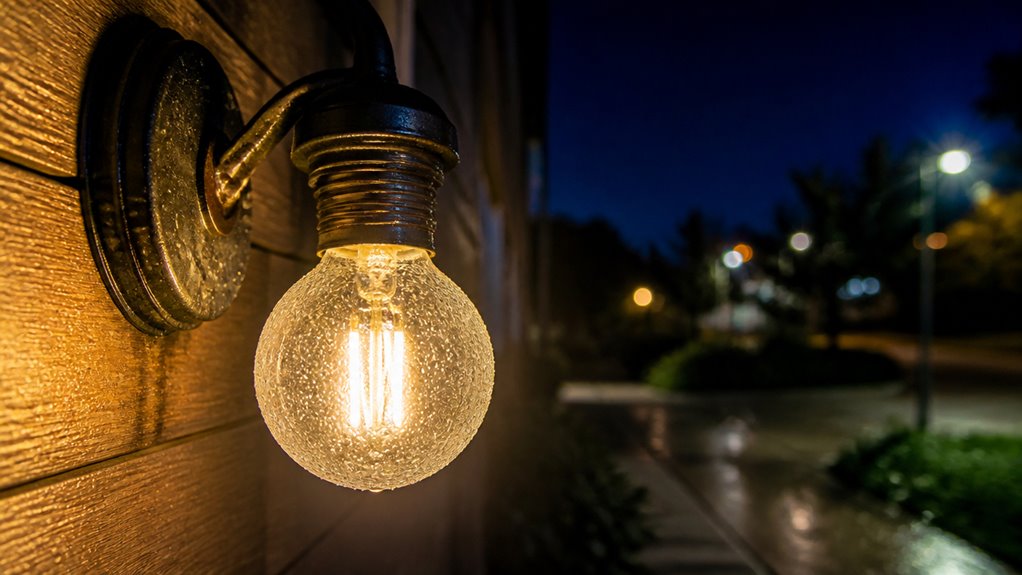

A dusk to dawn light bulb contains a built-in photocell sensor that detects ambient light levels to automatically turn the bulb on at dusk and off at dawn, eliminating manual control.
It requires unobstructed exposure to natural light for accurate operation and avoids false activation from artificial sources.
Typically, LED dusk to dawn bulbs offer enhanced efficiency, longer lifespan, and lower energy use compared to incandescent.
Understanding sensor placement and bulb features will help you optimize performance and savings.
Key Takeaways
- A dusk to dawn light bulb has a built-in photocell sensor that automatically turns the light on at dusk and off at dawn.
- The sensor detects ambient natural light levels, activating the bulb when light falls below a preset threshold.
- No manual switching, apps, or hubs are needed for automatic operation, providing convenient, hands-free lighting.
- LED dusk to dawn bulbs offer energy efficiency, longer lifespan, and lower heat output compared to incandescent bulbs.
- Proper sensor placement with unobstructed exposure to natural light is essential for reliable dusk to dawn function.
What Is a Dusk to Dawn Light Bulb and How Does It Work?
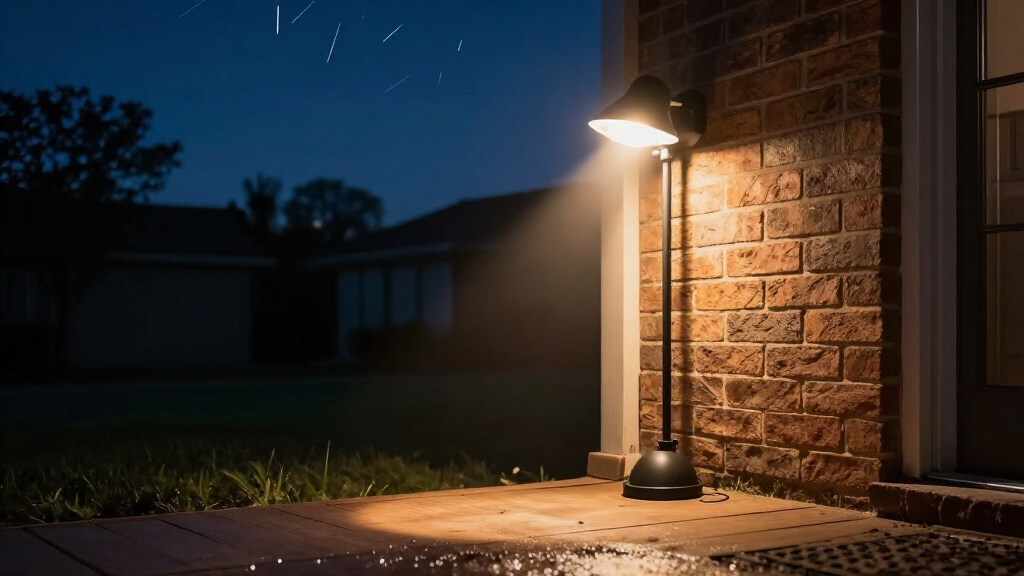
Although you mightn’t notice them, dusk to dawn light bulbs play a crucial role in automated outdoor lighting by using built-in sensors to detect ambient light levels.
Dusk to dawn bulbs automatically adjust lighting by sensing ambient light, ensuring seamless outdoor illumination.
These bulbs contain a photocell that measures surrounding light. When daylight diminishes below a threshold, the bulb activates automatically.
Conversely, when sunlight returns, the bulb powers off without manual intervention. This sensor-based mechanism requires exposure to ambient light, ensuring reliable operation without the need for apps, hubs, or scheduling.
You’ll find these bulbs mainly designed for outdoor fixtures like porches and garages, often in standard bases such as E26.
Their automatic switching enhances safety and convenience by providing consistent illumination only during low-light conditions. This optimizes energy usage and eliminates the need for manual control.
The photocell sensor uses a light-dependent resistor to detect changes in light intensity and control the bulb’s activation accordingly.
Why Choose LED Dusk to Dawn Bulbs Over Incandescent?
Choosing LED dusk to dawn bulbs over incandescent models markedly improves energy efficiency and operational lifespan.
LEDs convert a higher percentage of electrical energy into light, resulting in substantially lower wattage for comparable brightness—typically around 9 to 9.5 watts versus 60 watts for incandescent equivalents. This reduces electrical load and heat output, enhancing safety and fixture longevity.
Moreover, LED bulbs endure prolonged operational hours inherent in dusk to dawn use, lasting up to 25,000 hours or more compared to approximately 1,000 hours for incandescent. Their solid-state construction resists filament degradation and frequent cycling, maintaining consistent performance.
Additionally, LEDs generate minimal heat, reducing thermal stress on photocell sensors and ensuring reliable automatic switching. Overall, LEDs provide a technically superior, durable, and efficient solution tailored for continuous, sensor-driven outdoor lighting applications.
For optimal performance in smart home setups, LED dusk to dawn bulbs can integrate seamlessly with power and operation considerations to maintain consistent functionality.
Energy Savings and Security Benefits of Dusk to Dawn Bulbs
Switching to dusk to dawn bulbs can really help you save on energy costs. They’re super efficient, thanks to their LED technology, and the best part? They turn on and off automatically. This means you won’t waste energy by leaving lights on longer than needed.
Plus, these bulbs offer reliable lighting throughout the night. That added brightness can make a huge difference in keeping your home safe by deterring potential intruders. With better visibility around your entry points, you can feel more secure.
And since they’re sensor-driven, you won’t have to worry about remembering to turn the lights on or off. It’s all about making your home more energy-efficient and secure, without the hassle!
Using devices with tamper-resistant features can further enhance home security by preventing accidental disablement or tampering.
Reduced Energy Consumption
When dusk to dawn bulbs activate only during low light conditions, they substantially cut energy consumption compared to traditional outdoor lighting left on all night.
You save energy by powering lights strictly from dusk until dawn, avoiding unnecessary usage during daylight. Using LED technology further lowers wattage requirements, maintaining sufficient brightness with minimal power.
This efficiency translates into reduced electricity bills and environmental impact. Proper site selection and positioning ensure these bulbs perform optimally by maximizing exposure to natural light cycles.
| Feature | Traditional Bulbs | Dusk to Dawn LED Bulbs |
|---|---|---|
| Operating Hours | 12+ hours continuously | Automatically dusk to dawn |
| Power Consumption | 60 watts typical | ~9 watts LED equivalent |
| Energy Use per Night | ~720 watt-hours | ~108 watt-hours |
| Manual Operation Needed | Yes | No |
| Cost Efficiency | Lower initial cost | Lower long-term energy cost |
Enhanced Home Security
Although dusk to dawn bulbs primarily reduce energy consumption, they also markedly enhance home security by maintaining consistent nighttime illumination without requiring manual intervention.
By automatically activating after dusk, these bulbs deter potential intruders through continuous, reliable lighting that simulates occupancy.
Their built-in photocells guarantee activation only during genuine low-light conditions, preventing unnecessary operation and preserving sensor accuracy.
This consistent illumination improves visibility around entry points, reducing blind spots where unauthorized access could occur.
Additionally, since you don’t need to manually control them, you avoid periods of darkness caused by forgetfulness or absence.
The use of LED technology further supports extended operation without significant energy costs.
Key Features to Look for in Dusk to Dawn Bulbs
When choosing dusk to dawn bulbs, it’s really important to ensure the sensor is placed where it can get unobstructed ambient light. This way, it can accurately turn on and off when needed.
Next, take a moment to evaluate the brightness level you require. For most outdoor spaces, around 800 lumens usually does the trick.
And don’t forget about color temperature! You’ll want to pick one that complements your environment. Whether you prefer warm white or daylight tones, there’s a perfect option out there for you.
Additionally, placing outdoor lighting under eaves or sheltered areas can help protect sensors and bulbs from weather-related issues, ensuring consistent performance.
Sensor Placement Importance
Since the sensor’s ability to accurately detect ambient light directly impacts a dusk to dawn bulb’s performance, proper placement is essential for reliable operation.
You need to position the bulb so its sensor faces unobstructed natural light. If the sensor points toward artificial or reflected light sources, the bulb may switch on or off at incorrect times.
Avoid placing the bulb within shadows or near fixtures that emit stray light, as this can confuse the photocell. Optimal placement guarantees the sensor measures true ambient light levels, preventing false triggers.
Additionally, installing the bulb in a location shielded from rain or debris helps maintain sensor sensitivity over time.
For enhanced reliability, consider bulbs with AI motion tracking capabilities to minimize false activations caused by environmental factors.
Brightness And Color Temperature
Proper sensor placement guarantees your dusk to dawn bulb activates at the right times. Selecting the correct brightness and color temperature directly affects how well the light serves your space.
Brightness, measured in lumens, determines visibility and safety. Color temperature influences ambiance and clarity. To optimize performance, consider these key factors:
- Brightness Level: Choose around 800–850 lumens for effective outdoor illumination without excessive glare or energy waste.
- Color Temperature: Select 2700K for warm, inviting light or 5000K for crisp, daylight-like clarity enhancing security and detail recognition.
- Application Suitability: Match brightness and color temperature to the fixture’s purpose. Use soft white for porches and daylight for driveways and security zones.
These parameters ensure your dusk to dawn bulb provides balanced, functional lighting tailored to your outdoor environment. Additionally, ensuring proper heat management in your lighting setup helps prevent premature degradation and maintains safe operation during prolonged use.
Best Outdoor Places to Install a Dusk to Dawn Bulb
Outdoor fixtures around your property gain significant functionality when equipped with dusk to dawn bulbs.
You’ll want to prioritize areas where continuous nighttime lighting enhances safety and security.
Porches and entryways are ideal, providing consistent illumination for visitors and deterring intruders.
Garage exteriors benefit similarly, improving visibility for vehicle access.
Patios and back doors also serve well, offering hands-free lighting for outdoor activities and added convenience.
Additionally, driveway and walkway fixtures can use these bulbs to guarantee safe navigation after dark.
When selecting installation points, make certain the sensor receives unobstructed ambient light to function correctly.
Avoid locations where surrounding artificial lighting could trigger false activation.
For optimal performance, position outdoor lights to avoid direct artificial light that can cause lens washout in security cameras.
How to Match Bulb Base and Brightness to Your Fixture?
Identify the correct bulb base before purchasing a dusk to dawn light bulb to ensure compatibility with your fixture. Most outdoor fixtures use standard bases like E26 or E12. Choosing the wrong base prevents proper installation and electrical contact.
Next, assess the brightness level to suit your lighting needs. Typical dusk to dawn bulbs emit around 800 to 850 lumens, equivalent to a 60-watt incandescent bulb. This provides a balance of energy efficiency and illumination.
Consider these factors to match your bulb perfectly:
- Base Type: Confirm your fixture’s socket type (e.g., E26 or E12) to ensure physical and electrical fit.
- Brightness: Select lumens appropriate for fixture location and purpose. Higher lumens are better for security, while moderate levels suit ambiance.
- Wattage Equivalence: Verify energy consumption aligns with your fixture’s maximum rating to avoid overload.
Also, be aware that environmental factors like extreme cold and high humidity can affect the performance and lifespan of your lighting components.
How the Sensor in a Dusk to Dawn Bulb Detects Light and Darkness?
Selecting the right bulb base and brightness guarantees your dusk to dawn bulb fits your fixture and lighting needs. Understanding how the sensor operates explains how the bulb responds automatically to changing light conditions.
Choosing the correct bulb base and brightness ensures your dusk to dawn bulb suits your fixture and lighting requirements.
The sensor, typically a photocell, measures ambient light intensity by converting light into an electrical signal. When illumination falls below a predetermined threshold, indicating dusk, the sensor triggers the bulb to turn on.
Conversely, when light levels rise above this threshold at dawn, the bulb switches off. Some sensors distinguish natural sunlight from artificial sources by analyzing light spectrum or intensity patterns, preventing false activations.
This autonomous detection requires no external inputs, ensuring reliable operation based solely on environmental light variations. This provides seamless, hands-free lighting control.
For optimal performance, it is important to ensure the bulb is placed where it can accurately detect ambient light without obstruction from environmental interference.
How to Position Sensors to Prevent False Activation?
Positioning the sensor correctly is essential to prevent dusk to dawn bulbs from turning on or off unexpectedly. To optimize sensor accuracy, you need to take into account ambient light exposure and potential interference carefully.
- Avoid direct exposure to artificial light sources such as street lamps or porch lights. This can cause false daytime readings and prevent activation at dusk.
- Orient the sensor towards open sky or shaded areas free from reflective surfaces that could distort light detection.
- Install the bulb in fixtures shielded from motion or heat sources like HVAC vents or heaters. This may help prevent sensor errors.
Frequently Asked Questions
Can Dusk to Dawn Bulbs Be Used Indoors Near Windows?
Yes, you can use dusk to dawn bulbs indoors near windows, but their effectiveness depends on sensor exposure to natural light.
If the sensor faces ambient daylight through the window, it will activate correctly at dusk and deactivate at dawn.
However, artificial indoor lighting or blocked sensor placement can cause malfunction or constant illumination.
For reliable operation, make sure the sensor isn’t obstructed and receives consistent natural light signals.
How Long Do Dusk to Dawn Bulbs Typically Last?
Dusk to dawn bulbs typically last around 25,000 to 30,000 hours, markedly outlasting incandescent bulbs.
This lifespan means you can expect about 3 to 4 years of continuous nightly use before replacement.
Their LED technology guarantees consistent performance, energy efficiency, and durability.
To maximize lifespan, install them in proper fixtures with adequate ventilation and avoid exposure to excessive heat or moisture, which can degrade the bulb’s sensor and components prematurely.
Are Dusk to Dawn Bulbs Compatible With Dimmer Switches?
Dusk to dawn bulbs generally aren’t compatible with dimmer switches because their built-in photocell sensors control on/off operation automatically.
Using a dimmer can interfere with the sensor’s ability to detect ambient light accurately, causing erratic behavior or sensor failure.
If you want dimming functionality, look for models explicitly designed as dimmable and dusk to dawn, but these are rare.
Always verify manufacturer specifications before combining these features.
Do These Bulbs Work in Extreme Cold or Hot Weather?
You’ll find many dusk to dawn bulbs operate reliably between -4°F and 122°F (-20°C to 50°C), covering typical extreme weather conditions.
However, performance may degrade outside this range, causing sensor malfunction or reduced lifespan.
For cold climates, choose bulbs rated specifically for low temperatures to prevent delayed activation.
In hot environments, ensure proper ventilation to avoid overheating.
Always check manufacturer specs to confirm suitability for your region’s temperature extremes.
Can I Use Dusk to Dawn Bulbs With Smart Home Systems?
You generally can’t directly integrate traditional dusk to dawn bulbs with smart home systems because they operate via built-in light sensors and don’t connect to Wi-Fi or hubs.
However, you can use smart bulbs or smart switches designed for automation if you want remote control or scheduling features.
Alternatively, combining a dusk to dawn bulb with a smart switch can provide sensor-based operation plus smart control.
This may affect sensor accuracy and requires careful setup.
What Is a Dusk to Dawn Light Bulb? Final Tips
Choosing a dusk to dawn light bulb is like installing a vigilant sentinel at your doorstep. Silent, efficient, and ever-watchful, these bulbs guarantee your outdoor space is illuminated only when needed.
By harnessing precise sensor technology, they cut energy waste and enhance security. As you select and position your bulb, remember: the right match of sensor sensitivity and brightness transforms darkness into a shield, not a challenge.
This gives you control over nightfall’s uncertainty with technical confidence.