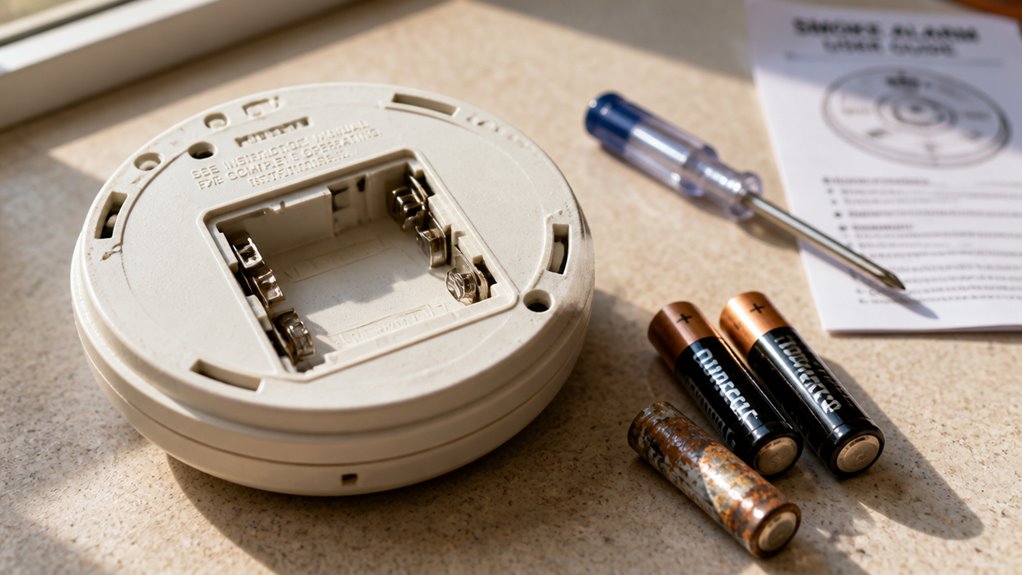

You can expect standard 9V alkaline smoke detector batteries to last about 6–12 months, while AA alkaline batteries typically last 12–18 months.
If you use sealed lithium 9V batteries, they can reliably power your detector for up to 10 years without replacement.
Hardwired alarms often have sealed lithium backups lasting a decade too.
Environmental factors, usage, and device features affect battery life.
Keep your detector maintained and discover ways to maximize its battery longevity and reliability.
Key Takeaways
- 9V alkaline batteries in smoke detectors typically last 6 to 12 months before needing replacement.
- AA alkaline batteries usually provide 12 to 18 months of reliable smoke detector power.
- Non-replaceable sealed lithium batteries can last up to 10 years, matching the detector’s lifespan.
- Hardwired alarms use sealed 10-year lithium batteries for backup, reducing frequent replacements.
- Replace replaceable batteries annually or as recommended, and replace the entire detector every 10 years.
How Long Do 9V and Other Smoke Detector Batteries Last?
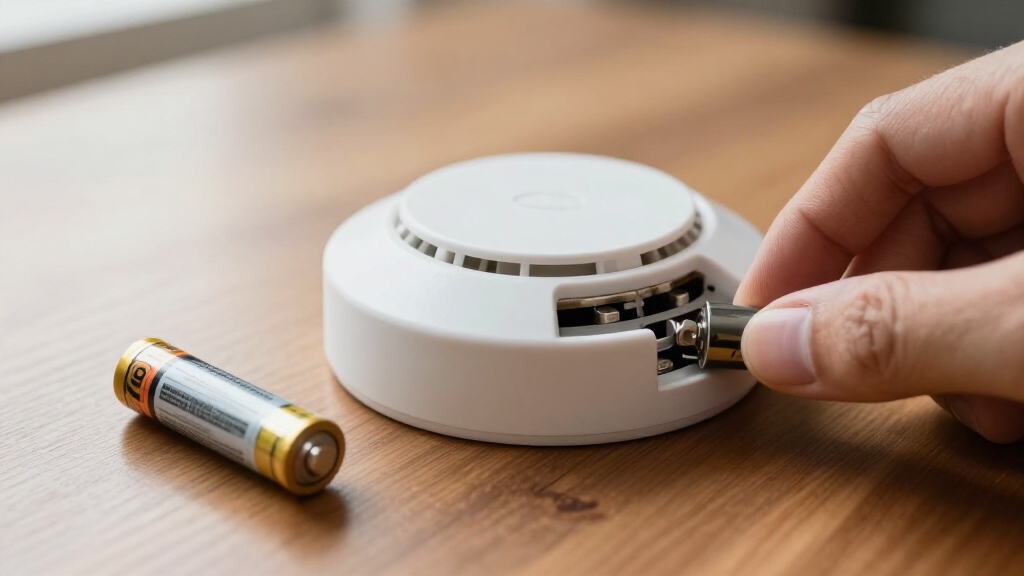
Typically, 9V alkaline batteries in smoke detectors last between 6 and 12 months. This requires you to replace them at least once a year to maintain continuous protection.
Battery life varies depending on the detector’s power draw and design. For example, AA alkaline batteries often last longer, around 12 to 18 months.
However, lower-cost replaceable batteries usually need more frequent changes compared to sealed lithium units. Environmental factors and usage patterns can also shorten battery life.
To ensure your smoke detector functions reliably, replace 9V alkaline batteries annually at a minimum. Adhere to manufacturer guidelines for best results.
Regular battery replacement is essential because it directly impacts the alarm’s ability to alert you in an emergency. This helps maintain continuous, dependable safety for your home.
Consider using non-rechargeable lithium 9V batteries for longer-lasting power, as they can last up to 10 years in compatible smoke detectors.
How Lithium Batteries Last 10 Years in Smoke Alarms?
You know, lithium batteries in smoke alarms can last up to 10 years! That’s pretty impressive, right? It’s all thanks to some advanced chemistry that helps them maintain a steady power output over time.
Plus, these batteries are sealed within the unit. This design really helps prevent corrosion and energy loss, which is crucial for long-term reliability.
And here’s the best part: their design is tailored to meet the low power demands of smoke detectors. So, you won’t have to worry about frequent replacements. It makes maintaining safety in your home so much easier!
Many hardwired smoke alarms use sealed 10-year lithium batteries to offer maintenance-free backup power, reducing frequent replacements.
Benefits Of Lithium Batteries
Lithium batteries consistently outperform standard alkaline cells by providing reliable power for up to 10 years in smoke alarms.
When you choose lithium, you reduce the hassle of frequent battery changes and ensure consistent device performance.
Here’s why lithium batteries stand out:
- Longevity: They last up to 10 years, matching the smoke alarm’s typical lifespan.
- Reliability: Lithium maintains steady voltage, preventing false low-battery alerts.
- Maintenance: You only need to test your alarm monthly without worrying about replacing batteries annually.
This extended life cuts down on waste and maintenance costs while improving your safety by minimizing the risk of a dead battery during an emergency. Their long-lasting performance is achieved through low standby current that keeps power consumption minimal during idle operation.
Design For Long Life
Beyond their impressive lifespan, lithium batteries achieve their 10-year durability through smart design choices tailored to smoke alarm demands.
These batteries use high-quality lithium chemistry that maintains steady voltage output over long periods, ensuring reliable alarm performance.
Their sealed construction prevents corrosion and leakage, which often degrade standard batteries.
The battery’s low self-discharge rate minimizes energy loss when the alarm is idle, extending operational life.
Smoke alarms designed for these batteries optimize power consumption with efficient circuitry and low standby current draw.
You’ll also find these batteries integrated into nonreplaceable units, eliminating risks of incorrect replacements and ensuring continuous protection throughout the device’s entire lifespan.
This combination of chemistry, build, and system design allows lithium batteries to power smoke alarms reliably for up to a decade.
Their sealed design also prevents tampering and environmental damage, further enhancing reliability over the full operational life.
When to Replace Your Smoke Detector, Not Just Batteries?
Although replacing batteries keeps your smoke detector powered, it won’t extend the device’s overall lifespan. You should plan to replace the entire smoke detector every 10 years from its manufacture date.
Over time, sensors degrade and internal components wear out, risking failure even with fresh batteries.
Here’s when you need to replace the whole unit, not just the batteries:
- Your smoke alarm is 10 years old or more.
- The alarm chirps persistently despite battery replacement.
- The device fails routine monthly tests or shows inconsistent alerts.
Ignoring these signs compromises your safety. Remember, battery changes are essential but don’t reset the device’s operational limits.
Stay proactive by replacing your smoke detector as recommended to ensure reliable fire detection. Always check the manufacture date on your detector to determine its true age and replacement timeline.
How Often to Change Replaceable Smoke Detector Batteries?
You should really think about replacing your smoke detector’s batteries at least once a year. This way, you can ensure you’re getting consistent protection. And hey, keep an ear out for those low-battery chirps! When you hear that, it’s definitely time for an immediate swap.
Oh, and don’t forget to test your alarm every month. It’s a simple way to check that everything is working properly between battery changes. A little regular maintenance goes a long way in keeping you safe!
Remember to replace the entire smoke alarm unit every 10 years to guarantee peak safety and reliable detection.
Replacement Frequency Recommendations
Regularly replacing your smoke detector’s batteries is essential for ensuring your home’s safety.
For replaceable batteries, most experts recommend changing them at least once a year to maintain reliable operation. Some manufacturers and fire safety authorities suggest replacing batteries every six months for added security.
You should also test your smoke detectors monthly to verify proper function.
To keep your smoke alarms working optimally, follow these key replacement frequency recommendations:
- Replace standard 9V alkaline batteries every 6 to 12 months.
- Change AA alkaline batteries approximately every 12 to 18 months.
- Use daylight saving time changes as a reminder to swap batteries.
Adhering to these guidelines helps prevent battery failure and keeps your home protected. Sealed 10‑year lithium batteries offer a maintenance‑free option that eliminates routine replacements until the detector’s end of life, improving long‑term reliability and convenience with ultra‑low standby current.
Signs Battery Needs Replacement
Frequently, the most obvious sign that a smoke detector battery needs replacement is a persistent chirping sound. This alerts you to low power. When you hear this, don’t ignore it; it means the battery voltage has dropped below the threshold for reliable operation.
Besides chirping, you might notice the alarm failing to respond promptly during monthly tests or that the indicator lights are dim. Environmental factors like temperature extremes can hasten battery depletion, so consider this if your detector is in an unconditioned space.
If you have a replaceable 9V or AA battery, plan to replace it at least once a year to avoid sudden failures. Remember, a chirping alarm near the device’s 10-year lifespan could indicate the entire unit needs replacement, not just the battery. Kidde recommends replacing the 9V battery every six months or immediately after a low-battery chirp to ensure reliable operation.
Common Causes of Faster Smoke Detector Battery Drain
Although smoke detectors are designed for reliable, long-lasting operation, several factors can cause their batteries to drain faster than expected. Understanding these causes helps you maintain your alarm’s effectiveness and avoid unexpected failures.
Here are three common reasons for accelerated battery drain:
- Higher power consumption: Older or combination smoke and CO alarms generally draw more power, reducing battery life.
- Frequent wireless activity: Alarms with wireless connectivity or interlinked features consume more energy during pairing or alerts.
- Low-quality or incompatible batteries: Using lower-cost or incorrect battery types can result in shorter runtimes and unreliable performance.
Additionally, many hardwired smoke detectors rely on backup batteries to maintain operation during power outages, which can also influence overall battery usage.
Environmental Factors That Reduce Battery Life
Beyond power consumption and wireless activity, environmental conditions play a significant role in how long your smoke detector’s batteries last.
Extreme temperatures, especially cold, reduce battery efficiency by slowing chemical reactions inside cells, leading to shorter runtimes.
High humidity can also harm battery contacts, causing corrosion and intermittent power.
Conversely, excessive heat accelerates battery drain, shortening overall life.
If your detector is installed in a garage, attic, or near heating vents, expect more frequent battery replacements.
Dust and dirt buildup can interfere with sensor operation and may prompt more frequent alarms, increasing power use.
To maximize battery life, install detectors in moderate, stable environments, away from moisture and temperature extremes.
Regular cleaning and ensuring proper placement will help your smoke alarm’s battery perform reliably over time.
Additionally, cooler nighttime temperatures increase battery internal resistance, causing voltage drops that can reduce effective battery life and trigger low-battery warnings during the night battery internal resistance.
Do Hardwired Smoke Alarms Need Backup Battery Changes?
If your smoke alarm system is hardwired into your home’s electrical wiring, you still need to maintain its backup batteries regularly. These backup batteries guarantee that your alarms function during power outages, providing critical protection.
Don’t overlook them because a dead backup battery can render the alarm ineffective when you need it most. Here’s what you should remember:
- Replace backup batteries at least once a year, or sooner if the alarm chirps.
- Use the battery type specified by the manufacturer to guarantee compatibility and reliability.
- Test alarms monthly to verify that both hardwired power and backup batteries work correctly.
Regular backup battery maintenance extends your hardwired alarm’s reliability, guaranteeing it remains fully operational in emergencies.
Why Monthly Smoke Alarm Testing Is Essential?
Regularly testing your smoke alarms every month guarantees they function properly when you need them most. This simple step confirms the battery and sensor are working, reducing risks of failure in emergencies.
Even long-life lithium batteries require monthly checks to make certain reliability throughout their lifespan.
| Test Step | Purpose | Frequency |
|---|---|---|
| Press test button | Check alarm sound & circuitry | Monthly |
| Visual inspection | Confirm power indicator light | Monthly |
| Battery check | Detect low battery chirps | Monthly |
| Sensor dust clean | Prevent false alarms or failure | Every 6 months |
| Replace expired unit | Maintain effective detection | Every 10 years |
Monthly testing is a critical safety habit that ensures your smoke alarm performs at its best when it matters most.
How to Maximize Your Smoke Detector Battery Life?
Monthly testing helps you spot issues early, but maintaining your smoke detector’s battery life also plays a key role in guaranteeing continuous protection.
To maximize battery life, follow these essential steps:
- Replace batteries annually or every six months if recommended by the manufacturer, regardless of low-battery warnings.
- Use high-quality batteries; lithium 10-year sealed batteries provide the longest service with minimal maintenance.
- Keep detectors clean and free from dust or debris, which can cause increased power consumption and shorten battery life.
Additionally, avoid extreme temperatures and minimize wireless activity on smart alarms to reduce battery drain.
Frequently Asked Questions
Can I Use Rechargeable Batteries in Smoke Detectors?
You generally shouldn’t use rechargeable batteries in smoke detectors because their voltage and discharge characteristics differ from standard alkaline or lithium batteries.
Rechargeables may provide less consistent power, causing false alarms or failure to alert. Some detectors aren’t designed for rechargeables and mightn’t function properly.
To guarantee reliable operation and safety, stick to manufacturer-recommended battery types, typically alkaline or sealed lithium, and replace batteries as advised.
How Do I Safely Dispose of Old Smoke Detector Batteries?
You should never toss old smoke detector batteries in regular trash. Instead, take them to a local hazardous waste disposal facility or a battery recycling center.
Many retailers offer battery drop-off programs, so check nearby stores. Handle batteries carefully to avoid leaks or damage.
If your smoke alarm uses sealed lithium batteries, follow manufacturer instructions for disposal. Proper disposal prevents environmental harm and guarantees safety.
Are There Smoke Detectors That Run on Solar Power?
Yes, you can find smoke detectors that use solar power, but they’re not very common.
Most models rely on batteries or hardwired power with battery backup.
Solar-powered smoke alarms typically combine a small solar panel with a rechargeable battery to guarantee continuous operation, even in low light.
If you want a solar option, check product specs carefully. These units may require specific placement to receive enough sunlight for reliable performance.
How Does Humidity Affect Smoke Detector Performance?
Humidity can negatively impact your smoke detector’s performance by causing false alarms or sensor malfunctions.
Excess moisture may interfere with the sensor’s ability to detect smoke particles accurately, leading to unreliable alerts.
High humidity can also corrode internal components, reducing the unit’s lifespan.
To maintain peak function, place your detector away from bathrooms or kitchens where humidity spikes.
Regularly test and clean it to prevent moisture buildup.
What Is the Best Brand of Batteries for Smoke Alarms?
You’ll want to choose reliable brands like Energizer, Duracell, or Panasonic for your smoke alarm batteries.
These brands offer long-lasting alkaline and lithium options that maintain steady power output.
For 10-year sealed lithium smoke alarms, Panasonic’s CR123A or Energizer’s Ultimate Lithium batteries are excellent.
Always pick batteries designed for smoke detectors to guarantee safety and longevity.
Replace them annually if they’re replaceable to keep your alarm functioning at peak performance.
Final Answer: How Long Does a Smoke Detector Battery Last?
You can’t afford to overlook your smoke detector’s battery life. It’s literally the guardian of your home.
Whether you use 9V or lithium batteries, knowing when and how to replace them guarantees your safety isn’t compromised.
Test your alarms monthly and watch out for environmental factors that sap battery power.
By staying vigilant, you’ll maximize your smoke detector’s lifespan and keep your home protected without the stress.
Don’t wait. Act now!