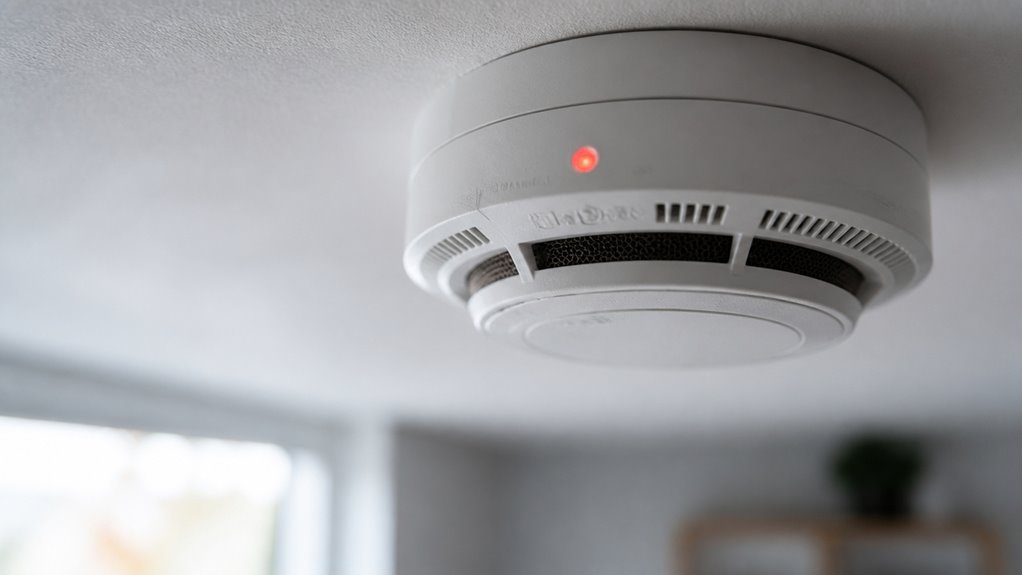

You might not realize it, but your smoke detector technically functions as a specialized embedded computer.
It uses a microcontroller to process sensor data, execute decision-making algorithms, and trigger alarms autonomously.
Unlike general-purpose computers, it’s designed solely for rapid smoke detection and alerting, with limited data processing and no broad versatility.
Its embedded firmware manages sensor inputs, power, and false alarm filtering.
Exploring its design reveals why it’s more than just a simple alarm device.
Key Takeaways
- A smoke detector contains a microcontroller and embedded software but lacks the broad data processing of a traditional computer.
- It functions primarily to sense smoke and trigger alarms, not to process or store diverse information.
- The device’s embedded system continuously samples sensor input, makes threshold decisions, and activates alarms autonomously.
- Smart smoke detectors with connectivity and advanced sensors increase computational complexity but remain specialized embedded systems.
- Despite internal complexity, smoke detectors are not general-purpose computers due to their narrow, safety-focused function.
Is a Smoke Detector a Computer? Key Differences Explained
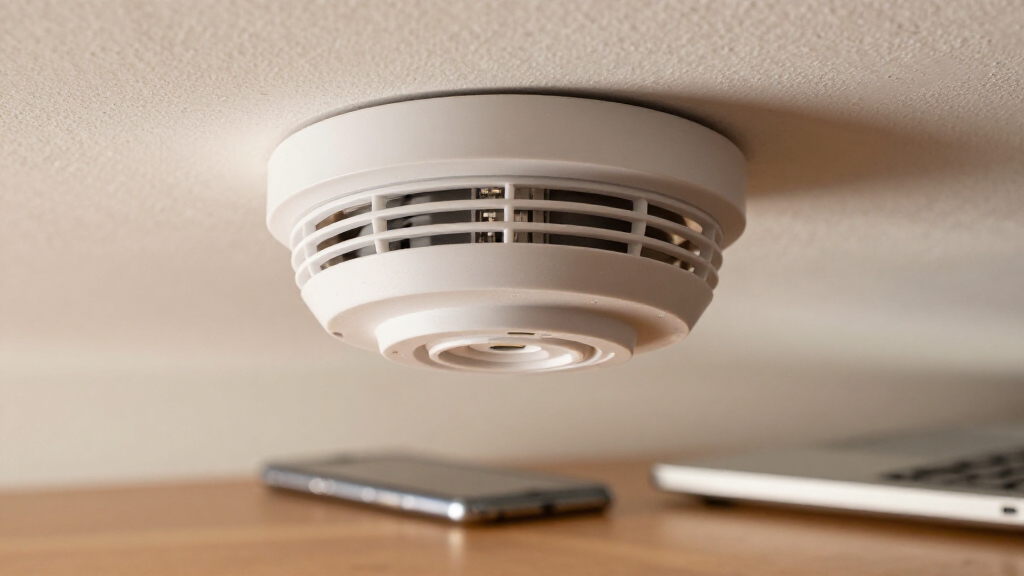
Although a smoke detector may contain microcontrollers and embedded software, it doesn’t qualify as a computer in the traditional sense. Its design focuses solely on sensing smoke and triggering alarms rather than performing broad data processing tasks.
When you examine the fundamental definition of a computer as a programmable device that accepts input, processes data, stores information, and produces diverse outputs, you’ll see smoke detectors lack this versatility.
Instead, they operate as specialized embedded systems dedicated to a singular function: safety notification. Even if microcontrollers handle sensor data and alarm activation, these components execute narrowly defined algorithms without general-purpose computing capabilities.
Consequently, while internally complex, a smoke detector’s architecture and functional scope differ markedly from conventional computers designed for multi-faceted information processing and storage. Additionally, smoke detectors require a consistent power source, such as hardwired systems or batteries, to maintain continuous operation.
How Smoke Detectors Work: Core Functions and Components?
To understand how smoke detectors work, you need to break down their core functions and key components. At their essence, smoke detectors sense airborne particles indicative of combustion and then trigger an alert to warn occupants.
The main elements include:
Sensor module: Detects smoke via ionization or photoelectric methods, converting physical phenomena into electrical signals.
Alarm system: Produces audible or visual warnings upon detection, ensuring immediate occupant awareness.
Power supply: Provides continuous energy, often via batteries or mains, ensuring persistent operation.
These components interact seamlessly to fulfill the detector’s safety role. The device focuses on rapid, reliable smoke detection rather than data processing or storage.
While some units integrate control electronics, the fundamental operation remains a specialized sensing and alert system designed for safety notification rather than general computation.
Regular maintenance and monitoring of system performance help ensure smoke detectors remain effective over time.
Inside Smoke Detectors: Microcontrollers and Embedded Systems
Explore the microcontroller at the heart of many smoke detectors. It governs sensor input processing, decision-making algorithms, and alarm activation.
This embedded processor continuously samples sensor signals, whether photoelectric or ionization. It applies calibration routines and threshold comparisons to detect smoke presence accurately.
It executes deterministic firmware that filters noise, validates sensor data, and triggers alarms when conditions meet programmed criteria. The microcontroller also manages power consumption and self-test functions, ensuring reliability.
You’ll find this embedded system integrates sensor interfaces, control logic, and alarm drivers on a single chip. This optimization enhances both size and cost.
While it processes data and controls outputs, its computing scope is narrowly tailored to fire detection tasks. This distinguishes it from general-purpose computers, even though it utilizes similar foundational components.
Many detectors also rely on a battery backup system to maintain operation during power outages, ensuring continuous smoke detection and alarm readiness.
When Does a Smoke Detector Qualify as a Computer?
Determining when a smoke detector qualifies as a computer hinges on its internal capabilities and intended function. You need to evaluate whether the device performs programmable data processing rather than just sensing and alarming.
Key factors include:
Presence of a microcontroller executing embedded software to process sensor inputs.
Ability to store data, make threshold decisions, and trigger alarms autonomously.
Integration of control logic beyond simple sensor-to-alarm activation.
If the smoke detector contains a microcontroller that processes inputs algorithmically, it aligns with the technical definition of a computer as a programmable electronic device.
However, its purpose remains narrowly focused on safety notification, making it an embedded system rather than a general-purpose computer.
Consequently, only smoke detectors with embedded processing and decision-making logic qualify as computers in a technical sense.
This embedded processing often integrates inputs from various sensor types such as photoelectric or ionization sensors to optimize fire detection accuracy.
How Smart Smoke Detectors Add Computing Power and Connectivity?
Building on the presence of embedded processing in some smoke detectors, smart smoke detectors extend computing capabilities by integrating network connectivity and enhanced sensor arrays.
You’ll find Wi-Fi modules enabling remote alerts, firmware updates, and interoperability with other smart home devices.
These units incorporate additional sensors—carbon monoxide, temperature, humidity—to improve environmental monitoring and hazard detection accuracy.
The embedded microcontroller runs sophisticated algorithms, filtering false alarms and optimizing response thresholds.
Connectivity demands added communication protocols and security layers, increasing computational complexity beyond basic detection.
While they don’t perform general-purpose computing, smart smoke detectors function as specialized embedded systems with expanded data processing and network functions.
This elevates their role from simple alarms to integral components of an interconnected safety ecosystem, demonstrating a clear evolution in embedded computing within fire detection technology.
Similar to smart smoke detectors, many modern home security devices also integrate motion detection capabilities that use sophisticated sensors and algorithms to reduce false alarms while enhancing security monitoring.
Frequently Asked Questions
How Often Should I Replace My Smoke Detector?
You should replace your smoke detector every 10 years to guarantee reliable operation.
Over time, sensor sensitivity degrades and internal components like the microcontroller or battery connections may fail.
Even if it still sounds functional, aging electronics reduce detection accuracy.
For peak safety, check the manufacture date on the unit and plan replacement accordingly.
Regular testing and battery changes complement timely replacement, maintaining effective smoke detection.
Can Smoke Detectors Detect Carbon Monoxide?
You can’t judge a book by its cover. Standard smoke detectors don’t detect carbon monoxide because they use sensors specialized for smoke particles.
However, many modern devices combine smoke and carbon monoxide sensors, employing electrochemical cells to identify CO gas accurately.
These dual-function detectors analyze sensor inputs with embedded algorithms, triggering alarms when hazardous CO levels appear.
What Is the Lifespan of a Smoke Detector Battery?
You can expect a typical smoke detector battery to last between 6 months and 1 year, depending on the battery type and usage.
Lithium batteries often last up to 10 years in sealed units, while alkaline batteries require more frequent replacement.
Regular testing and timely battery changes are essential to maintain reliable operation.
Some models feature low-battery alerts to prompt you when it’s time to replace the battery.
Are Smoke Detectors Required by Law in Homes?
Yes, smoke detectors are required by law in most homes across many jurisdictions.
Local building codes and fire safety regulations mandate their installation to guarantee occupant safety.
Requirements often specify detector placement in bedrooms, hallways, and common areas, with standards on interconnectivity and power sources.
You should check your local laws for precise rules, as they vary by region.
Neglecting this legal obligation can risk safety and compliance.
How Do I Test if My Smoke Detector Is Working?
To test if your smoke detector is working, press and hold the test button until you hear a loud alarm. This simulates the detector’s sensing function and verifies the internal electronics, including the microcontroller and alarm circuitry.
If the sound is weak or absent, replace the batteries or the unit. Additionally, you can use smoke test spray for a more accurate sensor check. Make sure to ensure proper ventilation afterward to avoid false alarms.
See Smoke Detectors as Smart Safety Devices
You might think a smoke detector is just a simple safety device, but it’s more complex than a 1950s radio.
While basic models rely on sensors and microcontrollers to detect smoke, only those with embedded systems capable of processing data and connecting to networks truly qualify as computers.
Understanding this distinction helps you appreciate how smart smoke detectors enhance fire safety through real-time analysis and connectivity.
This transformation turns a basic alarm into a sophisticated computing device.