
You’ll know your sump pump is clogged if it runs continuously without removing water, the pit fills faster than the pump can handle, or water drains very slowly.
Listen closely for grinding, rattling, or gurgling sounds signaling debris caught in the impeller or pipes. Check for stuck float switches and obstructed check valves causing water backup.
Inspect discharge pipes for sediment or blockages. Understanding these signs helps you maintain efficient pump operation and avoid costly damage.
Keep exploring to learn how to prevent problems.
Key Takeaways
- Standing water in the basement or slow sump pit drainage signals possible pump clogging or blockage.
- Continuous pump operation without effectively discharging water often indicates partial clogging or float switch issues.
- Grinding, rattling, or gurgling noises during pump operation suggest debris trapped in the impeller or discharge pipe.
- Inspect discharge pipe for sediment, leaves, small stones, or crushed sections causing flow restriction or blockages.
- Check for float switch sticking or jammed check valve, which can cause pump cycling or failure to start despite rising water.
Signs Your Sump Pump Is Clogged
When your sump pump is clogged, you’ll notice it struggles to move water efficiently. This often leads to standing water in the basement or slow drainage from the sump pit.
You may observe water rising in the pit while the pump runs without discharging properly. If the sump pit fills faster than the pump can handle or water fails to drain despite pump operation, these are clear signs of blockage.
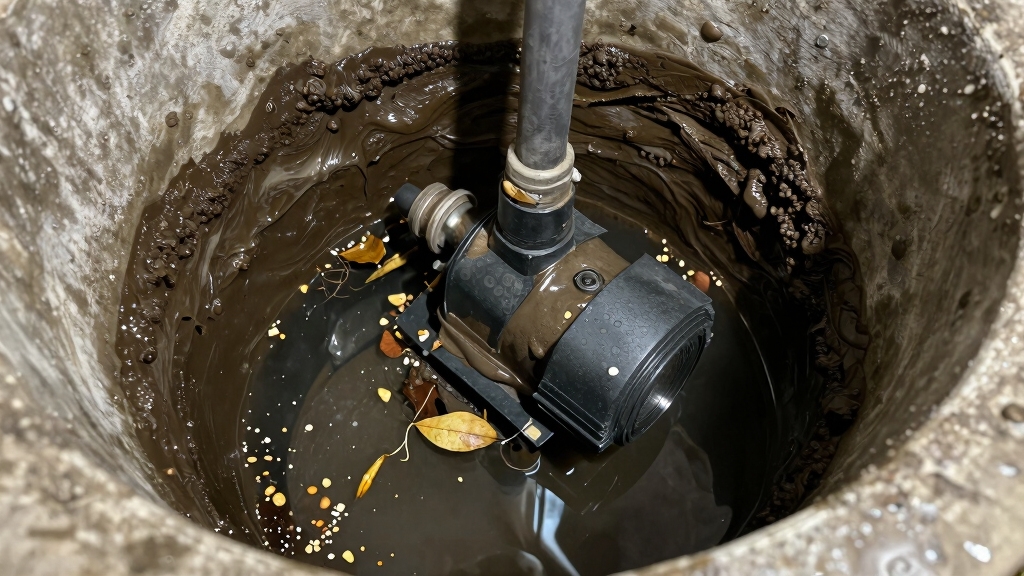
Additionally, partial or total flooding can occur due to inadequate water removal. Inspect the pit for visible debris such as dirt, sand, or sediment buildup, which can obstruct the intake screen or discharge pipe.
Promptly addressing these symptoms helps prevent damage and maintains your pump’s peak function. Regular maintenance including cleaning the sump pit and inlet screen every 3–4 months can prevent debris accumulation that leads to clogging and impaired pump operation.
What Noises Reveal About Sump Pump Clogs?
You’ll often hear unusual noises when your sump pump is clogged, signaling internal issues that need immediate attention.
Grinding or rattling sounds typically indicate debris trapped in the impeller or discharge pipe, restricting water flow.
Grinding or rattling noises usually signal debris caught in the impeller or discharge pipe, blocking water flow.
Gurgling noises suggest partial blockages causing air pockets or turbulent water movement inside the system.
If you notice humming or buzzing, the motor may be straining against an obstruction, increasing wear risk.
These abnormal sounds mean the pump is working harder than normal, which can lead to premature motor failure if ignored.
To diagnose, listen closely during operation and inspect for debris buildup.
Addressing these noises quickly by cleaning or repairing components prevents further damage and guarantees your sump pump maintains efficient water removal.
Additionally, regular routine maintenance is essential to prevent clogs and extend the lifespan of your sump pump system.
Why Water Might Not Drain Properly?
Water may fail to drain properly from your sump pit due to blockages or mechanical issues that disrupt normal flow.
Check if the check valve is functioning correctly; a stuck or obstructed valve can cause water backup.
Inspect the float switch to make certain it moves freely.
Debris or sediment can jam it, preventing pump activation or shutoff.
Also, examine the discharge pipe for frozen sections or clogs that hinder water expulsion.
If water rises in the pit while the pump runs but isn’t discharged effectively, suspect partial blockage or component malfunction.
Continuous pump operation without proper drainage often indicates these issues.
Regularly test these components and clear any obstructions to restore efficient drainage and prevent water accumulation or basement flooding.
Ensure that any electrical wiring involved uses properly rated low voltage wire to enhance safety and reduce shock risk during maintenance.
How Debris and Sediment Clog Your Sump Pump?
You know, it’s pretty common to find things like dirt, sand, leaves, and even small stones clogging up your sump pump’s intake screen or discharge pipe. It’s amazing how easily these little bits of debris can sneak in there!
When sediment builds up, it really restricts water flow. This forces the pump to work a lot harder, which isn’t great for its efficiency or lifespan.
Additionally, heavy rains can saturate surrounding soil, potentially causing backups and flooding that exacerbate sump pump clogs and failures, highlighting the importance of monitoring weather impacts.
Common Debris Types
When dealing with sump pump clogs, understanding the common debris types that interfere with your system is essential.
Debris obstructs the intake screen and discharge pipe, reducing water flow and causing the pump to overwork or fail.
You need to identify and remove these materials promptly to maintain efficient operation.
Common debris types include:
Dirt and Sand: Fine particles easily enter the pit, settling and accumulating to block the pump’s intake.
Leaves and Organic Matter: These materials can clump together, clogging the pump and float switch.
Small Stones and Gravel: Hard debris can damage the impeller or cause mechanical jams.
Regular inspection and cleaning prevent these debris types from compromising your sump pump’s performance. Managing water volume is also crucial because hydraulic overload can cause system failures by saturating soil and impairing proper drainage.
Sediment Buildup Effects
Frequently overlooked, sediment buildup plays a critical role in clogging your sump pump by gradually restricting water flow and impairing mechanical components.
As sediment accumulates, it blocks the intake screen and impeller, reducing efficiency and increasing wear. You’ll notice slower water discharge and possible pump overheating.
Regular inspection and maintenance are essential to prevent damage, similar to how system integrity is monitored in gas line testing.
| Sediment Type | Impact on Pump | Recommended Action |
|---|---|---|
| Sand | Abrades impeller | Flush pit regularly |
| Silt | Clogs screen | Use fine mesh screens |
| Leaves | Block intake | Remove visible debris |
| Small stones | Damage parts | Inspect and clean frequently |
| Mud | Reduces flow | Pump out sediment buildup |
Monitoring sediment buildup helps maintain peak pump function and prevents costly repairs.
Preventing Intake Blockages
Sediment buildup not only reduces flow but also sets the stage for intake blockages that can severely impair your sump pump’s operation. To prevent debris and sediment from clogging your pump, you need to maintain a clean sump pit and inspect components regularly.
Start by removing visible dirt, leaves, and sediment that accumulate over time. Install a fine mesh screen over the intake to block small particles without restricting water flow. Additionally, make certain proper grading around your foundation to minimize sediment entering the pit.
Regularly clean the sump pit and intake screen to prevent buildup. Use a mesh filter to block debris while allowing water passage. Maintain landscape grading to reduce sediment intrusion.
Taking these steps will help preserve peak pump function and extend its service life. Proper maintenance and preparation are essential, similar to how prepping air filters ensures effective recycling and longevity.
Why Does My Sump Pump Keep Cycling On and Off?
If your sump pump keeps cycling on and off, it can be pretty frustrating. Usually, this happens because of clogs or issues with the float switch. When these things go awry, it disrupts how the pump operates.
This rapid cycling isn’t just annoying; it can really wear out the motor over time. Every time it starts up again, it adds to the strain, which can shorten its lifespan. So, it’s a good idea to figure out what’s causing the problem and fix it as soon as you can.
That way, you can keep your pump running smoothly and avoid any premature failures down the line. Regular maintenance and inspection can help identify issues early and prevent cycling problems.
Causes Of Frequent Cycling
You may notice your sump pump cycling on and off more often than usual, which usually signals an underlying issue affecting its operation.
Frequent cycling often results from mechanical or environmental factors that disrupt normal function, forcing the pump to start and stop repeatedly.
Common causes include:
Float switch malfunction: Debris or sediment can jam the float, causing erratic on/off signals.
Check valve failure: A faulty or obstructed check valve allows water to flow back, triggering frequent restarts.
Rapid sump pit refill: Excessive water entering the pit too quickly for the pump to handle leads to continuous cycling.
Address these causes promptly to maintain efficient pump performance and prevent potential damage. Regular routine maintenance and inspection can help identify issues early and keep the pump functioning properly.
Impact On Pump Lifespan
Although frequent cycling may seem like a minor inconvenience, it markedly reduces your sump pump’s lifespan by causing excessive wear on mechanical components.
When the pump turns on and off repeatedly, the motor experiences rapid thermal stress, accelerating insulation breakdown and increasing the risk of burnout.
The float switch and impeller also endure repeated mechanical strain, which may lead to premature failure.
To preserve your pump’s durability, address the root cause of frequent cycling, such as clogs, debris buildup, or malfunctioning check valves.
Regular maintenance, including cleaning the sump pit and inspecting components, helps guarantee smooth operation and minimizes unnecessary cycling.
Scheduling regular inspections can help identify issues early and extend the operational life of your sump pump.
Inspecting Your Sump Pump’s Discharge Pipe
When inspecting your sump pump’s discharge pipe, start by examining the entire length for visible blockages or damage that could restrict water flow.
Check for dents, cracks, or crushed sections that might impede discharge. Also, inspect the pipe’s outlet to make sure it’s not buried or obstructed by debris. If water drains slowly or not at all, clogs in the pipe are likely.
Focus on these key areas during your inspection:
Look inside the pipe with a flashlight for sediment, leaves, or small stones causing partial or full blockage.
Examine pipe joints and connections for leaks or misalignments that reduce flow efficiency.
Verify that the pipe is pitched correctly to allow gravity-assisted drainage without pooling or backflow.
Thorough inspection helps maintain peak discharge and prevents clog-related failures.
How Float Switches and Check Valves Cause Clogs?
Float switches and check valves often cause clogs by trapping debris that interferes with their operation.
When debris accumulates around the float switch, it can get stuck in the raised or lowered position. This prevents the pump from activating or shutting off properly.
Similarly, check valves, designed to prevent backflow, can become obstructed by sediment, leaves, or small stones.
This blockage restricts water flow and forces the pump to work harder or run continuously.
To identify these issues, observe if the pump runs non-stop or fails to start despite rising water levels.
Also, check for mechanical resistance or unusual noises near the float or valve.
Addressing float switch and check valve clogs promptly avoids pump failure and inefficient drainage.
Preventing Sump Pump Clogs With Maintenance
Regularly maintaining your sump pump is the most effective way to prevent clogs and guarantee reliable operation.
You need to inspect the sump pit and pump components frequently to remove debris that could obstruct water flow.
Proper upkeep ensures the float switch and check valve function smoothly, avoiding common clog-related malfunctions.
Focus on these key maintenance tasks:
- Clean the sump pit and intake screen to eliminate sediment, leaves, and dirt buildup.
- Test the float switch and check valve for free movement and proper sealing.
- Flush the discharge pipe periodically to clear sediment and prevent partial blockages.
When to Call a Pro for Sump Pump Clogs?
If you notice persistent issues such as continuous pump cycling, unusual noises, or inadequate water discharge despite your maintenance efforts, it’s time to call a professional.
These symptoms often indicate internal clogs, mechanical failures, or damaged components that require specialized tools and expertise.
Don’t attempt complex repairs if you observe water backing up in your basement, the sump pit filling faster than the pump can handle, or the float switch sticking repeatedly.
A pro can accurately diagnose problems like blocked discharge pipes, malfunctioning check valves, or sediment-packed impellers.
Prompt professional intervention prevents motor burnout, flooding, and extensive property damage.
Contact a licensed technician for thorough inspection, cleaning, and repair to restore your sump pump’s efficient operation and protect your home from water damage.
Frequently Asked Questions
Can a Clogged Sump Pump Cause High Electricity Bills?
Yes, a clogged sump pump can cause high electricity bills.
When debris or sediment blocks the pump or discharge pipe, your pump works harder and runs longer to move water.
This continuous or frequent cycling consumes more power, increasing energy costs.
To prevent this, regularly inspect and clean your sump pit, discharge pipe, and check valves to ensure efficient operation and avoid unnecessary electricity expenses.
How Often Should I Replace My Sump Pump?
Think of your sump pump like a car tire. It won’t last forever. You should replace your sump pump every 7 to 10 years to guarantee reliability.
However, inspect it annually for signs like unusual noises, constant running, or poor water discharge. If you notice mechanical issues or debris buildup affecting performance, consider replacing the pump sooner to avoid failure and costly water damage.
Regular maintenance extends its lifespan.
Are Battery Backups Effective During Sump Pump Clogs?
Battery backups can keep your sump pump running during power outages but won’t fix clogs.
If debris blocks the intake or discharge pipe, the pump keeps running without properly moving water, even with a charged battery.
You’ll still face flooding risks. To guarantee effectiveness, regularly inspect and clear debris from your sump pit, discharge lines, and float switch.
Battery backups support power issues but don’t resolve mechanical blockages.
Can Tree Roots Cause Sump Pump Clogging?
You might think tree roots can’t reach your sump pump, but they absolutely can cause clogging.
Roots seek moisture and can infiltrate discharge pipes or the intake screen, blocking water flow.
This leads to inadequate water discharge and frequent cycling as the pump struggles.
To prevent this, inspect pipes regularly for root intrusion.
Consider root barriers or replacing vulnerable piping with root-resistant materials to maintain efficient sump pump operation.
Does Sump Pump Clogging Affect Home Insurance Coverage?
Yes, sump pump clogging can affect your home insurance coverage if it results in water damage.
Most policies require you to maintain your sump pump properly to prevent flooding. If clogging causes damage, insurers may deny claims, citing neglect or lack of maintenance.
You should regularly inspect and clear debris to avoid clogs, ensuring your pump functions correctly. Document maintenance to support your coverage in case of a claim.
Keep the Water Out: Your Sump Pump Survival Guide
Now that you know how to spot a clogged sump pump, don’t wait like it’s the dial-up era; act promptly. Regularly inspect your discharge pipe, float switch, and check valve to prevent debris buildup.
Listen closely for unusual noises and watch for irregular cycling. With proper maintenance, you’ll keep your sump pump running smoothly and avoid costly water damage.
If issues persist, call a pro before your basement turns into a moat.