
You rely on fire alarms daily, but their invention evolved over centuries.
Ancient civilizations used water brigades and night watchmen for fire prevention.
In 1890, Francis Robbins Upton revolutionized fire safety by patenting the first automatic electric fire alarm.
This device detected heat and triggered alerts without manual input.
This breakthrough laid the groundwork for modern systems.
If you explore further, you’ll discover how telegraphs, smoke detectors, wireless tech, and smart integration transformed fire alarm technology.
Key Takeaways
- Francis Robbins Upton patented the first automatic electric fire alarm in 1890, enabling automatic detection and alarm activation.
- Early manual fire alarm systems included telegraph-based fire alarm boxes, pioneered by Dr. William F. Channing and Moses G. Farmer in Boston, 1852.
- Walter Jaeger developed the first smoke detector in the late 1930s, initially intended as a poison gas sensor.
- George Andrew Darby patented a heat-detecting thermostat alarm in 1902, advancing automatic fire detection technology.
- Duane D. Pearsall and Stanley Bennett Peterson created affordable, battery-powered smoke detectors in the 1960s, popularizing home fire alarms.
Early Fire Alarm Concepts From Ancient Civilizations

Fire safety has ancient roots, with early civilizations laying the groundwork for modern fire alarm systems.
Fire safety’s origins trace back to ancient times, shaping the foundation of today’s fire alarm systems.
You’ll find that the Greeks and Romans prioritized fire prevention by establishing water-based extinguishing standards.
In those days, night watchmen and bell towers acted as your primary fire detection tools, alerting communities when flames broke out.
You’d also encounter bucket brigades in ancient Rome, an organized response where citizens passed water hand-to-hand to fight fires.
Around the 18th century, George Hockley improved alert methods by inventing a wire-and-bell network that warned townspeople of danger.
Additionally, Ctesibius of Alexandria’s hand pump, created circa 200 BCE, gave you a mechanical means to deliver water to fires.
These early concepts created a foundation that modern fire alarm technology continues to build upon.
Understanding the fire triangle—the essential elements needed for fire to burn—has been crucial in developing effective fire prevention and alarm systems.
How Telegraphs Revolutionized Early Fire Alarms?
Telegraphs transformed how communities detected and responded to emergencies by enabling instant communication over distances.
Before telegraphs, fire alerts relied on slow, manual methods like bells or runners.
With telegraph technology, you could send electric signals from fire alarm boxes directly to a central station, alerting firefighters immediately.
Invented in the mid-19th century, this system revolutionized fire response by drastically reducing notification times and coordinating efforts citywide.
You’d activate a telegraphic key in a fire alarm box, instantly transmitting a coded message to dispatchers.
This innovation laid the foundation for modern municipal fire alarm systems by combining electrical engineering with public safety.
Boston’s First Municipal Fire Alarm System and Impact
Although many cities struggled with slow emergency responses, Boston changed the game on April 28, 1852, by launching the first municipal fire alarm system.
You can appreciate how Dr. William F. Channing and Moses G. Farmer integrated telegraph technology to connect forty fire alarm boxes across the city, each equipped with telegraphic keys and levers.
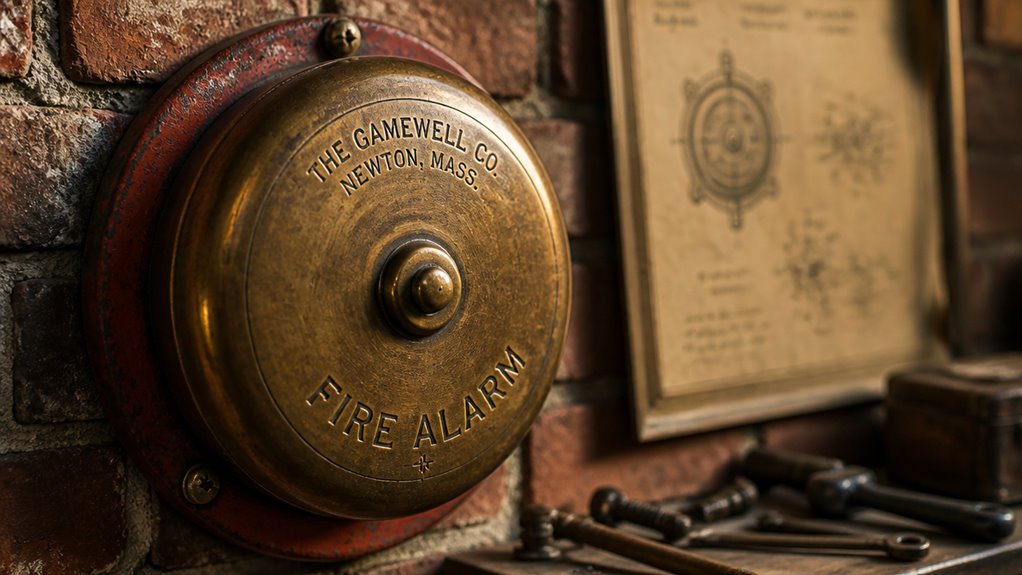
When you pull a box’s lever, it sends an electric signal to a central station, instantly alerting fire crews and triggering sixteen alarm bells.
This innovation dramatically reduced response times and enhanced public safety, setting a precedent for urban fire protection worldwide.
By adopting this system, Boston demonstrated how technology could transform emergency communication, ultimately saving lives and property by enabling rapid, coordinated fire responses.
You’re witnessing the birth of modern fire alarm infrastructure.
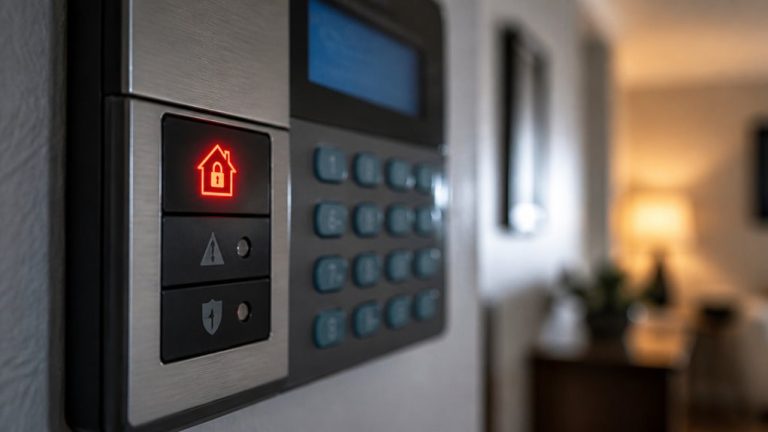
Modern fire alarm systems now include centralized display units that provide real-time status and alerts to improve emergency response coordination.
Francis Robbins Upton and the First Electric Fire Alarm
Did you know that Francis Robbins Upton changed the game when it comes to fire safety? Back in 1890, he patented the very first automatic electric fire alarm. Pretty impressive, right? One of his key innovations was the portable handpull station, which made it way easier for people to alert others about a fire.
But that’s not all! Upton also developed an early heat sensor that used metals with different expansion rates. This clever design helped detect fires before they’d a chance to spread. Talk about being ahead of his time!
His invention laid the groundwork for modern systems that use automatic devices like heat detectors to continuously monitor environmental changes and trigger alarms.
Upton’s 1890 Patent
In 1890, Francis Robbins Upton revolutionized fire safety by patenting the first automatic electric fire alarm. This breakthrough laid the foundation for modern fire detection technology.
You can trace key innovations directly to Upton’s work, which combined electrical engineering with practical fire alert needs.
Here’s what you should know about Upton’s 1890 patent:
- It introduced an automatic mechanism that activated upon detecting fire conditions without manual intervention.
- Upton’s design integrated electrical circuits to trigger alarms faster than previous manual systems.
- The patent included the first concept of a heat sensor using metals with different thermal expansion rates.
- His invention paved the way for future advancements like portable handpull stations and more sophisticated detectors.
Modern fire alarms incorporate core safety functions such as smoke and carbon monoxide detection to ensure continuous protection.
Portable Handpull Station
Francis Robbins Upton’s invention of the portable handpull station marked a pivotal advancement in fire alarm technology. It enabled individuals to manually trigger an electric alarm quickly and reliably.
When you pull the lever on this device, it completes an electric circuit that immediately signals a fire emergency. This innovation transformed fire safety by shifting alarm activation from passive observation to active human intervention.
You no longer need complex telegraph systems or wait for an automated trigger. The handpull station puts control directly in your hands, improving response times drastically.
Upton’s design laid the groundwork for modern manual fire alarm stations found in buildings worldwide. It ensures that anyone spotting danger can alert occupants and emergency services without delay.
This practical and straightforward mechanism remains essential in fire safety systems today. It is often integrated into zone-based detection systems, which simplify wiring and provide reliable alerts in small properties.
Early Heat Sensor
Building on his earlier work with the portable handpull station, Francis Robbins Upton pioneered the first electric fire alarm equipped with an early heat sensor.
You can appreciate how Upton ingeniously used metals with different thermal expansion rates to detect heat changes. This triggered an electric signal to alert occupants.
This innovation marked a significant leap from manual alarms to automatic detection.
Consider these key aspects of Upton’s early heat sensor:
- It relied on thermal expansion differences between metals to activate the alarm circuit.
- It eliminated the need for human intervention, improving response time.
- It laid the groundwork for future automatic fire detection technologies.
- It was patented in 1890, underscoring its originality and practical value.
Upton’s work fundamentally transformed fire safety by introducing automation. This early development set the stage for the rigorous compliance with NFPA 72 standards that modern fire alarm systems must meet.
Automatic Heat-Based Fire Alarms: Key Innovations
Automatic heat-based fire alarms revolutionized fire safety by eliminating the need for human intervention in detecting fires.
You benefit from early innovations like Francis Robbins Upton’s 1890 heat sensor, which used metals expanding at different rates to trigger alarms automatically.
George Andrew Darby advanced this concept in 1902 by patenting a system that employed thermostats to detect heat and complete electrical circuits.
This instantly activated alarms without manual input.
These key innovations laid the foundation for reliable, automatic fire detection, enabling faster responses and reducing reliance on human vigilance.
By sensing temperature changes directly, these alarms enhanced safety in both residential and commercial settings.
This marked a pivotal shift toward automated fire protection long before smoke detection technologies emerged.
Regular inspection frequencies and maintenance routines ensure these systems continue to operate effectively and reliably over time.
The Birth of Smoke Detectors and Optical Fire Alarms
While early fire alarms relied primarily on heat detection, the invention of smoke detectors introduced a critical advancement in fire safety by identifying fires at an earlier stage.
Early smoke detectors revolutionized fire safety by enabling quicker fire identification than heat-based alarms.
You benefit from smoke detection technology that senses smoke particles before heat intensifies. This allows faster evacuation and response.
In the late 1930s, Walter Jaeger pioneered the first smoke detector, initially intended as a poison gas sensor.
Later, Donald Steele and Robert Emmark developed the photoelectric (optical) smoke detector in 1972, further enhancing early fire detection.
Key milestones include:
- Walter Jaeger’s initial smoke detection concept (1930s).
- Ionized smoke detectors’ development in 1951.
- Introduction of compact heat detectors in 1955.
- Photoelectric smoke detectors patented in 1972.
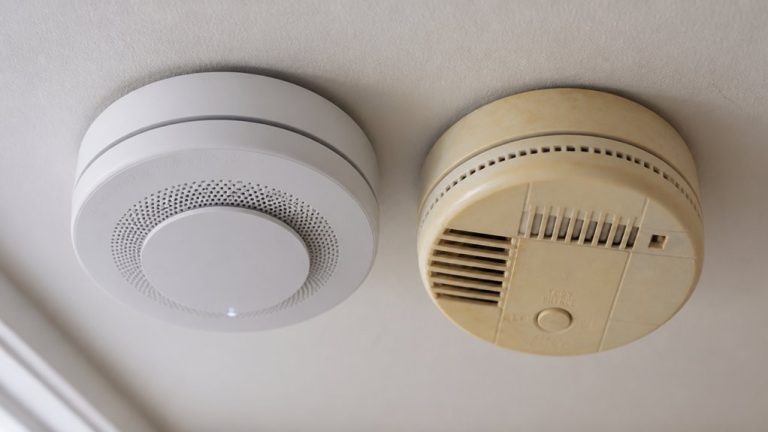
These innovations shaped modern fire safety protocols you rely on today. Regular testing and maintenance of smoke detectors, including checking for interconnected alarms, is essential to ensure reliable protection.
Mass Production of Affordable Home Smoke Alarms
You can thank Duane D. Pearsall and Stanley Bennett Peterson for changing the game when it comes to smoke detectors. Their battery-powered innovation made these life-saving devices affordable and accessible for everyone.
By 1975, they were being mass-produced, which meant that homeowners could easily protect their families without breaking the bank.
This breakthrough really transformed fire safety. Now, reliable alarms were just within reach, putting safety directly into our hands.
It’s amazing to think how something so simple can make such a huge difference! Regular testing and maintenance are essential to keep these devices functioning effectively and ensure ongoing protection.
Battery-Powered Innovation
Battery-powered smoke alarms revolutionized home fire safety by making detection accessible and affordable for everyday households.
Before their introduction, fire alarms were often expensive and required professional installation with wired connections.
With battery-powered designs, you can easily install smoke alarms anywhere without needing electrical wiring.
This innovation brought several key advantages:
- Portability, allowing placement in multiple locations within a home.
- Lower costs, enabling mass production and widespread adoption.
- Simplified maintenance, as batteries can be replaced without professional assistance.
- Increased safety, ensuring continuous operation during power outages.
Thanks to these advancements, you now benefit from reliable, affordable fire detection that markedly reduces fire-related casualties and property damage in residential settings.
However, to maintain continuous operation and effectiveness, it is important to regularly check and replace batteries, similar to best practices recommended for battery-dependent security devices.
Affordable Smoke Detector Production
Manufacturers revolutionized home fire safety by scaling up the production of smoke detectors, making them affordable and widely accessible.
Thanks to innovators like Duane D. Pearsall and Stanley Bennett Peterson, who developed low-cost, battery-powered smoke detectors in 1965, mass production became viable.
By 1975, these detectors were available to most households, dramatically increasing fire safety awareness and prevention.
You benefit from this large-scale manufacturing, as it lowers costs without compromising reliability.
Today’s smoke detectors must meet strict safety standards, ensuring consistent performance.
This mass production not only expanded availability but also facilitated technological improvements and integration with monitoring systems.
As a result, you can protect your home effectively with devices that are both economical and capable, thanks to decades of focused development and industrial scaling.
Combining Smoke and Carbon Monoxide Fire Detectors
Several advancements in fire safety technology converged in the 1990s to create combination smoke and carbon monoxide detectors.
You benefit from a single device that enhances safety by detecting two critical hazards simultaneously. This innovation reduced installation complexity and improved home protection.
Key features include:
- Integration of optical smoke detection with electrochemical CO sensors for accurate, timely alerts.
- Compact design enabling easy installation in residences and businesses.
- Dual alarm systems that trigger distinct alerts for smoke and carbon monoxide presence.
- Compliance with evolving safety standards ensuring reliable performance and widespread adoption.
Wireless Technology in Fire Alarm Systems
Wireless technology has revolutionized fire alarm systems, allowing them to operate without the constraints of physical wiring.
You no longer need complex installations or extensive cabling to protect a building. Instead, wireless fire alarms communicate through radio signals, enabling rapid installation and flexible placement.
This technology enhances system reliability by minimizing wiring faults, which were common in older setups. You benefit from quicker maintenance and the ability to expand or modify your system with ease.
During emergencies, wireless alarms instantly transmit alerts to central monitoring stations and occupants, ensuring swift responses.
Originating from early radio-triggered systems developed during World War II, today’s wireless alarms incorporate advanced encryption and frequency hopping to prevent interference.
Smart Fire Alarms and Digital Advances
Countless advances in digital technology have transformed fire alarms from simple alert devices into intelligent safety systems that actively protect your home or business.
Digital innovation has elevated fire alarms into smart systems that safeguard homes and businesses proactively.
Today’s smart fire alarms connect wirelessly to your smartphone, allowing real-time alerts no matter where you are. They integrate multiple sensors to detect smoke, heat, and even carbon monoxide with improved accuracy.
Additionally, digital advances enable faster emergency response by transmitting alarm signals directly to fire departments.
Key features include:
- Wireless connectivity for instant notifications and system control.
- Multi-sensor technology combining smoke, heat, and gas detection.
- Integration with home automation systems for coordinated safety responses.
- Cloud-based monitoring and data analysis to enhance system reliability and predict potential hazards.
With these innovations, you gain all-encompassing protection tailored to modern living.
Frequently Asked Questions
How Do Fire Alarms Detect Different Types of Fires?
Fire alarms detect different fires by using specific sensors.
Smoke detectors sense particles from smoldering fires, while heat detectors respond to temperature rises from flaming fires.
Photoelectric sensors detect smoke visually, and ionization sensors pick up tiny combustion particles.
Some alarms combine smoke and carbon monoxide sensors for broader detection.
When these sensors identify fire evidence, they trigger alarms, giving you early warnings to protect your home or workplace effectively.
What Maintenance Is Required for Modern Fire Alarm Systems?
You might think modern fire alarms are maintenance-free, but they still need regular care.
You should test alarms monthly and clean detectors to remove dust.
Replace batteries annually or as needed, and make sure sensors remain unobstructed.
Additionally, schedule professional inspections every year to verify system integrity and update software.
This routine keeps your system reliable, ensuring it responds quickly in emergencies and minimizes false alarms.
Are Fire Alarms Effective in All Building Types?
Fire alarms are effective in most building types, but their efficiency depends on proper installation, maintenance, and system design tailored to the building’s use and layout.
You’ll need specific detectors for areas like kitchens or industrial sites. Larger buildings might require more complex, interconnected systems.
Always make certain your fire alarm system complies with local codes and standards to maximize protection and timely alerts across residential, commercial, and industrial environments.
How Do Fire Alarm Systems Integrate With Emergency Services Today?
You’ll find modern fire alarm systems directly connect to emergency services through digital communicators and cellular transmitters.
When an alarm triggers, it instantly sends a signal to the nearest fire department or monitoring center, enabling rapid dispatch of firefighters.
This seamless integration uses smart detectors and mass notification technologies, ensuring you get swift alerts and professional response.
This dramatically improves safety and minimizes damage in emergencies.
What Regulations Govern Fire Alarm Installation and Use?
Regulations rigorously regulate fire alarm installation and use to safeguard safety.
You’ll follow standards set by bodies like the National Fire Protection Association (NFPA), especially NFPA 72, which outlines system design, placement, and maintenance.
Local laws layer on additional legal limits, requiring licensed professionals for installation and routine inspections.
Final Answer: Who Invented Fire Alarms?
You can picture the evolution of fire alarms as a steady flame, sparked by ancient ingenuity and fanned by groundbreaking inventions from telegraphs to electric signals.
Each innovation, from Boston’s first system to today’s smart detectors, builds a safer world around you.
As technology advances, these alarms become your vigilant guardians, blending precision and intelligence.
Understanding their history helps you appreciate the silent protectors that keep your home and life secure, always ready to warn and save.