
Yes, you need HOA approval before installing security cameras, as these devices are typically classified as architectural modifications subject to strict review under your community’s governing documents.
Installing cameras without written permission risks fines, required removal, and potential legal issues.
You must submit a detailed application outlining locations, technical specs, and privacy measures to comply.
Considering HOA rules and state laws will safeguard your installation.
Explore further to understand all requirements and guarantee smooth approval.
Key Takeaways
- HOA approval is typically required for security cameras as they are considered architectural modifications or exterior changes.
- Homeowners must submit a detailed application with camera specs, placement plans, and privacy compliance measures.
- Cameras must be positioned to avoid capturing neighbors’ private areas and comply with privacy and state laws.
- Installation in common areas requires explicit board approval and is controlled exclusively by the HOA.
- Failure to obtain HOA approval can result in fines, removal orders, and legal consequences.
HOA Approval Requirements for Security Cameras
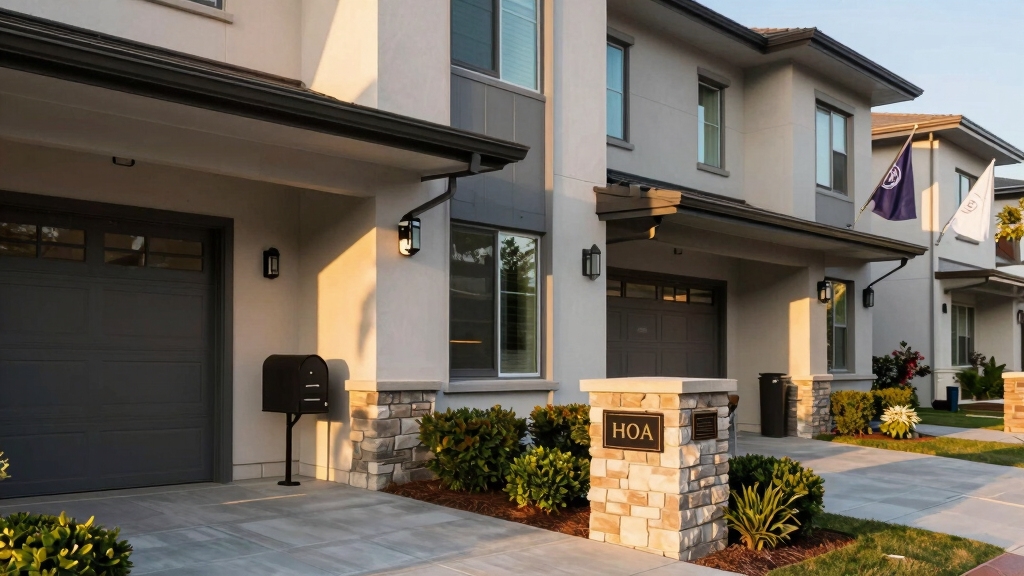
Although installing security cameras can enhance your home’s safety, you must obtain your HOA’s approval before proceeding.
Installing security cameras improves safety but always get your HOA’s approval first.
Most HOAs classify security cameras as architectural modifications or exterior changes, requiring you to seek permission in advance.
Review your community’s governing documents, especially the CC&Rs and architectural guidelines, to understand specific rules.
Failing to secure written approval can lead to legal consequences or mandatory removal of the equipment.
Keep in mind that HOA policies vary based on state laws and camera placement.
The association typically holds authority to restrict installation and monitoring of cameras on your property.
To avoid disputes, submit a detailed application outlining technical specifications and installation plans.
Ensure compliance with all HOA requirements before you install any surveillance devices.
It is also important to consider data privacy measures such as encryption and network segmentation to protect your footage and personal information.
Key HOA Rules Affecting Security Camera Installation
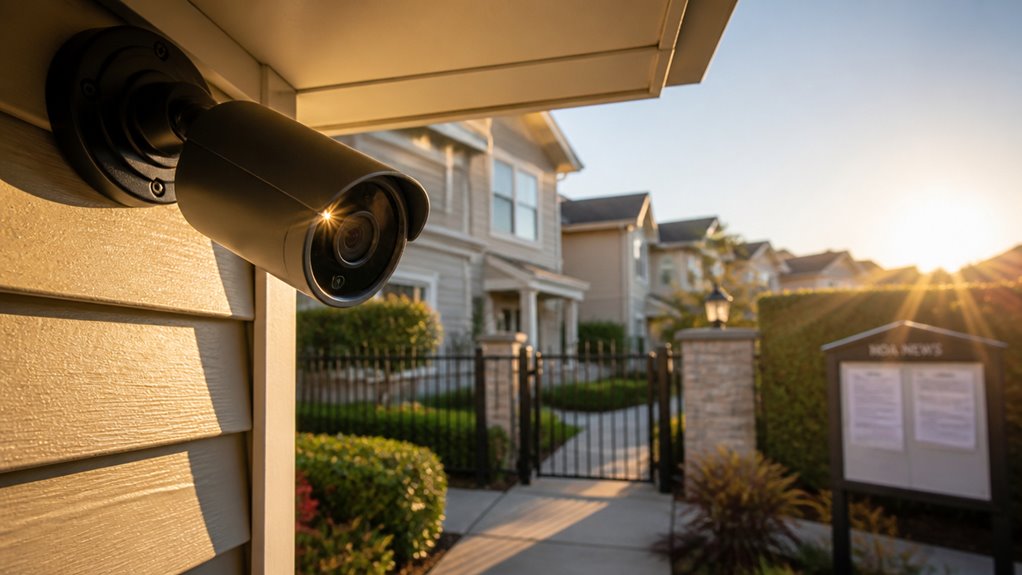
Several key rules govern how you can install security cameras within an HOA community. You must obtain written approval before installation, as cameras are typically classified as architectural modifications.
Review your community’s CC&Rs and architectural guidelines carefully; they dictate specific requirements and restrictions. You need to submit a detailed application including technical specifications, mounting methods, and privacy compliance measures.
Cameras must be positioned to avoid infringing on neighbors’ privacy, ensuring they only cover your property. Audio recording is generally prohibited.
Failure to comply can lead to enforcement actions, including removal. Always consult your HOA board or management to understand the exact process and conditions.
Adhering strictly to these rules protects your investment and maintains community harmony. Maintaining transparency about camera presence can reduce privacy concerns and strengthen trust within the community.
Restrictions on Security Cameras in Common Areas
Your HOA retains exclusive control over installing and operating security cameras in common areas such as clubhouses, pools, and entry points.
The HOA exclusively manages security camera installation and operation in shared community areas.
You can’t install surveillance equipment in these shared spaces without explicit board approval.
The HOA alone decides camera placement, operation, and maintenance on common property.
Such installations are often classified as capital improvements subject to owner voting.
Unauthorized installations risk removal and legal challenges.
When considering cameras in common areas, the HOA follows governing documents like CC&Rs and architectural guidelines to guarantee compliance with privacy and community standards.
As a homeowner, you must respect these restrictions and consult the board before proposing any security camera installation in shared spaces.
This preserves community order, privacy, and adherence to established policies.
It is also important to understand legal restrictions on security camera placement to avoid infringing on privacy rights and ensure compliance with applicable laws.
Preparing Your HOA Security Camera Installation Plan
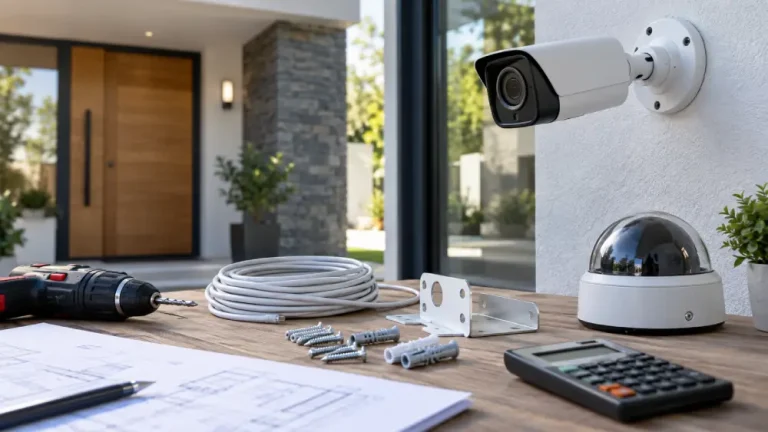
Before submitting your security camera request to the HOA, you must develop a thorough installation plan that clearly outlines technical details, camera locations, and mounting methods while adhering to privacy standards.
Specify the exact camera models, resolution, and angles to demonstrate compliance with your community’s architectural guidelines. Identify precise mounting points, ensuring they blend with the property’s exterior and don’t alter structural elements.
Include diagrams or photos illustrating placement to facilitate HOA review. Confirm that your plan respects all privacy considerations by limiting coverage strictly to your property and avoiding views into neighbors’ private spaces.
A well-prepared, detailed plan not only expedites the HOA approval process but also helps prevent future disputes or removal orders. Your diligence in preparation reflects your commitment to community standards and security.
Additionally, consider mounting cameras at an optimal height of 8–10 feet with a slight downward angle to maximize coverage and reduce vandalism risks, as recommended in mounting heights guidelines.
Privacy Rules to Follow for Your Security Cameras
When setting up your security cameras, it’s really important to think about where you’re positioning them. You want to make sure they’re not aimed at places where your neighbors expect privacy, like their windows or backyards. Nobody wants to feel like they’re being watched, right?
Also, keep in mind that many homeowners associations (HOAs) have strict rules against audio recording. This is all about keeping everyone’s confidentiality intact. So, by following these simple guidelines, you can be sure your security system stays within privacy standards and HOA regulations. It’s all about keeping the peace in the neighborhood! Additionally, it’s important to verify whether your state requires one-party or all-party consent before enabling audio recording on your cameras.
Camera Placement Guidelines
Make sure security cameras are positioned thoughtfully to respect neighbors’ privacy while maximizing protection. Avoid directing cameras toward neighbors’ windows, backyards, or patios, ensuring only your property is monitored.
Placement near shared property lines requires extra caution and sometimes neighbor approval. Cameras should focus on entry points, driveways, and common access areas without overreaching into private spaces.
Visible cameras placed at entry points have a significant deterrent effect on criminal activity, increasing neighborhood safety.
| Location | Permissible View | Notes |
|---|---|---|
| Front entrance | Your driveway, porch | Ideal for monitoring visitors |
| Backyard | Own yard only | Avoid neighbors’ private spaces |
| Sidewalk | Public walkways | Generally allowed |
| Neighbor boundary | Limited; avoid direct views | Seek approval if uncertain |
| Shared areas | Not permitted without HOA approval | HOA controls common spaces |
Audio Recording Restrictions
Although security cameras enhance neighborhood safety, capturing audio often raises significant privacy concerns that HOAs strictly regulate.
You must understand that most HOAs prohibit audio recording to protect residents’ privacy rights. Recording conversations without consent can violate state wiretapping laws and expose you to legal liability.
Before installing cameras with audio capabilities, consult your HOA’s governing documents and obtain explicit approval. Even if permitted, you must clearly inform anyone recorded that audio surveillance is active, complying with applicable laws.
Prioritize video-only monitoring unless your HOA and state regulations explicitly allow audio recording. Adhering to these restrictions preserves community trust and prevents enforcement actions, including removal of non-compliant equipment.
Always balance security benefits with respecting neighbors’ reasonable expectations of privacy. Additionally, it is important to obtain explicit consent from neighbors before sharing or accessing security camera feeds to maintain transparency and respect privacy boundaries.
How to Submit a Security Camera Application to Your HOA?
Since security camera installations often require HOA approval, submitting a thorough application is essential. This ensures compliance and avoids delays.
Start by reviewing your community’s CC&Rs and architectural guidelines. Prepare detailed plans specifying camera locations, technical specs, mounting methods, and privacy measures.
Include diagrams or photos to clarify installation impact. Submit the formal application with all documentation as required by your HOA.
When planning placement, consider optimizing angles and coverage to reduce blind spots and enhance system efficiency.
| Step | Requirement | Purpose |
|---|---|---|
| Review Documents | CC&Rs, guidelines | Understand HOA rules |
| Prepare Plans | Specs, locations, visuals | Assure clarity and privacy |
| Submit Application | Complete forms and docs | Obtain written approval |
Follow these steps carefully to ensure your application complies with all HOA requirements.
How HOAs Enforce Security Camera Rules?
It’s important to know that your HOA has the authority to enforce security camera rules. If you install a camera that doesn’t meet community standards or hasn’t been approved, they can ask you to take it down.
Understanding how these enforcement mechanisms work can really help you steer clear of any disputes. Plus, it keeps you in good standing within your community. So, always check the rules before putting up that camera! Engaging in communication and neighbor relations can also help resolve potential conflicts before they escalate.
Enforcement Authority and Actions
When HOAs detect security cameras installed without proper approval or in violation of community rules, they exercise their enforcement authority promptly to maintain compliance.
You can expect the HOA to issue formal notices requiring you to rectify the violation. This may include submitting a retroactive approval request or adjusting the camera’s placement.
The board reviews your response in light of governing documents, ensuring adherence to privacy and aesthetic standards. If you fail to comply, the HOA can escalate enforcement actions, potentially involving fines or legal proceedings.
Their authority is grounded in the community’s CC&Rs and architectural guidelines, empowering them to safeguard property values and resident privacy.
Staying proactive by securing approval prevents enforcement actions and fosters cooperative community relations.
In cases where disputes arise over camera placement or compliance, it is advisable to seek professional help to navigate complex enforcement and technical challenges.
Removal and Compliance Requirements
Although HOAs prioritize security and privacy, they enforce compliance by requiring homeowners to remove any security cameras installed without proper approval or those violating community rules.
You must understand the seriousness of adhering to HOA regulations to avoid forced removal or fines. Here’s how HOAs typically enforce these rules:
- Inspect properties to identify unapproved or non-compliant cameras.
- Issue written notices demanding removal or modification within a specified timeframe.
- Impose fines or penalties for continued non-compliance.
- Initiate legal action or lien placement if homeowners refuse to comply.
Consequences of Installing Security Cameras Without HOA Approval
Since security cameras often qualify as architectural modifications, installing them without HOA approval can lead to significant consequences.
You risk enforcement actions, including formal violation notices, fines, and demands to remove the cameras immediately.
The HOA board holds authority to enforce compliance, which can escalate to legal proceedings if ignored.
Additionally, unapproved cameras may violate privacy guidelines, potentially exposing you to neighbor disputes or legal claims.
Noncompliance can also affect your standing within the community, impacting resale value and relations with the HOA.
To avoid these repercussions, you must adhere strictly to your HOA’s approval process before installation.
Doing so guarantees your security measures align with community standards and legal requirements, protecting both your property and your rights.
Tips to Get Your Security Camera Approved by the HOA
Getting your security camera approved by the HOA requires careful preparation and clear communication. To increase your chances of approval, follow these essential tips:
- Review Governing Documents: Thoroughly examine the CC&Rs and architectural guidelines to understand specific requirements and restrictions.
- Prepare a Detailed Proposal: Include technical specifications, exact camera locations, and mounting methods. Demonstrate compliance with privacy standards.
- Submit a Formal Application: Provide all necessary documentation and adhere to the HOA’s submission procedures for architectural modifications.
- Engage with the HOA Board: Consult the board or management early to address concerns and clarify expectations before installation.
Understanding HOA Security Camera Policies and State Laws
After preparing and submitting your security camera proposal to the HOA, it’s important to understand the specific policies your association enforces as well as relevant state laws that govern surveillance.
Submitting your security camera proposal is just the first step; understanding HOA policies and state laws is crucial.
Your HOA’s CC&Rs and architectural guidelines typically dictate whether approval is required, especially for exterior modifications.
State laws may impose additional restrictions on camera placement, recording practices, and privacy protections, such as prohibiting audio capture or surveillance of neighbors’ private areas.
You must guarantee your system complies with both HOA rules and state statutes to avoid legal issues or enforced removal.
Consulting these governing documents and statutes before installation helps you respect privacy norms, adhere to application procedures, and prevent conflicts.
Ultimately, understanding these layers of regulation guarantees your security camera installation aligns with community standards and legal mandates.
Frequently Asked Questions
Can I Use Wireless Security Cameras Without HOA Approval?
You generally can’t install wireless security cameras without HOA approval. Even wireless cameras qualify as exterior modifications, requiring you to follow your HOA’s rules and submit a formal application.
Installing without consent risks enforcement actions, including removal. To avoid legal issues, consult your HOA’s governing documents, provide detailed plans, and obtain written approval before installation.
This guarantees compliance, respects neighbor privacy, and upholds community standards effectively.
Are Doorbell Cameras Subject to HOA Security Camera Rules?
Imagine your doorbell camera as a vigilant sentinel watching over your doorstep.
Yes, doorbell cameras are typically subject to HOA security camera rules because they impact the exterior appearance and privacy of the community.
You must review your HOA’s CC&Rs and architectural guidelines, then seek written approval before installation.
Ignoring this can lead to enforced removal or penalties.
Follow the formal application process carefully to guarantee compliance and protect your investment.
How Do HOA Security Camera Rules Apply to Renters Versus Owners?
You must adhere to HOA security camera rules regardless of being a renter or owner.
Typically, owners bear primary responsibility for compliance. However, renters also need approval from both the HOA and property owner before installation.
You should review the HOA’s governing documents and seek written consent to avoid violations.
Can HOA Security Cameras Record Audio in Common Areas?
You can’t record audio with HOA security cameras in common areas. Privacy laws and HOA policies strictly prohibit audio surveillance to protect residents’ rights.
While video monitoring is often allowed to enhance security, capturing sound crosses legal boundaries and invites serious privacy concerns. Your HOA enforces these rules rigorously, ensuring cameras only record visuals without audio.
Always consult governing documents to confirm specific restrictions before installation.
Who Is Responsible for Maintaining Hoa-Installed Security Cameras?
You’re responsible for ensuring HOA-installed security cameras are maintained by the homeowners’ association itself.
The HOA manages all upkeep, repairs, and technical servicing for cameras in common areas.
As a resident, you don’t handle maintenance, but you should report any issues to the HOA board or management company promptly.
This centralized responsibility guarantees consistent operation and compliance with community standards and privacy policies.
Final Answer: Do You Need HOA Approval for Security Cameras?
When installing security cameras, you must seek HOA approval, follow privacy rules, and respect common area restrictions.
You must prepare a clear installation plan, understand HOA policies, and comply with state laws.
You must avoid consequences by adhering to guidelines and communicating openly with your HOA.
By doing so, you protect your property, preserve neighborly trust, and promote community safety.
Always prioritize approval, compliance, and transparency for a successful security camera installation.