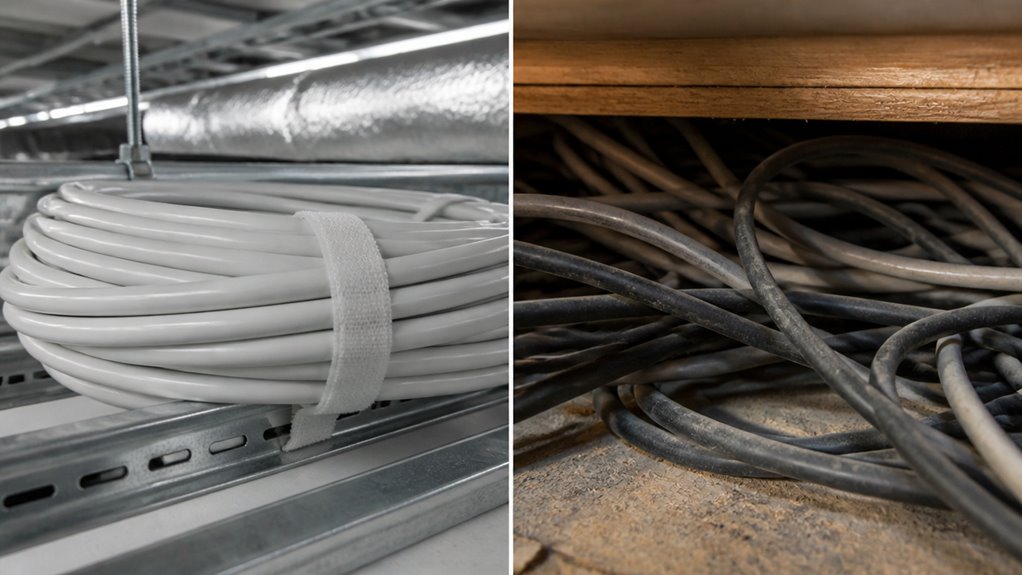

You need plenum cable when wiring passes through air-handling spaces like ceiling voids or raised floors. Its low-smoke, flame-resistant fluoropolymer jacket meets strict fire safety codes such as UL 910 and NFPA 262.
Non-plenum cable uses less costly PVC jackets but produces more toxic smoke. It isn’t permitted in plenums unless enclosed in approved conduit.
Choosing the right cable depends on your installation environment, regulatory compliance, and budget considerations. Explore further to optimize safety and cost.
Key Takeaways
- Plenum cables have low-smoke, fire-retardant fluoropolymer jackets for use in air-handling spaces like ceiling voids and raised floors.
- Non-plenum cables use standard PVC jackets, which are less expensive but produce more smoke and toxic gases when burned.
- The NEC requires plenum-rated cables (CMP) in plenum spaces to minimize flame spread and smoke toxicity for fire safety compliance.
- Non-plenum cables are prohibited in plenum spaces unless enclosed in approved plenum-rated conduit to meet code requirements.
- Choosing plenum cable increases cost but ensures safety and regulatory compliance in air-handling environments; non-plenum cables suit non-plenum zones.
Plenum Cable vs Non Plenum Cable Comparison: Safety, Code, Cost, and Best Use
| Comparison Point | Plenum Cable | Non-Plenum Cable | Best Choice |
|---|---|---|---|
| Main Purpose | Designed for air-handling spaces where fire safety is critical | Designed for non-air-handling areas with lower smoke-spread risk | Depends on installation location |
| Common Location | Ceiling voids, raised floors, and HVAC return-air pathways | Wall cavities, enclosed runs, and general non-plenum spaces | Plenum for air circulation areas |
| Jacket Material | Uses low-smoke, flame-resistant materials like fluoropolymers | Usually uses standard PVC jackets | Plenum for safer jacket performance |
| Fire Safety Rating | Built to meet stricter standards such as UL 910 and NFPA 262 | Lower fire resistance compared to plenum-rated cable | Plenum for code-sensitive projects |
| Smoke Production | Produces less smoke during a fire | Can produce more smoke and toxic gases | Plenum for occupant safety |
| Code Compliance | Required in many plenum spaces under building and electrical codes | Not allowed in plenum spaces unless properly enclosed | Plenum for NEC compliance |
| Cable Marking | Often identified with CMP marking | May use non-plenum ratings such as CMR or CM | Check markings before installation |
| Cost | More expensive because of specialized fire-safe materials | More budget-friendly for standard installations | Non-plenum for lower-cost areas |
| Installation Risk | Reduces risk of failed inspections in air-handling spaces | Can cause code violations if used in the wrong location | Plenum when unsure |
| Best Use | Commercial ceilings, raised floors, HVAC air spaces | Standard walls, conduit runs, and non-plenum zones | Match cable to environment and code |
What Makes Plenum and Non-Plenum Cables Different?
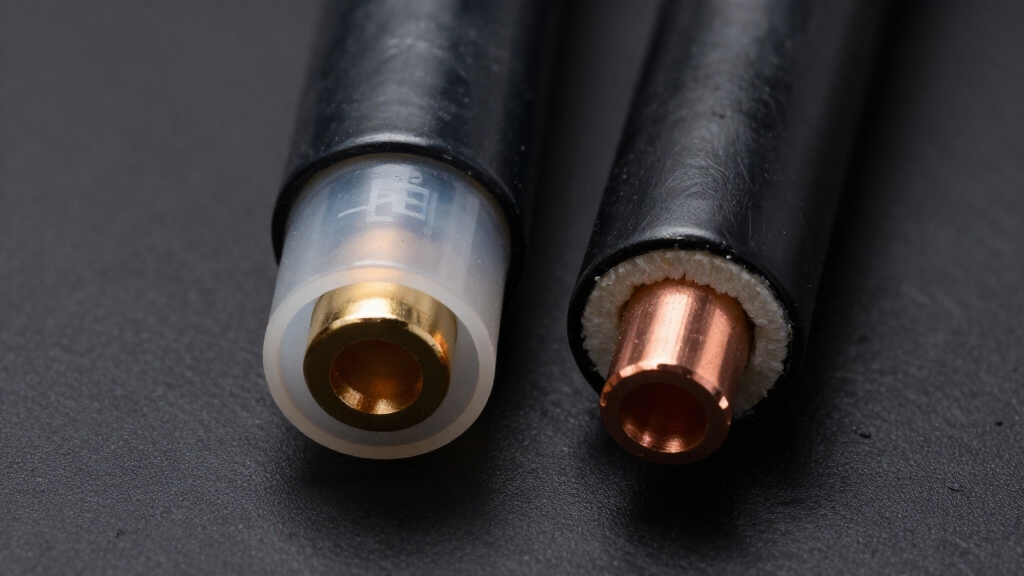
Although plenum and non-plenum cables share similar core conductors, they differ primarily in their outer jacket materials. This directly impacts fire safety performance and compliance requirements.
Plenum and non-plenum cables differ mainly in jacket materials, affecting fire safety and regulatory compliance.
Plenum cables use low-smoke, flame-resistant jackets made from specialized materials like fluoropolymers. These are designed to slow flame spread and minimize toxic smoke in air-handling spaces.
In contrast, non-plenum cables use standard PVC jackets, which are less fire-resistant and produce more smoke and toxic gases when ignited.
This distinction is critical because plenum cables are intended for spaces where air circulates, such as ceiling plenums and raised floors. Non-plenum cables should be installed only in enclosed, non-air-handling areas like wall cavities.
Understanding this difference helps you select the right cable to meet safety and regulatory demands effectively. The fire safety ratings for plenum and non-plenum cables are defined by distinct UL standards that dictate their specific use cases.
Building Code Requirements for Plenum Cable
When it comes to plenum cable, it’s essential to stick to the NEC rules that specify its use in air-handling spaces, such as ceiling plenums and raised floors.
Knowing exactly what a plenum space is can really help you stay compliant and steer clear of code violations.
Plus, proper cable labeling is a must. This ensures that everything is in order for local inspections.
Additionally, using the correct cable types like 12-2 NMB and securing wiring with proper connectors helps maintain safety and code compliance.
NEC Rules Overview
When installing cables in commercial or multi-occupancy buildings, the National Electrical Code (NEC) mandates specific requirements to guarantee fire safety in plenum spaces.
These areas are used for air circulation, such as drop ceilings and raised floors. You must use plenum-rated cable, identified by CMP markings, which complies with UL 910 and NFPA 262 fire tests.
This compliance minimizes flame spread and smoke production. Non-plenum cables are prohibited in these spaces unless enclosed in approved plenum-rated conduit.
The NEC distinguishes plenum from riser and general-purpose cables, enforcing strict material standards for jacket composition. This reduces toxicity and improves flame resistance.
Adhering to these rules prevents code violations and enhances occupant safety by controlling fire hazards associated with cable installations in HVAC air-handling areas.
Plenum cables typically feature enhanced insulation materials with higher fire resistance ratings to meet these stringent safety standards.
Plenum Space Definition
A plenum space refers to areas within a building specifically designed to facilitate air circulation for heating, ventilation, and air conditioning (HVAC) systems.
These spaces typically include ceiling voids, raised floors, and other designated return-air pathways.
Building codes require that any cables installed in these environments must comply with strict fire safety standards due to the enhanced risk of flame spread and smoke propagation through circulating air.
Plenum cable, consequently, uses low-smoke, flame-resistant materials to minimize toxic smoke and flame spread, meeting UL 910 and NFPA 262 testing criteria.
Non-plenum cable is prohibited in these spaces unless enclosed in approved conduit.
Understanding the definition and function of plenum spaces is critical for compliant cable selection, ensuring fire safety and adherence to National Electrical Code (NEC) requirements in air-handling environments.
Compliance and Enforcement
Although plenum spaces demand stringent fire safety measures, building codes enforce specific requirements that mandate the use of plenum-rated cables in these environments.
You must comply with the National Electrical Code (NEC) and local regulations, which require cables in air-handling spaces, like ceiling plenums and raised floors, to have UL 910 and NFPA 262 certification.
Using non-plenum cable in these areas violates code and exposes occupants to heightened fire and smoke risks.
Enforcement relies on inspections, proper labeling (e.g., CMP for plenum cables), and adherence to approved installation methods.
If you install cables without verifying compliance, you risk costly rework, code violations, and compromised safety.
Consequently, always confirm that your cable selections and routing meet plenum requirements to guarantee regulatory compliance and fire protection effectiveness.
Proper installation by qualified personnel according to building safety standards ensures correct wiring and reduces fire hazards in plenum spaces.
Fire Safety Ratings for Plenum vs Non-Plenum Cables
Since fire safety is critical in building infrastructure, understanding the ratings for plenum and non-plenum cables is essential before installation.
Plenum cables comply with stringent fire standards like UL 910 and NFPA 262. They are designed to slow flame spread and minimize smoke toxicity.
Non-plenum cables, typically with PVC jackets, offer lower fire resistance. They produce more smoke and toxic gases when burned.
| Fire Safety Aspect | Plenum Cable |
|---|---|
| Flame Spread | Low |
| Smoke Production | Minimal |
| Smoke Toxicity | Low |
| Compliance Standards | UL 910, NFPA 262 |
You must choose plenum cables where air circulation exists to ensure reduced fire hazards. This helps conform to safety codes and protects building occupants effectively.
Using plenum cables also supports code compliance requirements critical for fire alarm system integrity and occupant safety.
Where to Use Plenum Cable and Where Non-Plenum Works Best?
When your cable runs pass through air-handling spaces such as plenum ceilings or raised floors, you must use plenum-rated cable to comply with fire safety codes and minimize hazards.
Plenum cable’s flame-resistant jacket reduces smoke and toxicity, essential in these spaces. Conversely, non-plenum cable fits areas without air circulation, like enclosed conduits or wall cavities, where fire risks are lower.
Use this guide to decide:
- Plenum cable: Required in plenum spaces, such as dropped ceilings, raised floors, and HVAC return air pathways.
- Non-plenum cable: Suitable for interior walls, open ceilings without air circulation, and general-purpose wiring outside plenums.
- Code compliance: Never install non-plenum cable in plenum spaces unless protected by approved conduit or method.
Choosing correctly guarantees safety and meets NEC and building code standards. Building codes similarly mandate battery backups for hardwired smoke detectors to ensure uninterrupted fire safety protection during power outages.
Cost and Material Differences Between Plenum and Non-Plenum Cables
Understanding where to use plenum versus non-plenum cable naturally leads to evaluating their cost and material differences, which directly impact project budgets and installation choices.
Plenum cables command higher prices due to their specialized outer jacket made from fire-retardant, low-smoke materials such as fluoropolymers.
These materials guarantee compliance with stringent fire safety codes like UL 910 and NFPA 262, minimizing flame spread and toxic smoke.
In contrast, non-plenum cables use standard PVC jackets, which are less expensive but lack the same fire resistance and smoke suppression properties.
You’ll find non-plenum cables more flexible and budget-friendly, suitable for non-air-handling environments.
When weighing costs, remember the investment in plenum cable reflects enhanced safety and regulatory compliance essential for installations in plenum spaces.
Non-plenum cable offers a cost-effective option outside those zones.
For security camera installations, choosing the right cable type also involves planning cable routes that protect wiring from damage and comply with safety codes.
How to Choose the Right Cable for Your Installation Needs?
Choosing the right cable for your installation hinges on accurately identifying the environment in which the cable will be placed.
Selecting the correct cable depends on understanding the specific environment of your installation site.
You must assess whether the cable route passes through plenum spaces, areas with air circulation like ceiling voids or raised floors, or non-plenum zones such as wall cavities.
Consider these steps:
- Verify the cable pathway. If it traverses plenum spaces, select plenum-rated cable (CMP) to meet fire and smoke safety codes.
- For wall or enclosed conduit installations without air circulation, non-plenum cable (CMR or CM) suffices and reduces cost.
- When uncertain, default to plenum cable or consult local building codes and inspectors to guarantee compliance and safety.
This approach assures your installation meets regulatory requirements while optimizing safety and budget constraints. Proper installation with weatherproof enclosures and routine inspections preserves system longevity in harsh environments.
Frequently Asked Questions
Can Non-Plenum Cable Be Upgraded to Plenum Rating After Installation?
You can’t upgrade non-plenum cable to plenum rating after installation because the fire-resistant, low-smoke jacket materials required for plenum compliance are integral to the cable’s construction.
To meet plenum safety standards, you’d need to replace the cable entirely or encase it in a plenum-rated conduit approved by local codes.
Otherwise, using non-plenum cable in plenum spaces risks code violations and compromises fire safety.
How Do Plenum Cables Affect Network Performance or Signal Quality?
Imagine your network signal trying to sprint through a fireproof maze wearing a hazmat suit.
Plenum cables don’t inherently boost or degrade signal quality. They use specialized jackets focused on fire safety, not conductivity.
So, your data speed and integrity stay the same as with regular cables, assuming proper installation.
The flame-retardant insulation won’t interfere with bandwidth or latency. It guarantees safety without sacrificing your network’s technical performance.
Are There Environmental Impacts Specific to Plenum Cable Materials?
Yes, plenum cable materials impact the environment differently due to their specialized low-smoke, flame-retardant jackets.
These jackets are often made from fluoropolymers.
These materials reduce toxic emissions and smoke during fires, improving indoor air quality and safety.
However, their manufacturing involves more complex chemical processes, potentially increasing environmental footprint and disposal challenges compared to standard PVC.
You should weigh these trade-offs when selecting cables, considering both fire safety and environmental sustainability.
What Maintenance Is Required for Plenum Versus Non-Plenum Cables?
You need to inspect both cable types regularly for physical damage, but plenum cables demand extra attention due to their fire-resistant jacket.
Make certain their low-smoke materials remain intact and avoid exposure to harsh chemicals that might degrade the jacket.
For non-plenum cables, focus on preventing crushing or bending since their PVC jackets are less durable.
Clean dust and debris from surrounding areas to maintain airflow and comply with safety standards, especially in plenum spaces.
Can Plenum Cables Be Used Outdoors or in Wet Locations Safely?
You shouldn’t use plenum cables outdoors or in wet locations unless they’re specifically rated for those conditions.
Standard plenum cables focus on fire resistance and low smoke, not moisture or UV protection.
For outdoor or damp environments, you need cables with waterproof jackets, UV resistance, and appropriate ratings like CMX or outdoor-rated.
Using regular plenum cable outdoors risks degradation, safety hazards, and code violations.
Choose cables designed and certified for those environments.
Choose the Right Cable for Fire Safety Compliance
Choosing between plenum and non-plenum cables is like picking the right armor for your network’s environment.
You want cables that meet strict building codes and fire safety standards without overspending.
Plenum cables protect airspaces with fire-resistant materials, while non-plenum cables fit less critical areas.
By understanding their differences in safety, cost, and application, you can make a calculated decision that guarantees both compliance and performance in your installation.