
You must routinely maintain fire extinguishers to guarantee they perform reliably during emergencies and comply with safety codes.
Regular inspections detect corrosion, leaks, pressure loss, or damage that could prevent operation.
Annual servicing by certified technicians verifies mechanical integrity, agent condition, and proper pressure. This minimizes downtime and regulatory issues.
Neglect risks equipment failure, costly outages, and compromised safety.
Staying informed about maintenance schedules and procedures helps you make certain extinguishers are always ready when needed.
Key Takeaways
- Routine maintenance ensures fire extinguishers operate reliably during emergencies, preventing failures from corrosion, leaks, or pressure loss.
- Regular inspections verify extinguisher presence, accessibility, intact seals, and correct mounting for immediate operability.
- Maintaining correct pressure levels optimizes spray duration and suppression effectiveness, critical for early fire control.
- Certified technician servicing complies with NFPA standards, supporting legal compliance and insurance requirements.
- Neglecting maintenance risks malfunction, prolonged downtime, regulatory penalties, and compromised business continuity.
Why Routine Fire Extinguisher Maintenance Matters?
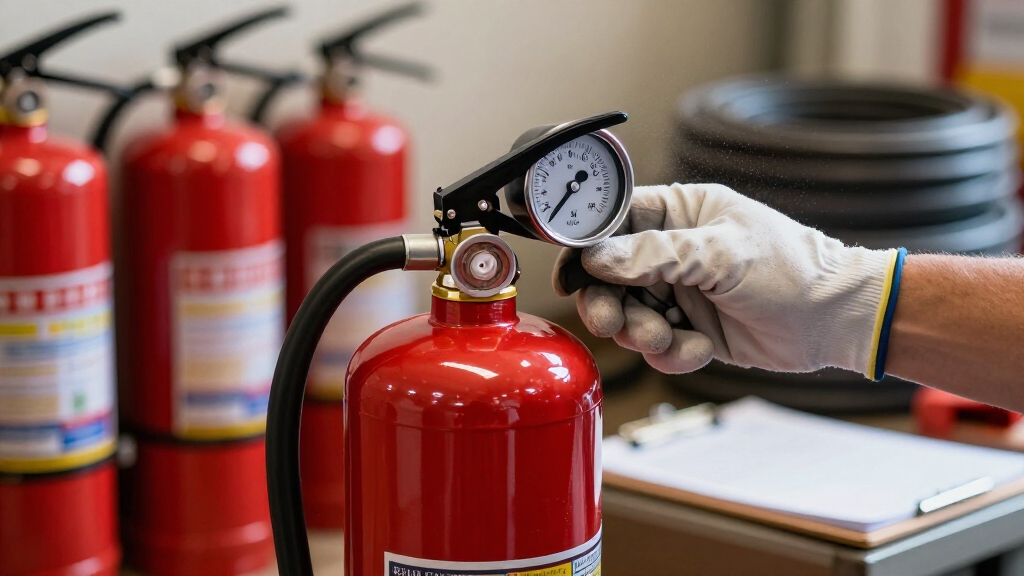
Regularly maintaining your fire extinguisher guarantees it performs reliably when you need it most. You must adhere to mandated service intervals: monthly visual inspections, annual maintenance, and periodic internal examinations to assure operational readiness.
Maintenance verifies mechanical components, pressure levels, seals, and agent condition. This prevents failures caused by corrosion, leaks, or pressure loss. Hydrostatic testing evaluates vessel integrity under pressure, a critical step for safety compliance.
Neglecting these protocols increases the risk of malfunction during emergencies, jeopardizing occupant safety and property protection. You should keep detailed records documenting all maintenance, testing, and inspections to comply with legal requirements. Certified technicians perform these tasks to ensure compliance with standards like NFPA 10.
How to Perform Monthly Visual Fire Extinguisher Inspections?
Hey there! Each month, it’s super important to carry out a thorough visual inspection of your fire extinguishers. You’ll want to check the pressure gauges, seals, labels, and the overall physical condition. It helps to have a detailed checklist handy for this.
While you’re inspecting, keep an eye out for common issues. Look for signs of corrosion, leaks, missing pins, or anything that might be blocking access to the extinguisher.
And don’t forget! Consistently documenting your findings is key. It ensures your extinguishers stay compliant and, most importantly, fully operational when you need them.
Regular maintenance also includes scheduling annual certified technician service to ensure the extinguisher’s reliability and safety.
Visual Inspection Checklist
Monthly visual inspections play a critical role in ensuring your fire extinguishers remain ready for immediate use.
You must systematically check each unit’s physical condition and accessibility to confirm operational readiness.
Use this checklist to perform your monthly visual inspection efficiently:
| Inspection Item | What to Look For |
|---|---|
| Physical Condition | No dents, corrosion, or damage |
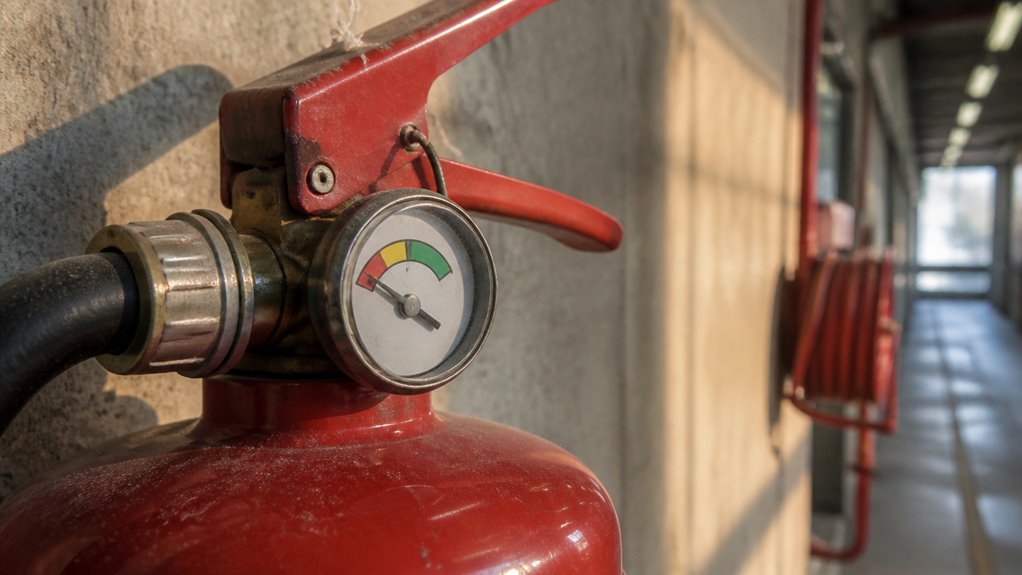
| Pressure Gauge | Needle in the operable range |
| Safety Seal & Pin | Intact and unbroken |
| Location & Accessibility | Clear, unobstructed, and properly mounted |
Record your findings clearly and promptly. Identifying defects early prevents failure during emergencies.
Always follow manufacturer guidelines and regulatory requirements to maintain compliance and maximize extinguisher reliability.
Be sure to verify the pressure gauge regularly to ensure the extinguisher is fully charged and within the operable range.
Common Inspection Issues
Although visual inspections might seem straightforward, several common issues frequently compromise extinguisher readiness.
You must check for pressure gauge readings outside the operable range, which indicate under- or over-pressurization.
Inspect the tamper seal and pull pin; missing or broken seals suggest prior use or tampering.
Examine the extinguisher body for corrosion, dents, or leaks that jeopardize vessel integrity.
Verify that the hose and nozzle are unobstructed, flexible, and free of cracks.
Confirm the extinguisher is mounted correctly, accessible, and unobstructed by equipment or debris.
Finally, make certain the inspection tag is present and up-to-date to maintain compliance.
By addressing these issues promptly during your monthly visual inspections, you sustain extinguisher reliability and legal code adherence.
This is essential for effective fire suppression during emergencies.
For any deficiencies found, always seek assistance from certified technicians to ensure proper maintenance and refilling.
Why Annual Fire Extinguisher Maintenance and Testing Matter?
Regular annual maintenance and testing of fire extinguishers guarantee their mechanical components, pressure levels, and agent conditions remain fully functional and reliable.
You ensure operational readiness by verifying seals, pressure gauges, hoses, nozzles, and the extinguisher agent itself. This service prevents failure from corrosion, leaks, or pressure loss, which could compromise fire suppression during emergencies. Only certified technicians should perform servicing to ensure compliance with safety standards and proper functionality of the recharging process.
| Maintenance Task | Purpose | Frequency |
|---|---|---|
| Visual Inspection | Check external damage | Monthly |
| Mechanical Testing | Verify operational parts | Annually |
| Internal Examination | Detect internal deterioration | 1-6 years |
| Hydrostatic Testing | Confirm cylinder integrity | 5-12 years |
How Fire Extinguisher Types Affect Maintenance Schedules?
To keep your fire extinguishers reliable, it’s super important to follow the right maintenance schedules based on their type. For instance, stored-pressure extinguishers need annual checks and an internal examination every six years.
On the other hand, carbon dioxide units have their own set of requirements, including different hydrostatic testing and service intervals.
Getting a grip on these distinctions isn’t just a good idea; it really helps you stay compliant and ensures that your extinguishers are always ready to go when you need them.
Professional servicing by licensed fire protection services ensures compliance with NFPA standards and maintains extinguisher safety and reliability.
Stored-Pressure Extinguisher Schedules
Stored-pressure fire extinguishers typically require annual maintenance to guarantee all mechanical components function correctly and that the agent remains effective.
You must inspect pressure gauges, seals, and the overall condition to confirm readiness.
Additionally, internal examinations are mandated every six years to detect corrosion, sediment, or damage inside the cylinder.
These inspections verify vessel integrity and prevent failures during deployment.
Hydrostatic testing, performed every 12 years, rigorously assesses the cylinder’s ability to withstand pressure.
Neglecting these schedules risks compromised performance and safety hazards.
By adhering to these intervals—annual maintenance, six-year internal exam, and 12-year hydrostatic test—you uphold compliance with safety codes and maximize extinguisher reliability.
Always consult manufacturer guidelines, but this framework forms the backbone of stored-pressure extinguisher care.
Regular documentation of all inspections and maintenance is essential to ensure compliance and track extinguisher condition over time, supporting operational reliability.
Carbon Dioxide Unit Care
While stored-pressure extinguishers have a well-defined maintenance schedule, carbon dioxide (CO2) units demand a distinct approach due to their unique design and operating characteristics.
You must perform annual conductivity testing on CO2 hose assemblies to prevent deterioration that could cause failure.
Hydrostatic testing intervals for CO2 cylinders typically occur every 5 years, reflecting their high-pressure containment requirements.
Unlike dry chemical units, CO2 extinguishers require careful inspection of the horn and valve assembly for blockages or damage, as these components affect discharge efficiency.
You should also verify cylinder pressure and make certain seals remain intact during annual maintenance.
Following manufacturer guidelines and adhering to type-specific testing schedules is critical to maintain readiness, prevent leaks, and secure reliable performance when CO2 extinguishers are needed most.
Regular maintenance and timely replacement of components extend service life and ensure reliable operation.
How Regular Checks Prevent Fire Extinguisher Failures?
Regular inspections routinely identify and address issues such as corrosion, leaks, pressure loss, and damaged seals that can compromise fire extinguisher performance.
By conducting monthly visual checks and annual maintenance, you ensure the extinguisher’s mechanical parts, pressure gauge, hose, and nozzle remain fully operational.
Internal examinations detect hidden deterioration inside the cylinder, preventing unexpected failures.
Hydrostatic testing confirms vessel integrity under pressure, critical for safety and compliance.
Neglecting these checks risks malfunction during emergencies when you rely on the extinguisher’s immediate response capability.
Additionally, servicing after any discharge guarantees the unit is fully recharged and ready.
Maintaining the correct pressure levels is essential to ensure optimal spray duration and fire suppression effectiveness.
Safety Risks of Neglecting Fire Extinguisher Care
If you neglect fire extinguisher care, you risk equipment failure that can delay fire suppression and escalate hazards.
Corrosion, pressure loss, and damaged seals reduce extinguisher effectiveness, increasing fire growth and danger to occupants and responders.
Nonfunctional extinguishers create false confidence, impairing emergency actions and evacuation safety.
Regular maintenance guarantees mechanical integrity, agent condition, and immediate operability, preventing these risks.
Extinguishers should be serviced or replaced every 10–12 years to ensure compliance with NFPA service life standards.
| Risk Factor | Consequence | Inspection Focus |
|---|---|---|
| Corrosion | Equipment failure | Cylinder integrity |
| Pressure loss | Delayed suppression | Pressure gauge |
| Damaged seals | Agent leakage | Seal condition |
| False confidence | Delayed evacuation | Operational readiness |
| Hidden deterioration | Sudden failure | Internal examination |
How Proper Maintenance Supports Business Continuity?
Because fire extinguishers play a critical role in early fire suppression, you must maintain them rigorously to minimize operational disruptions. Proper maintenance guarantees extinguishers function effectively, limiting fire damage and preventing costly downtime.
Neglecting service can lead to equipment failure, prolonged outages, and regulatory penalties, all of which compromise business continuity.
Focus on these key maintenance benefits:
- Damage Limitation: Early suppression reduces structural, inventory, and equipment losses.
- Operational Readiness: Regular inspections verify extinguisher presence, accessibility, and correct mounting.
- Regulatory Compliance: Consistent maintenance supports adherence to fire codes and insurance requirements.
Frequently Asked Questions
What Records Are Legally Required for Fire Extinguisher Maintenance?
You must keep detailed maintenance records to comply with legal requirements. These records document all inspections, servicing, testing, recharging, and readiness status of each fire extinguisher.
Monthly visual inspections, annual maintenance, internal examinations, and hydrostatic testing must be logged with dates and findings. Maintaining accurate, up-to-date records proves your extinguishers’ compliance.
This guarantees traceability and supports safety audits or regulatory inspections. It demonstrates your commitment to fire safety and code adherence.
How Does Conductivity Testing Apply to Carbon Dioxide Extinguishers?
Conductivity testing for carbon dioxide extinguishers works like a health check for their hose assemblies.
You use it to detect any leaks or damage that could compromise performance.
Since CO2 hoses must safely conduct pressure without allowing gas escape, this annual test guarantees the hose’s integrity remains intact.
When Is Hydrostatic Testing Mandatory for Different Extinguisher Types?
You must perform hydrostatic testing on fire extinguishers at type-specific intervals, typically every 5 or 12 years.
For instance, water and wet chemical extinguishers require testing every 5 years.
Many stored-pressure units need it every 12 years.
Carbon dioxide extinguishers have distinct hydrostatic schedules due to their construction.
Always consult manufacturer guidelines and extinguisher type specifications to guarantee compliance with mandatory hydrostatic testing timelines.
What Maintenance Is Needed After Partially Using a Fire Extinguisher?
After you partially use a fire extinguisher, you must recharge it immediately. Waiting is like trusting a deflated balloon to save you.
Recharging restores the extinguishing agent and pressure to full operational capacity. Then, perform a thorough inspection to check seals, hose, and nozzle integrity.
Document the service for compliance. This guarantees the extinguisher functions flawlessly during the next emergency, maintaining readiness and meeting legal maintenance requirements precisely.
How Do Maintenance Schedules Vary for Cartridge-Operated Versus Stored-Pressure Units?
Maintenance schedules differ notably between cartridge-operated and stored-pressure units.
Stored-pressure extinguishers usually require annual maintenance and an internal examination every six years.
Cartridge-operated units have distinct intervals, often needing more frequent internal inspections and hydrostatic testing due to their separate propellant cartridges.
Always follow the manufacturer’s specific guidelines for precise timing.
Cartridge-operated models demand tailored service to guarantee operational reliability and compliance with safety standards.
Final Answer: Why Must Fire Extinguishers Be Routinely Maintained?
You must treat fire extinguisher maintenance like tuning a precision instrument. Routine care guarantees peak performance when every second counts.
Neglecting inspections and testing increases failure risks, jeopardizing safety and business continuity. By adhering to monthly visual checks and annual servicing specific to extinguisher types, you guarantee reliable operation in emergencies.
Consistent maintenance isn’t optional; it’s a critical safeguard that protects lives, assets, and your organization’s resilience against fire hazards.