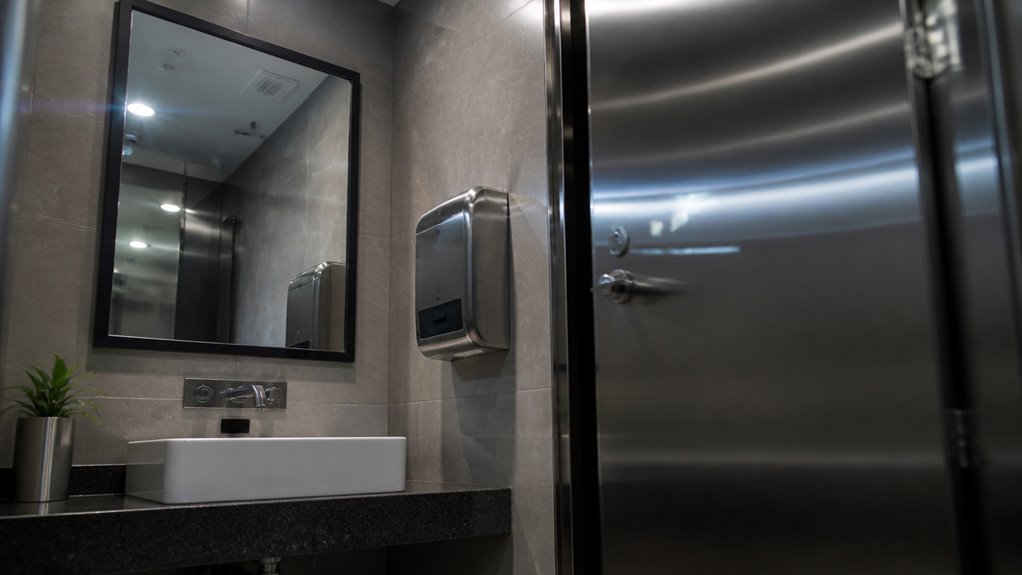

You won’t find cameras legally installed inside public bathroom stalls or toilets because privacy laws, like the Video Voyeurism Prevention Act, almost always prohibit recording in such high-privacy areas.
Cameras can be placed near entrances or adjacent hallways for security but must avoid capturing private spaces. Hidden or unauthorized cameras carry serious criminal and civil penalties.
If you want to understand the legal exceptions and how security balances with privacy, there’s more to explore on this topic.
Key Takeaways
- Cameras inside public bathroom stalls or private areas are almost always illegal due to strong privacy laws.
- Video surveillance is typically limited to restroom entrances or adjacent hallways to enhance security.
- Hidden cameras or audio recording in bathrooms carry significant legal risks and severe penalties.
- Some jurisdictions allow limited, court-approved monitoring for safety or criminal investigations under strict conditions.
- Clear signage and strict data policies are required when surveillance is conducted near but not inside bathrooms.
Why Cameras Inside Public Bathrooms Are Generally Illegal?
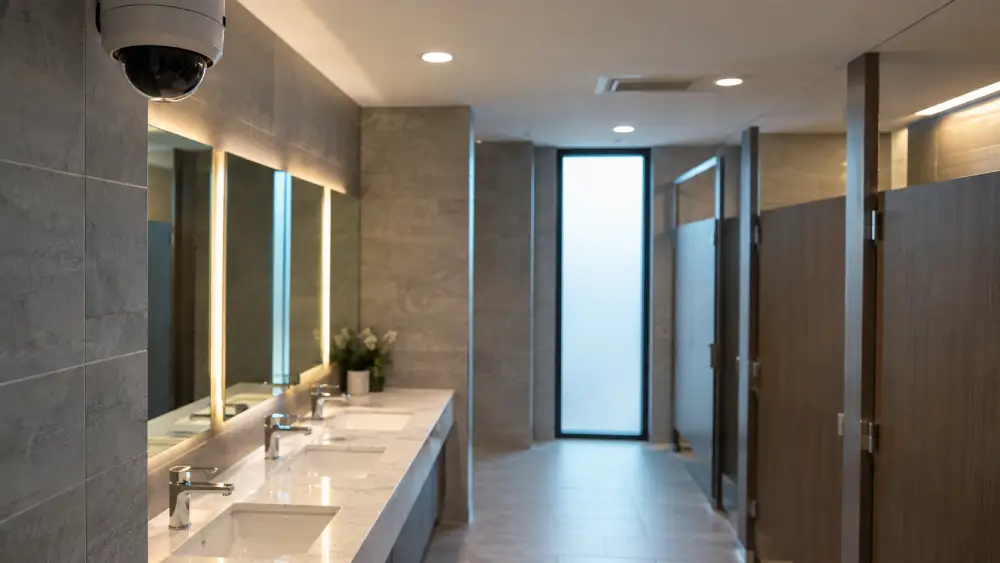
Because public bathrooms are considered high-privacy spaces, cameras inside them are almost always illegal. You should understand that these areas involve strong privacy expectations, making any recording without consent a violation of personal rights.
Laws like the Video Voyeurism Prevention Act and various state statutes criminalize capturing images or videos in restrooms, stalls, or changing areas. Consent is nearly impossible to obtain in these settings, so recording is prohibited to protect individuals from voyeurism and privacy invasion.
Even hidden or disguised cameras can lead to criminal charges, civil penalties, and workplace consequences. While exterior surveillance near bathroom entrances may be lawful, cameras inside restrooms breach legal and ethical boundaries.
This reflects society’s commitment to safeguarding intimate spaces from unauthorized observation. Additionally, audio recording in such private areas is generally prohibited under all-party consent laws to further protect privacy rights.
Key Privacy Laws Banning Bathroom Cameras
Understanding why cameras inside public bathrooms are generally illegal leads us to examine the specific laws that enforce these protections.
Federal laws like the Video Voyeurism Prevention Act criminalize capturing images or videos of private areas without consent, especially in settings where people expect privacy.
State laws consistently prohibit recording in restrooms, stalls, showers, and changing rooms, recognizing these as intimate spaces.
You should know that consent is rarely practical or valid in these environments.
Additionally, hidden or disguised cameras trigger criminal and civil liabilities, including invasion-of-privacy claims.
These laws apply equally in public and private facilities.
While limited exceptions exist, they’re narrow and uncommon.
Ultimately, privacy laws clearly prohibit inside-bathroom surveillance to protect individuals’ dignity and prevent abuse.
To protect yourself, performing a visual inspection for hidden devices in suspicious areas can help identify covert cameras before they invade your privacy.
Where Cameras Near Bathrooms Are Legally Allowed?
While cameras inside public bathrooms are largely prohibited, surveillance near these areas is often allowed under strict conditions. You can legally place cameras outside restroom entrances or in adjacent hallways, provided they don’t capture any part of the interior.
These placements serve security purposes, such as monitoring access points or deterring vandalism. Jurisdictions typically require clear signage informing the public about surveillance and may impose data retention limits.
You must make certain cameras aren’t aimed at stalls, toilets, or any private spaces to comply with privacy expectations and laws like the Video Voyeurism Prevention Act. Some areas permit limited use for safety reasons, but these exceptions are narrow.
It is important to respect privacy boundaries by avoiding viewing or sharing footage beyond agreed purposes when managing camera placement near sensitive areas.
Legal Risks of Hidden Cameras in Bathrooms
Installing hidden cameras in public bathrooms can land you in some serious legal trouble. First off, there are strict laws against recording in high-privacy areas like bathrooms without consent. If you go ahead and do it anyway, you could face hefty criminal penalties.
But it doesn’t stop there. You might also find yourself in civil court, facing lawsuits for invasion of privacy or emotional distress caused by your secret surveillance. So, really, it’s crucial to understand these legal risks before even thinking about any kind of bathroom monitoring. It’s just not worth the potential consequences! Unauthorized surveillance is often classified as criminal tampering, which can lead to fines, misdemeanor charges, or even imprisonment.
Criminal Penalties Overview
Because hidden cameras in bathrooms violate strong privacy protections, they often carry severe criminal penalties. You can face felony charges under laws like the Video Voyeurism Prevention Act, which prohibits capturing images or videos of private areas without consent.
Many states classify such offenses as criminal invasions of privacy, punishable by fines, imprisonment, or both. Penalties typically increase if you record audio or target minors. Courts treat bathrooms as highly private spaces, so intent and location markedly impact prosecution.
Even installing disguised cameras or using covert devices can trigger criminal liability. Law enforcement actively pursues violations due to the serious privacy breach involved. Understanding these risks is essential to avoid substantial legal consequences if you consider any form of video surveillance inside restroom stalls or other intimate areas.
In contexts involving safety and privacy, it is important to note that monitoring systems use strict protocols and legal guidelines to ensure responsible surveillance and reduce unauthorized access.
Civil Liability Risks
When hidden cameras are discovered in public bathrooms, individuals and entities responsible can face significant civil liability in addition to criminal penalties. You could be sued for invasion of privacy, emotional distress, and other damages by the victims.
Courts often hold property owners or managers accountable if they failed to prevent such violations.
Here are four key civil risks you should understand:
- Invasion of Privacy Claims: Victims can seek financial compensation for unauthorized recordings in private spaces.
- Emotional Distress Lawsuits: Hidden cameras cause psychological harm, leading to claims for mental anguish.
- Negligence Liability: You may be liable if you didn’t implement reasonable security measures to prevent covert surveillance.
- Punitive Damages: Courts may impose penalties to deter deliberate privacy violations.
Recognizing these risks is essential to avoid costly legal consequences. Additionally, integrating layered security measures can help prevent such violations by enhancing overall property protection.
Exceptions to Bathroom Camera Prohibitions
Hey there! Just a heads-up: there are some very specific legal exceptions that allow cameras to be placed near bathrooms. But it’s not as simple as it sounds. These exceptions usually relate to particular security needs.
Now, here’s the important part: if cameras are installed, they must be positioned so that they don’t capture private areas. Plus, there are strict regulations in place, and these can vary quite a bit depending on where you are. Always ensure compliance with local laws and ordinances to avoid legal issues when placing cameras near sensitive areas.
Narrow Legal Exceptions
Although cameras inside public bathrooms are almost always illegal, there are narrow legal exceptions that apply in very specific circumstances. You might encounter these exceptions when public safety or criminal investigations demand limited surveillance. Still, you must understand these exceptions are carefully constrained to protect privacy.
Here are four key scenarios where limited camera use could be lawful:
- Cameras positioned only at restroom entrances or exits, not inside stalls or private areas.
- Surveillance explicitly authorized by law enforcement during active investigations.
- Transparent use with clear signage and strict data protection measures.
- Situations involving credible threats of violence or criminal activity, where courts approve monitoring.
Additionally, compliance with local laws and regulations is essential to ensure any camera use in these contexts remains lawful and respects individuals’ privacy rights.
Security-Driven Installations
Because public safety concerns sometimes demand enhanced monitoring, security-driven camera installations near bathrooms can be lawful under tightly controlled conditions.
You may see cameras placed outside restroom entrances or in adjacent hallways, aimed solely at public areas to deter crime, such as vandalism or violence.
These installations must avoid capturing any interior views of stalls, toilets, or changing spaces to comply with privacy laws.
Typically, signage informs individuals of surveillance, and footage retention policies are strictly regulated to protect privacy rights.
Hidden cameras inside bathrooms remain illegal, but security-focused external placements are recognized exceptions when clearly justified.
You should note these exceptions are rare, narrowly defined, and require adherence to specific legal standards to balance safety needs with individuals’ strong privacy expectations in restrooms.
Additionally, to ensure compliance and effectiveness, such cameras should be positioned to avoid privacy intrusion while covering high-traffic or vulnerable areas nearby.
Jurisdictional Variations
While public bathrooms are generally protected from camera surveillance, legal exceptions vary considerably depending on jurisdiction.
You need to know that some areas allow limited surveillance for security, but these exceptions are narrow and strictly regulated.
For example:
- Cameras may be allowed at restroom entrances to monitor access without capturing interiors.
- Certain states permit audio monitoring in public restroom-adjacent spaces, not inside stalls.
- The UK rarely permits CCTV inside toilets, only for serious concerns like violence or drug issues.
- Enforcement differs widely; some local laws impose harsher penalties for hidden cameras or audio recording without consent.
Understanding these jurisdictional nuances helps you grasp where cameras might legally exist near bathrooms.
However, interior recording remains almost universally prohibited to protect privacy.
Homeowners should also be aware that installing security cameras in shared or common areas typically requires HOA approval and must comply with community rules.
Balancing Security and Privacy in Bathroom Surveillance
When managing bathroom surveillance, you must carefully balance the need for security with strict privacy protections.
Balancing security needs with privacy protections is essential when overseeing bathroom surveillance.
Cameras inside stalls or aimed at toilets are almost universally illegal due to strong expectations of privacy and laws like the Video Voyeurism Prevention Act.
Instead, you can install surveillance outside restroom entrances or in adjacent hallways, ensuring cameras don’t capture interior spaces.
This approach helps deter crime without violating privacy rights. You should also consider signage to inform the public about monitoring and follow retention policies.
Hidden cameras or audio recording inside bathrooms increase legal risk substantially and are prohibited.
Privacy Concerns With Visible Cameras Near Bathrooms
Although visible cameras near bathrooms serve security purposes, they can raise significant privacy concerns for individuals using nearby facilities. You might feel uneasy knowing a camera is watching close to a space where privacy is expected.
Even if cameras don’t record inside stalls, broad coverage areas risk capturing sensitive moments unintentionally. You should consider these key concerns:
- Cameras near bathrooms might record people entering or leaving, potentially exposing private routines.
- Overly broad surveillance can lead to discomfort or a sense of being constantly monitored.
- Visible cameras may deter some from using public restrooms due to fear of privacy invasion.
- The presence of cameras can blur lines between legitimate security and intrusive observation.
Awareness of these issues helps balance safety with respecting your privacy.
What to Do If You Suspect Unauthorized Bathroom Recording?
If you suspect unauthorized recording in a public bathroom, start by carefully inspecting the area for any hidden cameras or unusual devices.
Look for small lenses, wires, or objects that seem out of place, such as smoke detectors, vents, or mirrors.
Avoid touching or moving devices to preserve evidence. If you find a suspicious device or have strong concerns, document the location and details with photos or notes.
Report your findings immediately to facility management or security personnel. You can also contact local law enforcement as unauthorized recording in bathrooms is illegal in most jurisdictions.
This may violate privacy laws like the Video Voyeurism Prevention Act. Maintaining awareness and acting promptly helps protect your privacy and supports enforcement against illegal surveillance.
Frequently Asked Questions
How Can Businesses Ensure Restroom Security Without Cameras Inside?
You can ensure restroom security by placing cameras only outside restroom entrances or in adjacent hallways, avoiding any view of private areas.
Use clear signage to inform visitors about surveillance.
Regular staff checks and prompt maintenance help deter misconduct.
Implement good lighting and emergency alert systems.
These measures protect privacy while enhancing safety, avoiding legal risks related to hidden or interior cameras.
Always follow local laws and privacy guidelines carefully.
Are Audio Recordings Allowed in or Near Public Bathrooms?
You generally can’t legally make audio recordings inside public bathrooms due to strong privacy protections.
Recording conversations without consent in such private spaces often violates federal and state laws, including wiretapping statutes.
Audio surveillance near bathroom entrances may be allowed if it doesn’t capture private conversations inside.
To stay compliant, you should avoid hidden or intentional audio recording in or near restrooms, focusing instead on visible, non-intrusive security measures outside.
What Signs Should Be Posted if Cameras Monitor Bathroom Entrances?
You should post clear signs indicating video surveillance at bathroom entrances to comply with legal transparency requirements.
These signs must state that cameras are monitoring the area, specifying the purpose, such as security or safety.
Include details about who operates the cameras and how footage is stored or used.
Proper signage helps respect privacy expectations and reduces liability by informing individuals their actions near the restroom entry may be recorded.
How Do Privacy Laws Differ Internationally on Bathroom Surveillance?
Notably, while you’ll find U.S. laws broadly ban cameras inside bathrooms due to privacy rights, the UK relies more on data protection rules. This makes surveillance inside toilets highly restricted but not explicitly outlawed.
In some countries, strict consent laws dominate, whereas others allow limited monitoring for security if it doesn’t invade private spaces. Your legal risk depends greatly on local statutes, emphasizing privacy expectations and the specific surveillance context.
Can Employees Consent to Bathroom Camera Use at Workplaces?
You generally can’t consent to bathroom camera use at workplaces because privacy laws treat restrooms as highly private spaces.
Even if employees agree, recording inside stalls or toilets is almost always illegal and poses serious legal risks.
Employers must avoid hidden or overt cameras in these areas.
Consent rarely applies here since the expectation of privacy is strong.
This makes surveillance inside bathrooms virtually prohibited regardless of employee permission.
Know Where Security Cameras Can and Cannot Be Placed
You should know that over 90% of U.S. states have laws explicitly banning cameras inside public bathrooms to protect your privacy.
While security matters, these strict regulations reflect how seriously authorities treat your right to personal space.
If you ever suspect unauthorized recording, it’s vital to report it immediately.
Understanding these legal boundaries helps you stay informed and safeguard your privacy in public spaces.