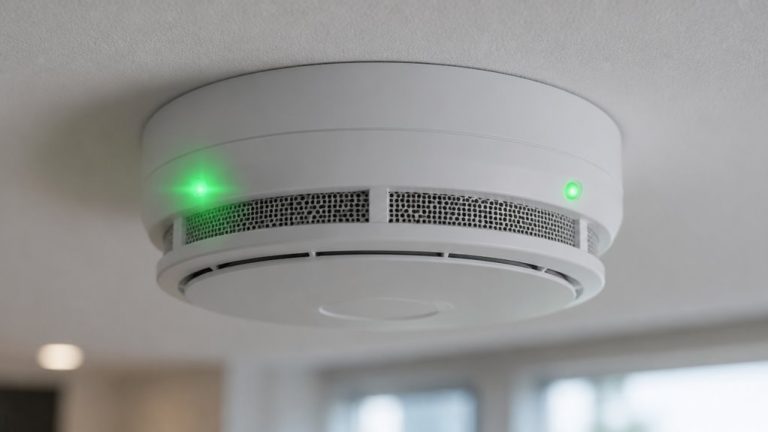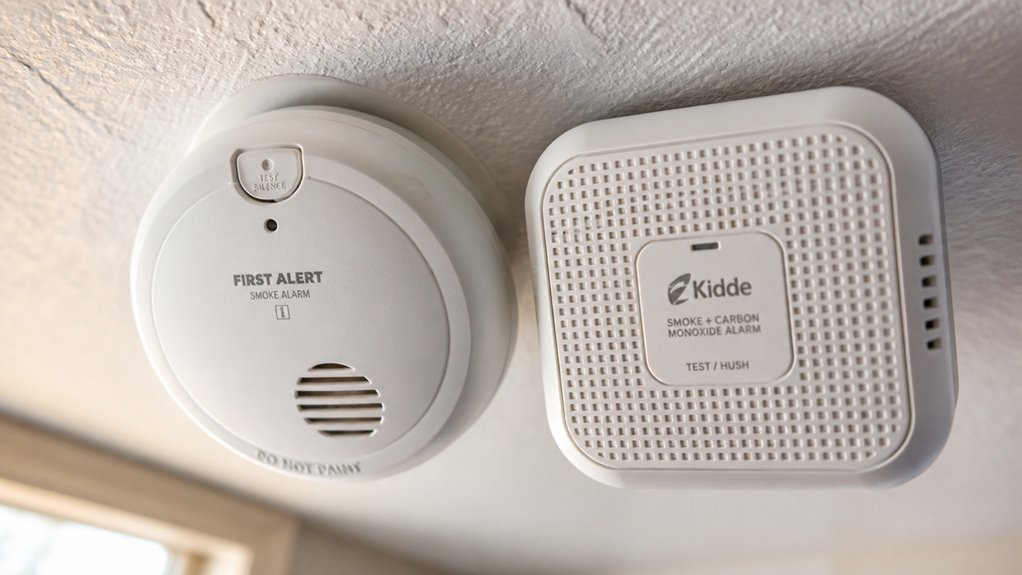

You’ll find both First Alert and Kidde offer reliable ionization, photoelectric, and dual-sensor smoke alarms, but their performance varies by model.
First Alert’s units often provide advanced dual-sensor sensitivity and voice location alerts.
Kidde focuses on fewer nuisance alarms and broader smart-home compatibility.
Kidde also tends to be more budget-friendly, especially on basic models.
Your choice depends on sensor type, smart features, and installation needs.
Exploring these differences can help you pick the best fit for your home.
Key Takeaways
- Both First Alert and Kidde offer ionization, photoelectric, and dual-sensor smoke alarms with varying sensitivity by model, not brand dominance.
- First Alert’s dual-sensor alarms emphasize voice location alerts, while Kidde smart alarms focus on app-based false-alarm cancellation.
- Kidde generally provides more affordable basic models, whereas First Alert offers premium units with broader smart-home and voice-location features.
- Both brands have battery-powered and hardwired options, with Kidde offering integrated 10-year sealed batteries and First Alert simplifying wiring with quick-connect harnesses.
- Interconnectivity varies; First Alert supports up to 18 interconnected devices, while mixed-brand setups may face compatibility challenges.
First Alert vs Kidde Smoke Alarms Comparison: Sensors, Features, Price, and Home Safety
| Comparison Point | First Alert Smoke Alarms | Kidde Smoke Alarms | Best Choice |
|---|---|---|---|
| Detection Technology | Offers ionization, photoelectric, and dual-sensor models | Also offers ionization, photoelectric, and dual-sensor models | Compare by specific model |
| Dual-Sensor Performance | Often emphasizes balanced detection for flaming and smoldering fires | Provides reliable dual-sensor and combination models | Both are strong options |
| False Alarm Control | Some models may be more sensitive near cooking smoke or steam | Select smart models may reduce nuisance alarms better | Kidde for fewer false alerts |
| Smart Features | Select Onelink models offer app alerts and smart integration | Smart models include app alerts and false-alarm cancellation | Depends on ecosystem |
| Voice Location Alerts | Stronger option for spoken location alerts on select models | Generally relies more on app alerts and wireless notifications | First Alert for voice location |
| Smart Home Compatibility | Works well with Apple HomeKit on select models | Better for mixed smart-home setups | Kidde for broader flexibility |
| Installation Style | Often uses quick-connect harnesses for hardwired units | Often uses twist-lock bases for replacement ease | Depends on existing setup |
| Power Options | Battery-powered and hardwired models available | Battery-powered, hardwired, and 10-year sealed battery options | Both cover major needs |
| Price and Value | Higher on premium and smart-enabled models | More affordable basic models | Kidde for budget value |
| Best Fit | Homes needing advanced features, voice alerts, and smart integration | Homes needing reliable, affordable, flexible alarms | Choose by home prio |
How To Choose Between First Alert And Kidde Smoke Alarms?
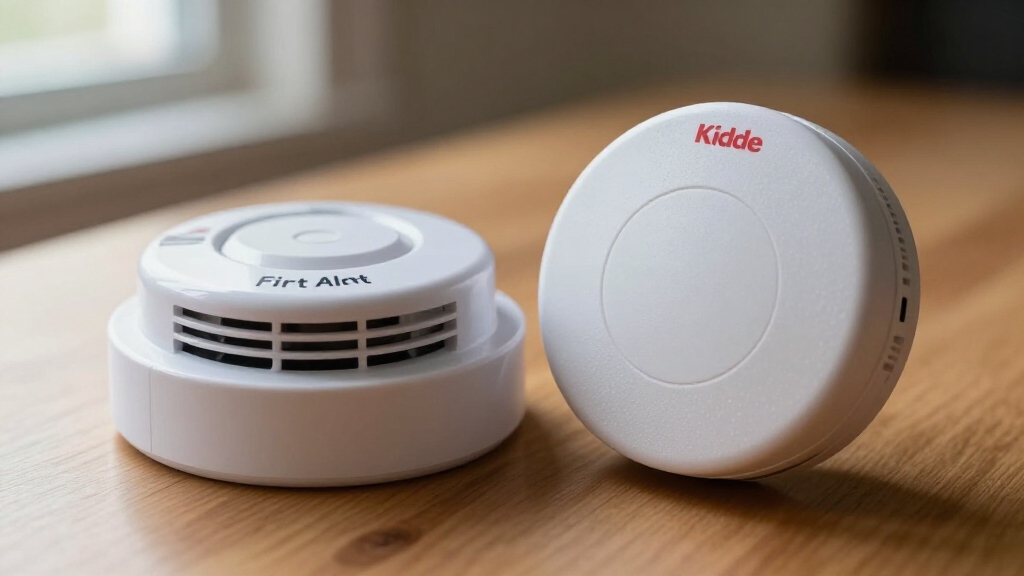
When choosing between First Alert and Kidde smoke alarms, focus on the specific features and priorities that matter most for your home.
Both brands offer battery-powered and hardwired options, including combination smoke and carbon monoxide detectors.
Kidde generally provides more affordable basic models, making it a good choice if budget is your main concern.
First Alert tends to include more advanced features like voice location and broader smart-home platform support, which may justify its higher price on premium models.
Installation styles differ too: First Alert often uses quick-connect harnesses, while Kidde employs twist-lock bases.
Support coverage overlaps, typically ranging from 5 to 10 years depending on the model.
Ultimately, compare models directly rather than relying on brand alone to find the best fit for your needs.
Kidde alarms feature integrated 10-year sealed batteries that eliminate the need for periodic replacements, enhancing long-term reliability.
Detection Technology Differences Between First Alert And Kidde
Choosing between First Alert and Kidde involves understanding how each brand approaches smoke detection technology. This directly impacts alarm responsiveness and reliability.
Both brands offer ionization, photoelectric, and dual-sensor alarms, covering a broad range of detection needs. First Alert is known for a robust selection of dual-sensor and combination units, often emphasizing all-encompassing detection in one device.
Kidde also provides dual-sensor and combination models, including smart versions with enhanced connectivity. Neither brand consistently outperforms the other in raw detection technology; performance depends more on the specific model than the brand itself.
You’ll find both excel at detecting flaming and smoldering fires, but sensitivity and false-alarm tendencies vary by unit. Comparing model features is key to matching your home’s needs.
Additionally, First Alert alarms generally incorporate photoelectric sensors that provide faster hazard detection and help reduce false alarms, enhancing overall safety.
How Ionization, Photoelectric, And Dual Sensors Perform In Both Brands?
Although both First Alert and Kidde offer ionization, photoelectric, and dual-sensor smoke alarms, their performance nuances depend on the specific sensor technology and model design.
Both First Alert and Kidde provide ionization, photoelectric, and dual-sensor smoke alarms with performance varying by technology and design.
You’ll find that First Alert’s dual-sensor units often emphasize balanced detection, combining ionization’s quick flaming-fire response with photoelectric’s smoldering-fire sensitivity.
Kidde also provides reliable dual-sensor models, including smart alarms that integrate both technologies effectively.
When it comes to single-sensor types, First Alert’s photoelectric alarms are praised for smoldering fire detection, while Kidde’s ionization alarms respond swiftly to fast flames.
Photoelectric alarms are especially valued for their ability to detect smoke from smoldering fires early, providing critical extra time for occupant evacuation.
False Alarm Performance In First Alert vs Kidde Smoke Alarms?
When you compare false alarm performance between First Alert and Kidde smoke alarms, it’s interesting to note that sensitivity can really vary depending on the specific model, not just the brand. Some folks really like certain First Alert units because they seem to do a better job at reducing false alarms.
On the flip side, Kidde’s smart alarms tend to have fewer nuisance triggers. Proper installation following key placement guidelines is crucial to minimizing false alarms and ensuring reliable operation.
False Alarm Differences
False alarms often influence user experience with smoke alarms. Both First Alert and Kidde have strengths and weaknesses in this area..
First Alert models are sometimes noted for higher sensitivity, which can lead to more nuisance alarms from cooking smoke or steam. This is especially true in certain photoelectric units.
Conversely, Kidde alarms, particularly select smart models, tend to reduce false alarms through app-based cancellation features and refined detection algorithms. However, this advantage isn’t universal across all Kidde products.
User reports vary widely, with some preferring First Alert’s quicker alerts despite occasional false positives. Others favor Kidde’s generally lower nuisance rate.
Ultimately, false alarm performance depends more on the specific model and placement than brand alone. You’ll want to consider your environment and usage patterns when choosing between these two. First Alert’s dual-sensor technology, combining photoelectric smoke detection and electrochemical sensing, is designed to minimize false alarms by accurately distinguishing smoke from non-hazardous particles.
Model Sensitivity Variations
Understanding false alarm tendencies requires looking beyond brand names to the sensitivity settings of individual models within First Alert and Kidde lines.
You’ll find that some First Alert models, especially dual-sensor alarms, tend to have higher sensitivity. This can lead to more nuisance alerts from cooking smoke or steam.
Conversely, Kidde’s smart models often incorporate algorithms to reduce false alarms, showing lower sensitivity to non-threatening particulates. However, this varies by model rather than brand alone.
For example, basic Kidde ionization alarms may trigger more false alarms compared to certain First Alert photoelectric models.
Your choice should consider the specific model’s sensor type and sensitivity calibration, as well as placement in your home. Both brands’ alarms can be affected by environmental factors influencing false alarm rates.
Regular cleaning and maintenance of smoke detectors is crucial to minimizing false alarms caused by dust buildup and environmental conditions.
Smart Features And Home Integration For First Alert And Kidde
Both First Alert and Kidde have stepped up their game with smart alarms that come with app alerts and wireless connectivity. However, if you’re looking for something a bit more advanced, First Alert’s Onelink models stand out because they offer voice location features that many users really appreciate. It’s like having a personal assistant that tells you exactly where the danger is!
On the other hand, Kidde has some unique perks too. They support app-based false-alarm cancellation, which can save you from those annoying moments when you accidentally trigger the alarm. Plus, Kidde generally plays nice with a variety of smart-home ecosystems, making it a versatile choice if you’ve got a mix of devices.
When it comes to compatibility, there’s a bit of a difference. First Alert tends to focus on Apple HomeKit, which is great if you’re already in that ecosystem. Kidde, however, offers broader flexibility across multiple platforms, so you can easily integrate it into your existing setup. It’s all about finding what works best for you!
It’s important to note that interconnect compatibility between models is crucial, as using incompatible alarms risks failure of the interconnected system to trigger all alarms simultaneously.
App Alerts And Connectivity
How do First Alert and Kidde stack up when it comes to smart features and connectivity? Both brands offer smart smoke alarms with app alerts, but their ecosystems differ.
First Alert’s Onelink models provide reliable smartphone notifications and support Apple HomeKit. This makes them a solid choice if you use that platform.
Kidde’s smart alarms also send app alerts and include features like app-based false-alarm cancellation, which can be helpful.
Kidde tends to integrate well with mixed smart-home setups, giving you flexibility if you have devices from various brands.
Keep in mind, smart features depend heavily on the specific model you choose. Both brands still sell many non-connected alarms.
Unlike First Alert and Kidde, Eufy smoke detectors require a HomeBase hub for smart connectivity and do not connect directly to Wi-Fi.
Voice Location Features
Where exactly a fire alarm sounds can make a big difference in how quickly you respond.
First Alert stands out by offering voice location features on select smart models, clearly announcing the type and location of danger, such as “Smoke detected in kitchen.” This helps you identify the threat’s source immediately.
Kidde’s smart alarms, while equipped with smartphone alerts and app-based controls, generally don’t provide spoken location announcements. Instead, they rely more on wireless interconnectivity and app notifications to inform you where alarms are triggered.
If pinpointing fire or CO sources audibly matters to you, First Alert’s voice location feature offers an advantage. However, keep in mind that availability depends on the model, and neither brand includes this feature across their entire lineup.
Additionally, interconnected alarms from brands like BRK support up to 18 devices to ensure comprehensive whole-home alerts, which can complement smart features for enhanced safety.
Smart Home Compatibility
Beyond voice location, smart home compatibility plays a significant role in choosing between First Alert and Kidde smoke alarms.
First Alert’s Onelink models offer strong Apple HomeKit integration, making them a natural fit if you use that ecosystem. You’ll also find app alerts and limited home platform integration.
Kidde targets mixed smart-home setups with smartphone alerts, app-based false-alarm cancellation, and wireless connectivity on select models.
Both brands rely heavily on specific models for smart features, as many remain standard non-connected units.
If you want seamless integration with Apple devices, First Alert may suit you better.
But if your home uses various smart platforms, Kidde’s broader compatibility and flexible wireless options could be more appealing.
Comparing models closely is essential to find the right match for your system.
Notably, unlike these brands, some competitors focus on wireless interconnectivity that supports multiple units without needing a smart home hub, which could influence your choice depending on your setup.
Battery vs Hardwired: Installation And Power Options For Smoke Alarms
Although both First Alert and Kidde offer a range of battery-powered and hardwired smoke alarms, the choice between these installation types affects convenience, reliability, and maintenance.
Battery-powered models from both brands grant you easy installation and flexibility. Some feature 10-year sealed batteries that minimize upkeep.
Hardwired alarms, paired with battery backup, typically provide more consistent power and are favored for long-term reliability.
First Alert’s hardwired units often include a quick-connect harness, simplifying wiring during installation.
Kidde’s hardwired alarms tend to use a twist-lock base compatible with standard household wiring patterns, streamlining replacement or upgrades.
Ultimately, your decision depends on your home’s wiring setup and preference for maintenance frequency. Both brands cover these bases well with comparable options.
Cost, Coverage, And Value: Comparing First Alert And Kidde Models
Considering installation and power options naturally leads to evaluating how much these alarms cost and the value they offer over time.
Kidde generally presents lower prices on basic models, making it a solid choice if you’re budget-conscious.
Kidde offers affordable basic models, ideal for those looking to save without sacrificing safety.
First Alert tends to cost more, especially on premium and smart-enabled units with voice and location features.
Both brands offer coverage terms ranging roughly from 5 to 10 years depending on the model, aligning their coverage closely.
When choosing, focus on model-to-model comparisons since price gaps narrow on basic alarms but widen with advanced features.
If you prioritize affordability, Kidde delivers consistent value.
If you want enhanced functionality and are willing to pay extra, First Alert models often justify the cost with additional features and longer-term peace of mind.
Smart Home Ecosystem Compatibility With First Alert And Kidde Alarms
How well do First Alert and Kidde smoke alarms fit into your existing smart home setup? First Alert’s Onelink models offer solid Apple HomeKit integration, making them a good choice if you rely heavily on iOS devices.
They also provide app alerts and voice location features, which can enhance your situational awareness. Kidde, on the other hand, supports a broader range of smart-home ecosystems and excels in mixed-device environments.
Their smart alarms include app-based false-alarm cancellation and wireless connectivity, offering flexible control across platforms. However, both brands have many non-smart models, so compatibility depends heavily on the specific unit.
If seamless ecosystem integration and smart features matter most, you’ll want to compare individual models carefully rather than choosing by brand alone.
User Experiences And Community Insights On First Alert vs Kidde
Users frequently report mixed experiences when comparing First Alert and Kidde smoke alarms, reflecting the nuanced differences between specific models rather than clear brand superiority.
You’ll find some users praising First Alert’s false-alarm reduction, while others prefer Kidde’s fewer nuisance alerts.
Installation ease and smart feature reliability also vary by model, influencing user experience. Community insights often highlight price versus feature trade-offs, urging you to ponder your priorities carefully.
| Aspect | First Alert | Kidde |
|---|---|---|
| False Alarm Handling | Generally sensitive, mixed reviews | Often fewer nuisance alarms |
| Installation | Quick-connect harness | Twist-lock base |
| Price and Value | Higher on premium models | More budget-friendly on basics |
Frequently Asked Questions
Are First Alert and Kidde Smoke Alarms Compatible With Fire Sprinkler Systems?
No, First Alert and Kidde smoke alarms typically aren’t compatible with fire sprinkler systems directly. They’re designed to detect smoke and carbon monoxide, not to trigger sprinklers.
You’ll usually need a separate fire alarm control panel that integrates with both smoke detectors and sprinkler systems for coordinated response.
Do Either Brand Offer Specialized Alarms for Hearing-Impaired Users?
Yes, both First Alert and Kidde offer specialized alarms for hearing-impaired users.
You’ll find models with low-frequency sounders designed to be more easily perceived by those with hearing loss.
Some units also feature strobe lights or vibrating pad compatibility.
When choosing, consider the specific model’s alert types and your home’s setup.
Both brands provide options tailored to different needs but vary in features and price accordingly.
What Is the Typical Lifespan of a First Alert or Kidde Smoke Alarm?
You can expect both First Alert and Kidde smoke alarms to last around 10 years, which is the typical lifespan for most residential smoke detectors.
After that, sensors degrade, so manufacturers recommend replacing the entire unit.
Some models feature sealed 10-year batteries to match this lifespan, reducing maintenance.
While lifespan is similar, always check your specific model’s instructions to confirm, since coverage details and battery types can vary slightly between units.
Can First Alert or Kidde Alarms Be Integrated With Home Security Systems?
Oh, sure, because your smoke alarm just *loves* to gossip with your home security system, right?
Actually, both First Alert and Kidde offer models that can integrate with security setups, but it’s model-dependent.
First Alert’s Onelink smart alarms play nicely with Apple HomeKit, while Kidde’s smart units boast broader smart-home ecosystem compatibility.
Are Replacement Parts Readily Available for Both First Alert and Kidde Alarms?
Yes, replacement parts for both First Alert and Kidde alarms are generally easy for you to find.
Both brands offer common components like batteries, mounting brackets, and replacement sensors through major retailers and online stores.
However, availability might vary depending on your model’s age and specific features.
You’ll want to check compatibility carefully, as some smart or hardwired units use proprietary parts that aren’t interchangeable between brands.
Choose the Alarm That Matches Your Home Setup
When choosing between First Alert and Kidde smoke alarms, consider your home’s specific needs.
If you prioritize smart home integration, First Alert’s Wi-Fi models might suit you better.
On the other hand, Kidde’s ionization alarms offer reliable, budget-friendly options.
Both brands balance false alarm reduction differently, so weigh detection technology and power sources carefully.
Ultimately, your choice depends on whether you value advanced features or straightforward reliability most.