
To extinguish a small contained fire most easily, first turn off the heat if it’s safe to do so.
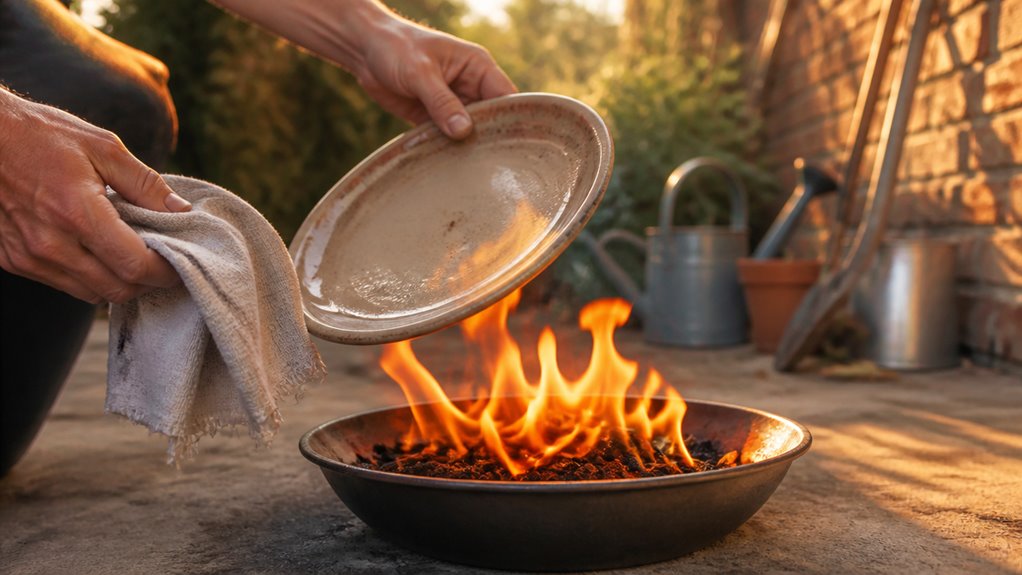
Then, smother the flames by covering the pan tightly with a metal lid or baking sheet to cut off oxygen.
Don’t move the pan or use glass lids, which can shatter.
For tiny grease fires, you can also apply baking soda in large amounts.
Avoid water, wet towels, and flour, as these make fires worse.
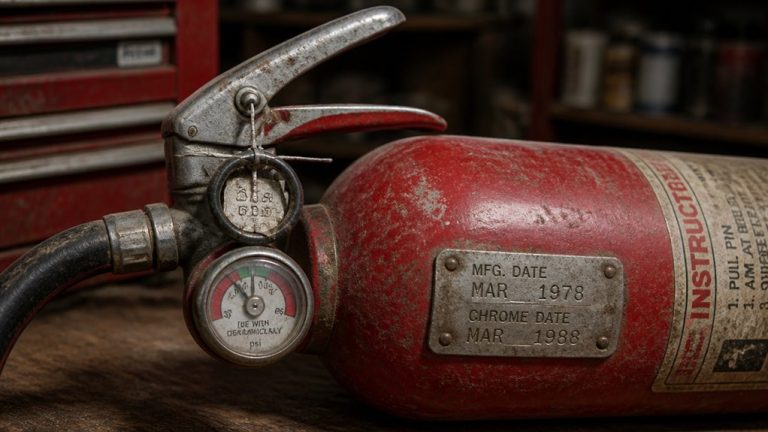
Keep a fire extinguisher ready for tougher situations.
Explore these steps further to handle kitchen fires confidently.
Key Takeaways
- Smother the fire using a metal lid or baking sheet to cut off oxygen without moving the pan.
- Use baking soda in large amounts to extinguish very small, contained grease fires.
- Deploy a Class B or Class K fire extinguisher aimed at the base of the fire if smothering fails.
- Turn off the heat source immediately if it can be done safely to stop feeding the fire.
- Avoid using water, flour, or wet towels as they can worsen and spread the fire.
Why You Should Turn Off the Heat First?
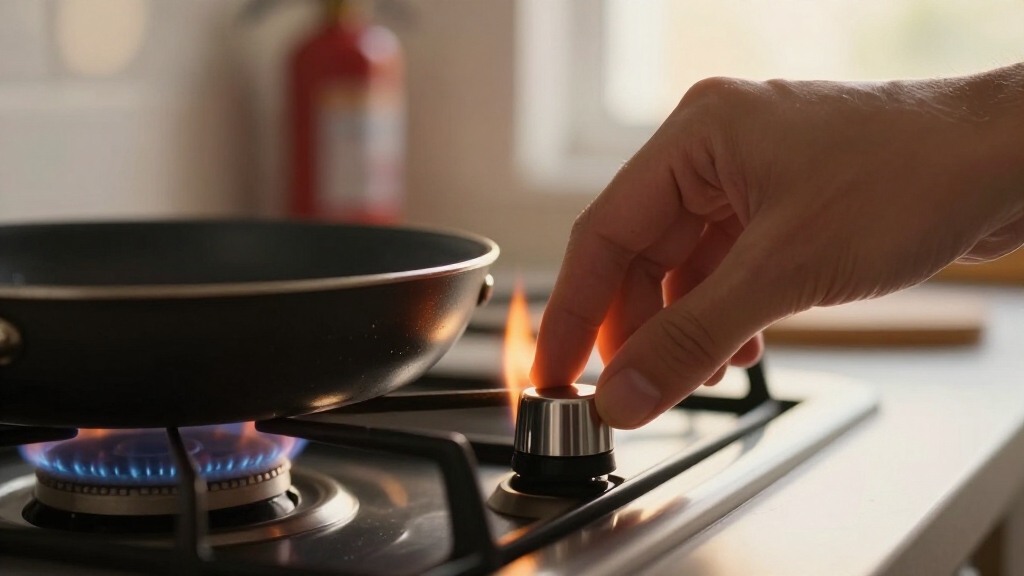
Always turn off the heat source immediately when a small fire starts. This stops feeding the fire and prevents it from growing larger.
Turning off the heat source immediately stops the fire from spreading and keeps it manageable.
If it’s safe, switch off the burner or oven right away. Avoid moving the pan or pot, as shifting hot oil or flames can spread the fire quickly.
Keep your hands and face away from the heat and smoke to protect yourself. For oven fires, closing the door helps smother flames by cutting off oxygen.
Also, clear the area to prevent additional oxygen from fueling the fire. Turning off the heat source is your first essential step. It limits the fire’s energy and makes any further extinguishing methods more effective and safer to apply.
Using a metal lid or baking sheet to cover flames can effectively smother the fire by cutting off its oxygen supply.
How to Smother a Small Cooking Fire With a Metal Lid or Baking Sheet?
When it comes to smothering a small cooking fire, you’ll want to grab a metal lid or a baking sheet that’s big enough to fully cover the pan. This is super important because cutting off the oxygen will help put out the flames.
Just a quick heads-up: steer clear of glass lids! They can shatter when they get hot, and that’s the last thing you need in a fire situation.
Once you’ve got your metal cover ready, place it gently over the pan. Make sure to seal it tightly without moving the pan around too much.
After that, just let it sit there until the fire is completely out and everything has cooled down. It’s a simple but effective method!
Keep a metal lid or baking sheet nearby in your kitchen to ensure you can act quickly when a grease fire starts.
Choosing the Right Cover
When smothering a small cooking fire, use a metal lid or baking sheet that fully covers the container to cut off oxygen effectively.
Choosing the right cover is critical to stop the fire quickly and safely.
Avoid glass lids, as they can shatter from heat. Instead, pick a sturdy metal cover that fits snugly.
Keep these tips in mind:
- Make certain the cover completely seals the pan to starve the fire of oxygen.
- Use a metal baking sheet if the original lid is unavailable, making sure it’s large enough.
- Don’t move the container once covered; disturbing it risks spreading flames or hot oil.
Selecting the right cover is your first step to controlling a small cooking fire fast. Always remember that using a metal lid to smother the fire is safer and more effective than substances like sugar, which can worsen the flames.
Proper Lid Placement
Once you have the right metal lid or baking sheet ready, place it carefully over the pan to fully seal in the flames.
Don’t slide or tilt the cover, as this can let oxygen in or spill hot oil. The goal is to starve the fire of air, smothering it quickly and safely.
Keep the lid on until the pan has completely cooled to prevent re-ignition.
It is important to avoid using water on grease fires, as this can cause dangerous flare-ups and spread the flames.
| Step | Action | Reason |
|---|---|---|
| 1 | Turn off heat | Stop feeding the fire |
| 2 | Select metal lid/sheet | Avoid glass lids |
| 3 | Place carefully on pan | Seal oxygen |
| 4 | Do not move pan | Prevent spreading fire |
| 5 | Leave lid until cool | Avoid flare-ups |
Why You Should Never Use a Glass Lid to Cover a Fire?
You know, it’s really important to avoid using a glass lid to cover a fire. Glass can shatter when it gets too hot, and that could send dangerous shards flying everywhere. Yikes, right?
Plus, glass lids just aren’t built to handle the high temperatures of a grease fire. Seriously, that makes them a major safety hazard. Instead, why not stick with metal lids or even a baking sheet? They can safely smother the flames without putting you at risk. Better safe than sorry!
Remember, sliding a metal lid over the pan helps cut off oxygen to the fire, which is essential for extinguishing it quickly and safely.
Glass Lid Shattering Risk
Avoid reaching for a glass lid to cover a grease fire. Doing so can cause the glass to shatter from the intense heat. When glass breaks, it creates dangerous shards and can spread the fire further, putting you at risk of injury and worsening the situation. Instead, always use a metal lid or baking sheet to smother the flames safely.
Here’s why glass lids are risky:
- Glass isn’t designed to withstand sudden high heat and can crack explosively.
- Shattered glass can scatter burning oil, increasing fire spread.
- Cleanup and injury risks rise markedly if glass breaks near flames.
To protect yourself and control the fire effectively, avoid glass lids and stick to metal covers only. Using a fire blanket or metal cover can safely smother flames by cutting off oxygen without the risk of shattering.
Heat Resistance Limitations
Because glass lids aren’t built to handle sudden intense heat, you shouldn’t use them to cover a fire.
Glass can quickly crack or shatter when exposed to the rapid temperature change from flames or hot oil.
This shattering not only defeats the purpose of smothering the fire but also creates sharp shards that pose serious injury risks. Instead, always use a metal lid or baking sheet, which can withstand high heat without breaking.
Metal covers effectively cut off oxygen, helping to extinguish the fire safely.
Using a metal lid works by cutting off oxygen, which interrupts the fire triangle and helps to suffocate the fire.
Safety Hazards Explained
Glass lids can become a serious hazard when used to cover a fire. They aren’t designed to withstand rapid temperature changes.
When exposed to intense heat, they can shatter, sending shards flying and causing injury or spreading the fire. Instead, use a metal lid or baking sheet to safely smother flames.
Here’s why you should never use a glass lid on a fire:
- Sudden heat causes glass to crack or explode, risking burns and cuts.
- Broken glass can scatter hot oil or flames, worsening the fire.
- Unlike metal lids, glass won’t contain the fire effectively or cool down safely.
Always prioritize safety by opting for heat-resistant metal covers to extinguish small contained fires quickly and securely. Additionally, ensure proper ventilation and avoid inhaling any extinguishing powder to prevent respiratory irritation during fire suppression.
How Baking Soda Helps Fight Tiny Grease Fires Safely?
When you face a tiny grease fire and don’t have a lid nearby, you can rely on baking soda to help extinguish the flames.
Baking soda works by releasing carbon dioxide when heated, which smothers the fire by cutting off oxygen.
When heated, baking soda releases carbon dioxide that smothers flames by cutting off their oxygen supply.
Use a generous amount directly on the flames rather than a light sprinkle to guarantee effectiveness.
Remember, this method is only for very small, contained grease fires and should be treated as a backup when smothering with a metal lid or baking sheet isn’t possible.
Always turn off the heat source first and avoid moving the pan.
Baking soda is safe and practical but never substitute it with baking powder or flour, which can worsen the fire.
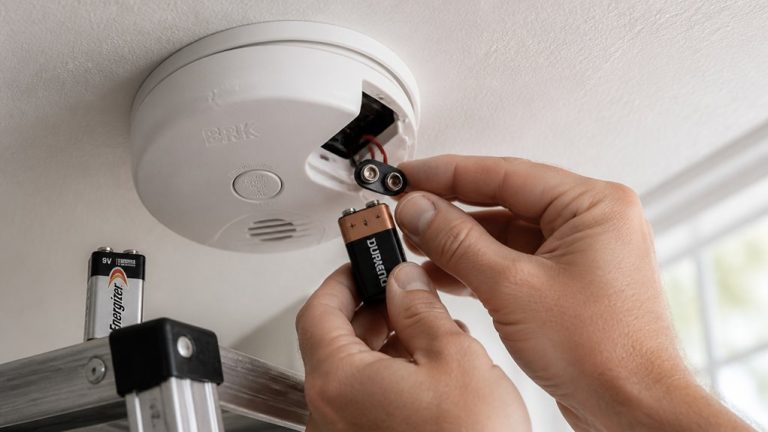
For enhanced safety, consider installing battery-powered smoke detectors nearby to alert you early in case of fire emergencies.
Why Baking Powder and Flour Are Dangerous on Grease Fires?
While baking soda can help extinguish tiny grease fires safely, using baking powder or flour can make things much worse.
These substances can ignite or worsen grease fires instead of putting them out. You need to avoid them completely when dealing with kitchen fires.
Here’s why:
- Flour is combustible. Its fine particles can catch fire quickly, causing flames to spread.
- Baking powder contains acids. When heated, it can release gases that intensify flames rather than smother them.
- Both create dust clouds. These can disperse burning particles or cause small explosions in extreme cases.
Stick to proven methods like smothering with a metal lid or using baking soda only for very small fires.
Avoid flour and baking powder to keep the situation under control. For handling grease fires safely and cleaning up afterward, always use Class K fire extinguishers designed specifically for kitchen grease fires.
When to Use a Fire Extinguisher for Kitchen Grease Fires?
If smothering a kitchen grease fire doesn’t put it out quickly, you’ll need to use a fire extinguisher if the fire remains small and manageable.
First, turn off the heat source if you can do so safely. Use a Class B dry chemical extinguisher or a Class K extinguisher if available. Aim at the base of the fire, following the PASS method: Pull the pin, Aim low, Squeeze the handle, and Sweep side to side.
| Extinguisher Type | Best For | Notes |
|---|---|---|
| Class B | Flammable liquids | Common dry chemical type |
| Class K | Cooking oils and fats | Preferred in commercial kitchens |
| PASS Method | Fire extinguishing use | Pull, Aim, Squeeze, Sweep |
| Safety Tip | Fire size | Only use if fire is small and contained |
Why Water and Wet Towels Make Grease Fires Worse?
Never douse a grease fire with water or wet towels; you’ll only make the flames spread uncontrollably.
Never use water or wet towels on grease fires—they cause flames to spread uncontrollably and dangerously.
When water hits burning oil, it instantly vaporizes, causing hot oil to splash and spread the fire.
Wet towels carry moisture that reacts similarly, risking rapid flame expansion and severe burns.
Here’s why you should avoid water and wet towels:
- Water causes burning oil to splatter, spreading flames beyond control.
- Wet towels release steam and droplets that ignite, worsening the fire.
- Both increase the fire’s intensity and danger, making extinguishing harder.
Stick to safer methods like smothering with a metal lid or using baking soda for small fires.
Water and wet towels aren’t just ineffective; they’re dangerous and increase fire hazards.
Step-by-Step Best Practice to Extinguish a Small Contained Fire
Start by turning off the heat source as soon as you notice a small contained fire, but only if it’s safe to do so. This stops fuel feeding the flames.
Next, cover the pan with a metal lid or baking sheet to smother the fire by cutting off oxygen. Avoid glass lids; they can shatter. Keep the cover on until the pan cools completely.
If you don’t have a lid and the fire is very small, use a large amount of baking soda—not baking powder—to help extinguish it.
Never move the pan, as this can spread flames. If smothering fails and the fire remains small, use a Class B or Class K fire extinguisher, aiming at the base with the PASS method.
Key Safety Tips to Prevent Kitchen Grease Fires
Knowing how to extinguish a small contained grease fire is essential, but preventing one in the first place saves you from danger and damage. You can minimize risks by following key safety tips designed for kitchen environments.
- Stay attentive: Never leave cooking unattended, especially when frying with oil. Grease fires often start when oil overheats unnoticed.
- Maintain clean surfaces: Regularly clean your stove and nearby areas to remove grease buildup, which fuels fires.
- Control heat: Use medium heat to avoid overheating oil. Keep a thermometer handy to monitor oil temperature and prevent ignition points.
Frequently Asked Questions
How Can I Safely Dispose of Used Baking Soda After Extinguishing a Fire?
You can safely dispose of used baking soda by allowing it to cool completely first.
Once cooled, sweep it into a dustpan and place it in a sealed plastic bag to prevent dust from spreading.
Then, throw the bag in your regular household trash.
Avoid rinsing it down the drain, as the residue might clog pipes.
Always wash your hands afterward to remove any residue or contaminants from the fire-extinguishing process.
What Should I Do if I Accidentally Inhale Smoke From a Small Kitchen Fire?
About 60% of fire-related injuries involve smoke inhalation.
If you accidentally inhale smoke from a small kitchen fire, get fresh air immediately and avoid further exposure.
Sit down and breathe slowly to calm yourself.
If you feel coughing, dizziness, shortness of breath, or chest pain, seek medical help right away.
Don’t ignore symptoms; they can worsen even after the fire is out.
Call emergency services if needed.
Are There Specific Types of Metal Lids Recommended for Smothering Fires?
You want a sturdy metal lid that fully covers the pan or pot to cut off oxygen effectively.
Avoid glass lids since they can shatter under heat. A heavy-duty stainless steel or cast iron lid works best because it won’t warp or break during a fire.
Make sure it fits snugly to seal the flames inside. Leave the lid on until everything cools completely to prevent reignition.
How Do I Maintain and Check the Readiness of My Kitchen Fire Extinguisher?
You don’t want to discover your extinguisher is empty mid-fire, right?
Check the pressure gauge monthly to guarantee the needle’s in the green zone.
Inspect for corrosion, dents, or clogged nozzles.
Make sure the pin and tamper seal are intact.
Shake dry chemical extinguishers yearly to prevent settling.
Replace or service it after use or if it fails inspection.
Keep it accessible and visible; you’ll thank yourself later.
Can Small Contained Fires Reignite After Being Smothered and Cooled?
Yes, small contained fires can reignite if not fully cooled.
After smothering, you must leave the metal lid or baking sheet on until everything is completely cool.
Heat trapped inside can restart flames once oxygen returns.
Always make certain the area is thoroughly cooled and monitor it closely before removing the cover.
If you notice any smoke or heat, reapply smothering methods or use a fire extinguisher to prevent reignition.
Smother Small Flames Before They Spread
You might think grabbing water is the first move, but turning off the heat and smothering the fire with a metal lid works best.
Coincidentally, your kitchen tools double as lifesavers. Baking soda helps, but baking powder and flour only fuel flames.
Remember, a fire extinguisher is your last resort. Follow these steps, and you’ll handle small fires confidently, keeping your kitchen safe without panic or damage.